
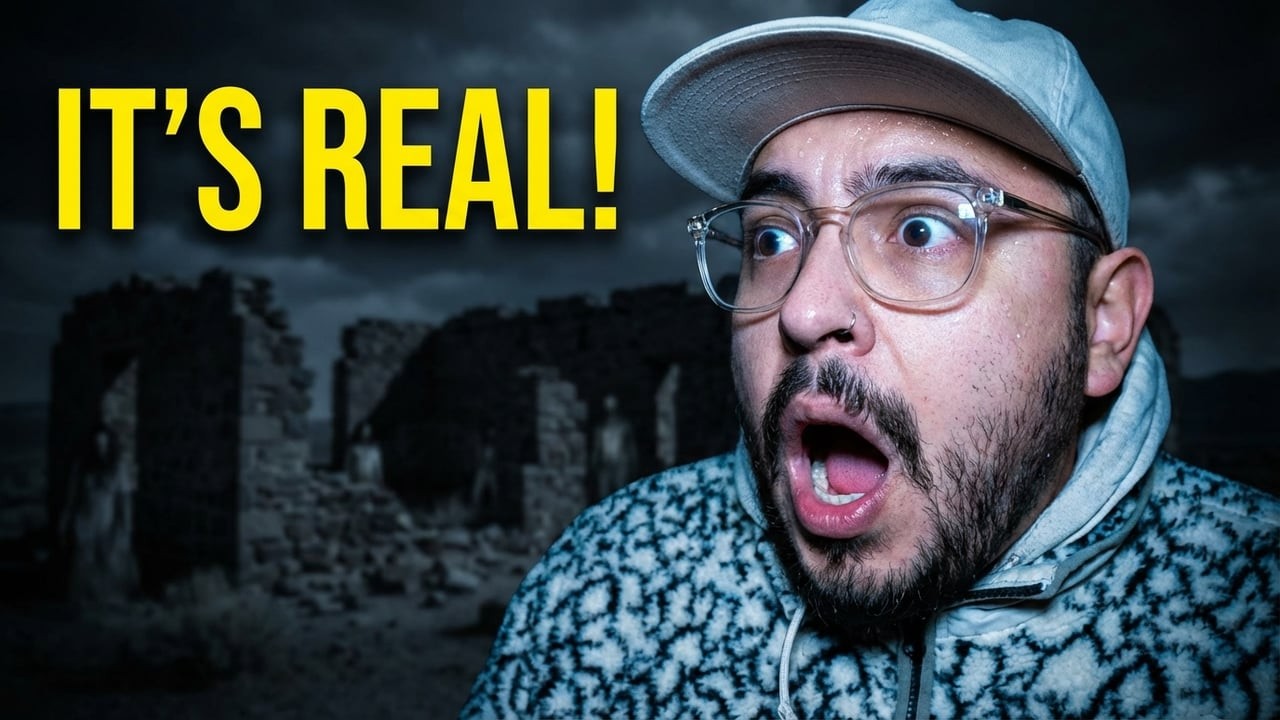
Fort Churchill in Silver Springs, Nevada, was built to guard a stretch of the Carson River where emigrants, mail riders and military patrols passed through Northern Paiute country. More than a century after the soldiers left, LiveSciFi came to the adobe ruins for an overnight ghost hunt. At the old hospital, Tim Wood reported seeing a tall, stick-like figure. The team calls it the Bone Walker, and the investigation includes footage the crew associates with that encounter.
Start with our original investigation. The hospital sighting comes up at 13:04. The episode follows the team through the ruins and into later nighttime sessions with reported footsteps, a motion detector and another reported figure. Watch the Fort Churchill encounter at 13:04.
Fort Churchill location in Silver Springs, Nevada
Fort Churchill State Historic Park is at 10000 Highway 95A South, Silver Springs, NV 89429, on the Carson River in Lyon County. The park includes the adobe fort ruins, the old parade ground and nearby Buckland Station. At the fort, the open ground between the surviving walls gives you a sense of how far apart the buildings were. That layout helps when you watch the investigation and hear the team refer to the hospital, the jail area and the spaces they cross between sessions.
Official park information · View location on Google Maps · Explore the LiveSciFi Haunted Locations atlas

Fort Churchill history on the Carson River
Fort Churchill and nearby Northern Paiute communities
Fort Churchill sits on the Carson River near Silver Springs, in a region with deep Northern Paiute ties. Pyramid Lake lies to the north. The Pyramid Lake Paiute Tribe’s own account of the 1860 war traces the conflict back to Williams Station near present-day Silver Springs, where Mogoannoga’s party went to free two Paiute women. The Carson River also runs east toward the Carson Sink and the Stillwater Marshes, homeland of the Toi Ticutta, the Northern Paiute People of the Marsh. Their descendants are part of today’s Fallon Paiute Shoshone Tribe, alongside Western Shoshone descendants. Pyramid Lake Paiute Tribe’s war memorial · Fallon Paiute Shoshone Tribe’s history.
Williams Station and the Pyramid Lake War
Fort Churchill’s story starts with the people who were already living along the rivers and lakes of western Nevada. The Carson River was part of a Northern Paiute homeland long before wagon traffic, trading stations and mining settlements began to crowd the region. In 1860, a confrontation at Williams Station on the Carson River set off a chain of events that led to two battles at Pyramid Lake and the construction of a permanent Army post.
In the Pyramid Lake Paiute Tribe’s account, Mogoannoga, whom settlers called Captain Soo, led a party to Williams Station to rescue two young Paiute women held captive there. News of the attack traveled west through nearby Buckland Station. A force of volunteers marched to Pyramid Lake and suffered a decisive defeat. U.S. troops and volunteers returned in greater numbers, and Native forces withdrew after the second battle in June. The tribal memorial recounts the rescue and the war from the perspective of the community whose homeland was at stake. Pyramid Lake Paiute Tribe War Memorial.
An Army post, a mail route and a supply depot
Captain Joseph Stewart began building the fort in July 1860. The Army named it for Inspector General Sylvester Churchill. Its position on the north bank of the Carson River let the garrison guard a corridor used by settlers, California-bound emigrants and the Pony Express. Troops also guarded telegraph lines and used the post as a supply depot. During the Civil War years, the fort gave the Army a permanent presence within reach of the Comstock mines and their growing settlements.
The old parade ground gives the ruins a sense of order even now. The buildings once had different jobs, from housing soldiers to caring for the sick. In the footage, those separate spaces shape the pace of the hunt. A question asked within the ruins feels different from a question posed out by the trees, and the hospital window gives Tim a specific place to point back to when he describes the figure. Nevada State Parks’ history of Fort Churchill.

What happened when the soldiers left?
The Army abandoned Fort Churchill in 1869. Samuel Buckland bought the buildings at auction and reused materials from the post. Buckland Station also has its own history as a stop for travelers and a source of supplies for the garrison. In 1884, the soldiers buried in the post cemetery were moved to Lone Mountain Cemetery in Carson City. The remaining graves at the fort belong to Samuel and Eliza Buckland and five of their children.
In the 1930s, the Civilian Conservation Corps worked to stabilize the adobe remains, and Fort Churchill joined the Nevada State Park System in 1957. The ruins still trace the outlines of the old post. Openings that once framed doors and windows now look across bare ground. When Tim talks about a figure in the hospital window, that surviving piece of the building gives the story its setting. Nevada State Parks’ history of Buckland Station.
Why is Fort Churchill considered haunted?
Fort Churchill is considered haunted because of stories that the soldiers and residents who once lived at the post can still be heard in the adobe ruins. The story made it into a Fort Churchill park brochure preserved by the Nevada State Library and Archives. Travel Nevada also includes the fort and its cemetery in its guide to paranormal stops. Fort Churchill park brochure · Travel Nevada’s Highway Haunts.
LiveSciFi’s investigation adds an apparition account to those older stories. Tim Wood reported a tall, gray figure at the old hospital window that the team calls the Bone Walker. Our crew also reported a voice near the jail area, a growl in the ruins and what sounded like running footsteps later in the night. The hospital account gives the haunting a specific place to start. Watch the Bone Walker account at 13:04.
Apparitions, voices and physical encounters
The tall figure is the visual account that gives the case its name. Tim’s later description adds the gray color and a silhouette that made him think of someone on stilts. The show also marks dark movement behind an investigator early in the recording and a separate report of a figure moving behind a tree near the end. The camera sequence and the team’s reactions give you several places to follow how their impression of the presence developed.
The sound reports have their own rhythm. Near the jail discussion, the crew pauses over what sounds like a brief greeting. A growl is reported after a direct question inside the ruins, and a nearby sound interrupts a later recording session. When the investigation shifts toward the campsite, footsteps and what the team describes as running become the sounds they keep listening for. Those moments play best with the lead-up intact, so you can hear what the investigators were doing just before they reacted.

The physical side of the encounter comes through in the investigators’ descriptions of what it felt like to be inside the ruins. A rotten-egg smell draws attention early in the night. At 31:18, an investigator feels sick enough to step out of the building. The psychic sketch follows shortly afterward, giving the team a way to work with the image Tim still had in mind. Watch the physical report and the sketch session that follows.
The Bone Walker and Northern Paiute man-eater lore
LiveSciFi uses Bone Walker for the tall presence Tim describes at the fort and revisits in the forest investigations. The name calls to mind a figure with the spare outline of branches or bones. The detail that makes Tim’s account memorable is how he remembers its height relative to a familiar shape in the ruins: the hospital window. That fixed point gives the sighting a place in the landscape even after the figure is gone.
The man-eater motif also appears in a Northern Paiute creation account told by Billy Steve of Pyramid Lake and recorded by Isabel Kelly in 1930. In his telling, a man-eater named Numuzoho approaches a tule camp where people are playing a hand game. A woman hears him, runs to warn the others and hides where she keeps her winter seeds. She survives the attack and emerges to find a baby alive. The story follows her beyond that camp through more encounters and acts of help, and into an account of the origins of peoples.
For readers drawn to stories about man-eating ghosts, the image that lingers in Billy Steve’s account is the warning heard before the danger arrives. A similar feeling runs through our fort footage, where a voice or footstep often makes the investigators turn toward a place they can barely see. That echo is part of how we read the modern haunting. In the recorded Paiute telling, Numuzoho is a man-eater in a creation story. Read the published account attributed to Billy Steve.
Water Babies in Northern Paiute tradition at Pyramid Lake
The Water Babies stories of Pyramid Lake come from Northern Paiute oral tradition. In one account preserved by the Churchill County Museum, two women walking near Sutcliffe hear splashing below the road. They look down and see two small, dark-haired figures at the water’s edge. One spots the women, runs into the lake and disappears beneath the surface. The other follows. The storyteller locates the encounter on the Pyramid Lake shoreline, north of Fort Churchill. Northern Paiute oral accounts in the Churchill County Museum archive.
Another account in the same collection tells of a father and son in a boat. The son asks what would happen if a Water Baby landed aboard. His father tells him to stop talking that way. A large wave rises, and both see a small figure in it. They pray for forgiveness and safety. The museum’s account places that story alongside elders’ teachings about speaking and acting with respect around water. Read the Water Baby accounts.
The Stone Mother of Pyramid Lake
Former Pyramid Lake Paiute Tribal Chairman Joe Ely described the Stone Mother as the tribe’s best-known origin story. It tells of the creation of the people, Pyramid Lake and the cui-ui fish. The story speaks to what the lake and its fish mean to the Pyramid Lake Paiute people, who have lived and fished there since time immemorial. Joe Ely’s account in the National Park Service’s history of the people of Pyramid Lake.
Watch The Demon Files at Fort Churchill
Use the chapter markers to follow the sighting, then stay for the ghost box, recorder and dowsing sessions. The team uses the ghost box while asking about the land, and it interprets a response at 19:58 as an invitation to come. Later, automatic writing brings another approach to the same question of where the presence lives. Together, the sessions show how the investigators kept returning to the encounter as they tried different ways of making contact.
| Timestamp | Paranormal activity | What to watch for |
|---|---|---|
| 3:03 | Dark movement on camera | The episode flags movement behind an investigator early in the walk. Watch the space behind the speaker as the camera follows the group. |
| 13:04 | Tall figure near the hospital ruins | Tim’s account of a stick-like figure is the starting point for the Bone Walker case. |
| 15:01 | A growl after a question | The crew reacts to a sound after asking who is there. The pause between the question and the reaction is part of the encounter. |
| 24:06 | Tim describes the figure at the window | The debrief brings out the gray color and the stilt-like proportions that stayed with him. |
| 31:18 | An investigator feels sick | The investigator leaves the building after reporting a physical reaction. |
| 31:45 | The psychic sketch | The drawing session gives viewers another way to follow the features Tim described. |
| 46:19 | Movement detector and a visual report | The archive places a sighting report alongside a detector response during work near the rods. |
| 1:00:40 | Figure reported behind a tree | The last visual report sends attention outside again as the team follows movement near the trees. |
Lilly Alquist’s Bone Walker sketch

Fort Churchill recaps in two off-site episodes
LiveSciFi filmed these two episodes at forest campsites elsewhere. Both revisit the Fort Churchill encounter. The links below take you to the full episodes and their Fort Churchill recaps.

Black Forest EVP playback, dowsing and thermal camera
At 9:52, Tim and Lilly look back on the Fort Churchill encounter from their forest campsite. The episode has the slow build of a live watch in the woods. The team tries illuminated dowsing rods, replays its recorder sessions and scans the trees with a thermal camera. At 51:15, the archive marks a reported tall shape at the tree line. Put that moment next to Tim’s hospital account and you can hear how the investigators describe a figure at the edge of what they can see. Watch the Black Forest Fort Churchill recap.

Bone Walker Forest light-strip tests, Ouija and automatic writing
Tim and Lilly open the episode by recalling the earlier sighting, then place a motion-sensitive light strip among the trees at their campsite. They report disorientation and footsteps and compare the strip’s intermittent flashes with deliberate crossings. A campfire Ouija session produces letters they interpret as a reference to ruins. The investigation returns to the fort in a recap at 1:53:10, and later Lilly tries automatic writing and describes feeling fatigued. The episode lets you follow how a story that began with one glimpse at the hospital shaped the questions the team asked on a later night. Watch the Bone Walker Forest Fort Churchill recap.
Frequently asked questions about Fort Churchill
Is Fort Churchill haunted?
LiveSciFi’s overnight investigation documents reports of a tall apparition, dark movement, a growl, footsteps and physical discomfort. The episode follows those experiences from the adobe ruins to the area around the team’s nighttime campsite.
Where can I see the Bone Walker footage?
Start at 13:04 in the Fort Churchill episode for the hospital sighting account. Go to 24:06 for Tim’s description at the window and 31:45 for the psychic sketch. The episode also flags dark movement on camera at 3:03.
What did LiveSciFi use to investigate Fort Churchill?
The investigators used a voice recorder for EVP sessions, a ghost box for live questions, dowsing rods and a movement detector. The recorder captured sound for later playback, while the ghost-box exchanges unfolded as the team asked questions. The episode also includes automatic writing and a psychic sketch session. The sketch follows the sighting and gives viewers a reference for Tim’s description of the figure’s proportions.
Where are the two forest investigations filmed?
The episode listings keep the precise forest campsite locations undisclosed. Both recordings include a look back at the Fort Churchill encounter, which took place at the historic post in Silver Springs.
When was Fort Churchill built?
Construction began in July 1860 after the Pyramid Lake War. The Army used the post until 1869. The surviving adobe ruins are now part of Fort Churchill State Historic Park.
Sources and further reading
- Nevada State Parks — History of Fort Churchill
- Pyramid Lake Paiute Tribe — War Memorial and timeline
- Billy Steve’s account as reproduced in the Journal of California and Great Basin Anthropology
- National Park Service — Fort Churchill and the Pony Express
More haunted Nevada locations from LiveSciFi include Crown Point Mill and the Gold Hill Hotel and Miner’s Cabin.