
The Baby Blue challenge, also called Baby Blue, Blue Baby or the Baby Blue ritual, is a bathroom mirror game in which a player rocks an invisible baby in their arms, chants its name 13 times, and tries to get rid of it before its mother appears in the glass. It is one of the best-known scary games after Bloody Mary, and it found a huge new audience when it went viral on TikTok.
On April 28, 2018, LiveSciFi investigator Tim Wood played Baby Blue live on camera with a digital voice recorder running, first in front of a living room mirror and then in a bathroom. This guide explains what the Baby Blue challenge is, where the story comes from, how to play it step by step with illustrations, and what the recorder picked up when LiveSciFi tried it.

What Is the Baby Blue Challenge?
Baby Blue is a dare. You go into a bathroom alone at night, lock the door, switch off the lights and face the mirror with your arms held as if you were cradling a baby. You rock your arms and repeat “Baby Blue, Blue Baby” 13 times. According to the legend, your arms begin to feel heavy, as if a real infant has been placed in them, and the weight keeps growing.
The game is won or lost in the next few seconds. The player is supposed to drop the invisible baby into the toilet and flush it away before it becomes too heavy to hold, then get out of the room. In the story, a player who is too slow sees a woman appear in the mirror, screaming “Give me back my baby!” Some versions add that the baby scratches the arms of whoever is holding it, or that the mirror shatters when the mother screams.
Like Bloody Mary, Baby Blue needs nothing but a dark room, a mirror and nerve. That is why it spreads so easily at sleepovers and on social media, and why people searching for “is Baby Blue real” usually arrive at the same handful of rules told slightly differently each time.
Baby Blue, Blue Baby: Origins and the Story Behind It
Nobody has found a first telling of the Baby Blue story. There is no named child, no date and no town behind it, and no old newspaper report that it grew out of. It is a piece of living folklore: a set of rules passed between children and teenagers, changed a little by everyone who repeats it. Folklore students at the University of Southern California have collected versions directly from kids, who argued with each other over the “right” way to do it. One said you say the name three times, another that you simply fold your arms and wait for the weight. The collectors compared it directly to Bloody Mary, a game they describe as most common among girls of about 8 to 14.
The strongest theory is that Baby Blue grew out of Bloody Mary. One long-running version of the Bloody Mary game has the player taunt the mirror with the line “Bloody Mary, I killed your baby.” Writer Lucia Peters, who catalogues games like this at The Ghost in My Machine, has suggested that Baby Blue is what happened when that baby became the centre of the game. Many players now say outright that the woman in the mirror is Bloody Mary and that Baby Blue is her child.
That link matters because Bloody Mary itself is well studied. The folklorist Alan Dundes wrote about it in 1998 as a ritual tied to the anxieties of girls approaching puberty: a locked bathroom, a mirror, blood and a frightening adult woman. Baby Blue pushes the same themes further. The player is handed a baby, is responsible for it, cannot cope with it, and is punished by its mother.
The name has a plainer echo too. “Blue baby” is an old everyday term for a newborn whose skin looks blue from a lack of oxygen. The legend never says so, but a ghost baby called Blue fits neatly with the idea of a child who did not survive, and some tellings give the story a mother who harmed her own infant.
For years Baby Blue lived in schoolyards, creepypasta sites and wikis of “games you should not play.” Then it reached TikTok, where the hashtag #babyblue passed 187 million views as thousands of people filmed themselves trying it. At least one primary school posted a warning for parents, and a new generation learned the rules. A horror film based on the legend, The Summoning of Baby Blue, followed.
How to Play Baby Blue: Rules and Step-by-Step Instructions
These are the Baby Blue game rules as the legend is most often told. They are here for reference and storytelling. The game is a dare built to frighten the person playing it, so read the safety notes before anyone tries it, and do not put younger children up to it.
What you need
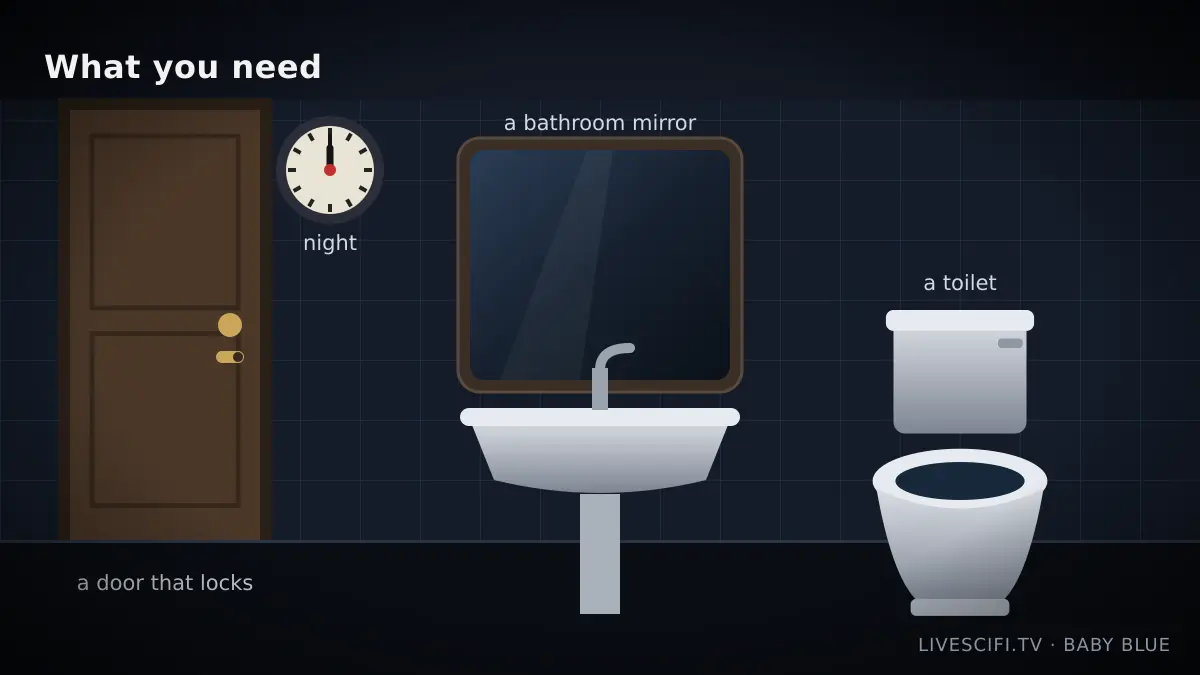
- A bathroom you can make completely dark
- A wall mirror
- A toilet
- A door that locks
- Night time (some players insist on midnight or 3 a.m.)
Step 1: Go in alone at night and lock the door
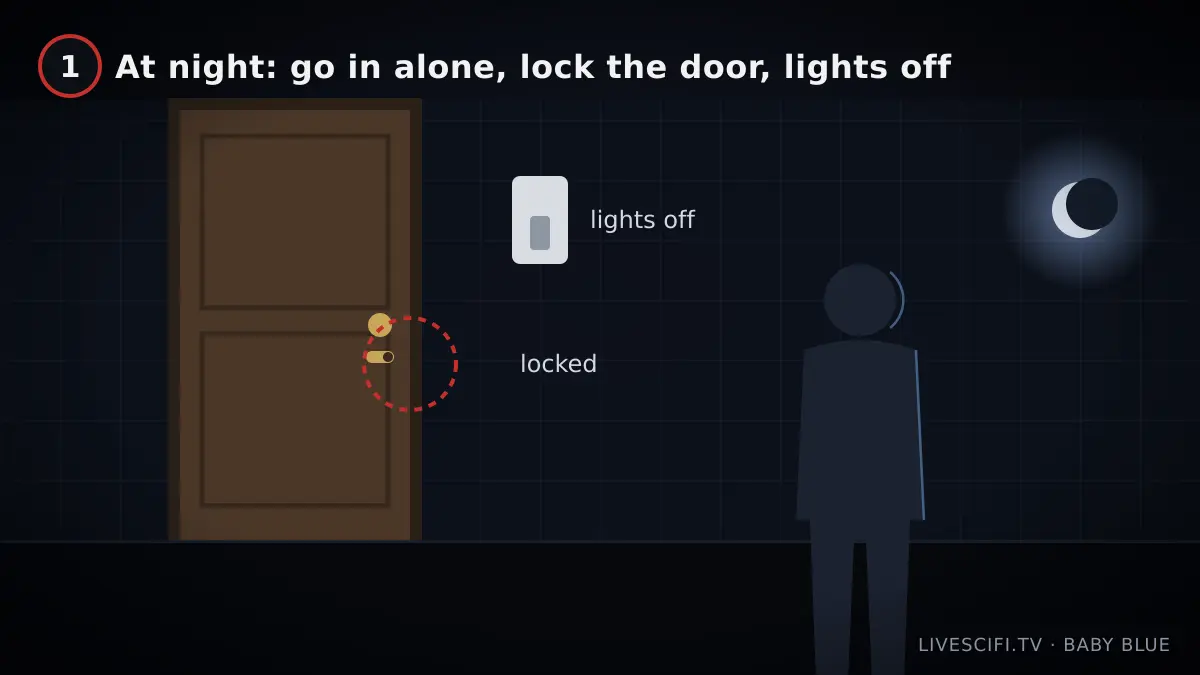
Wait until night. Go into the bathroom by yourself, lock the door behind you and turn off every light. The legend says the game only works in the dark and only when the player is alone. If you are playing the two-player version, both of you go in.
Step 2: Face the mirror and cradle your arms
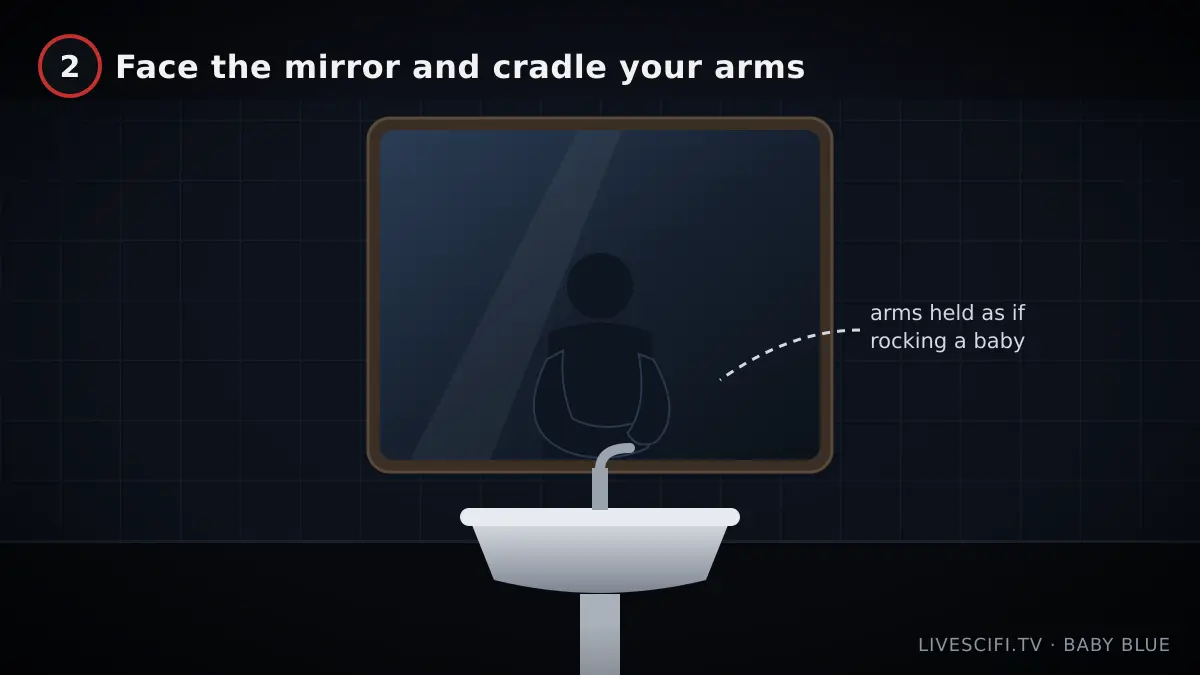
Stand in front of the mirror and look at your reflection. Bring your arms up in front of your chest as if you were holding a newborn: one arm under the head, the other under the body. Keep your eyes on the mirror.
Step 3: Rock your arms and chant 13 times
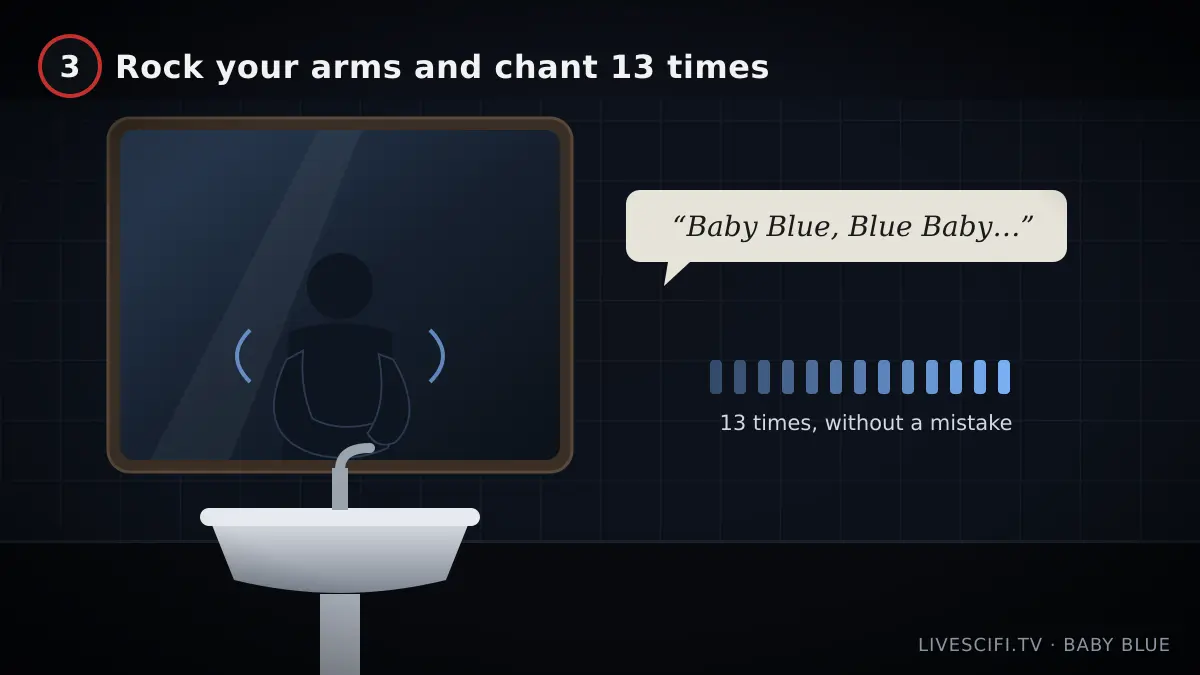
Gently rock your arms back and forth and say “Baby Blue, Blue Baby” 13 times. The chant has to be said without a mistake; if you stumble, most versions say to start the count again. Some players say “Blue Baby, Baby Blue” instead, and both are treated as correct.
Step 4: Wait for the weight
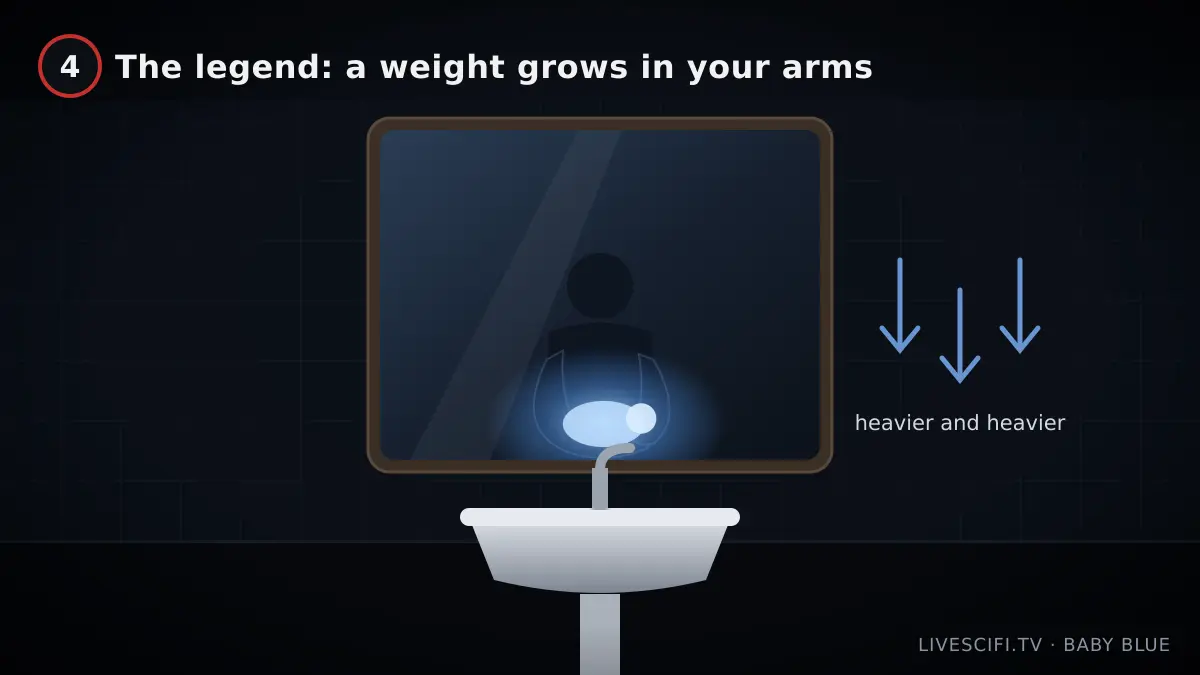
This is the part people film. The legend says that somewhere during the chant your arms begin to feel heavy, as though a baby is lying in them, and that the weight grows with every repetition. Some tellings say you will feel small scratches on your forearms. Do not look away from the mirror.
Step 5: Drop it in the toilet and flush
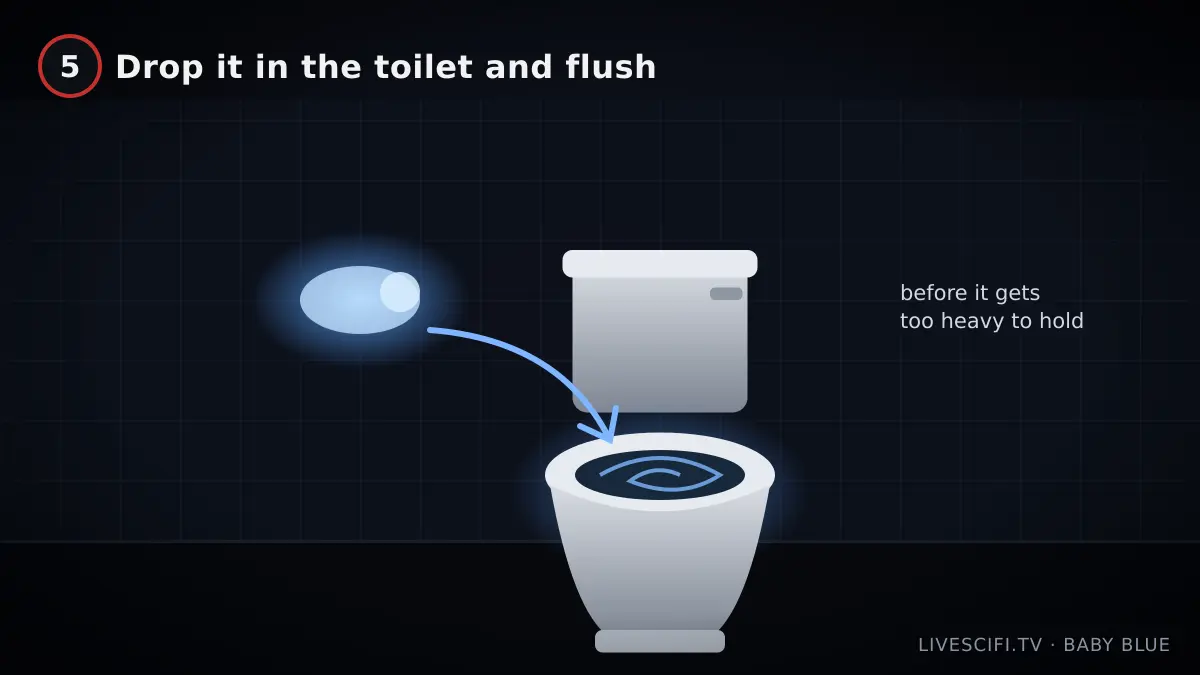
Before the weight becomes too heavy to hold, open your arms over the toilet, let it fall and flush. Speed is the whole game. The story says that a player who holds on too long cannot let go at all.
Step 6: Leave the bathroom
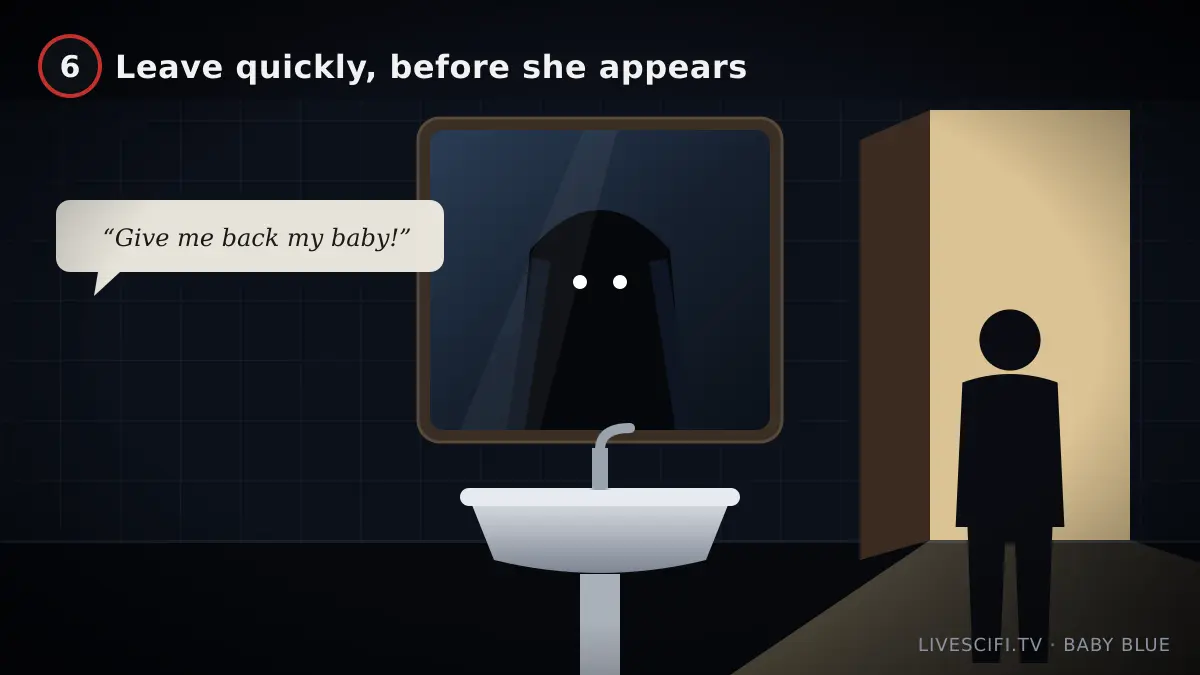
Unlock the door and get out. If you make it out, you have won. If you are too slow, the legend says a hideous woman appears in the mirror screaming “Give me back my baby!”, and that the glass may crack with her voice. In the darkest versions, a player still holding the baby when she arrives does not leave.
The two-player version
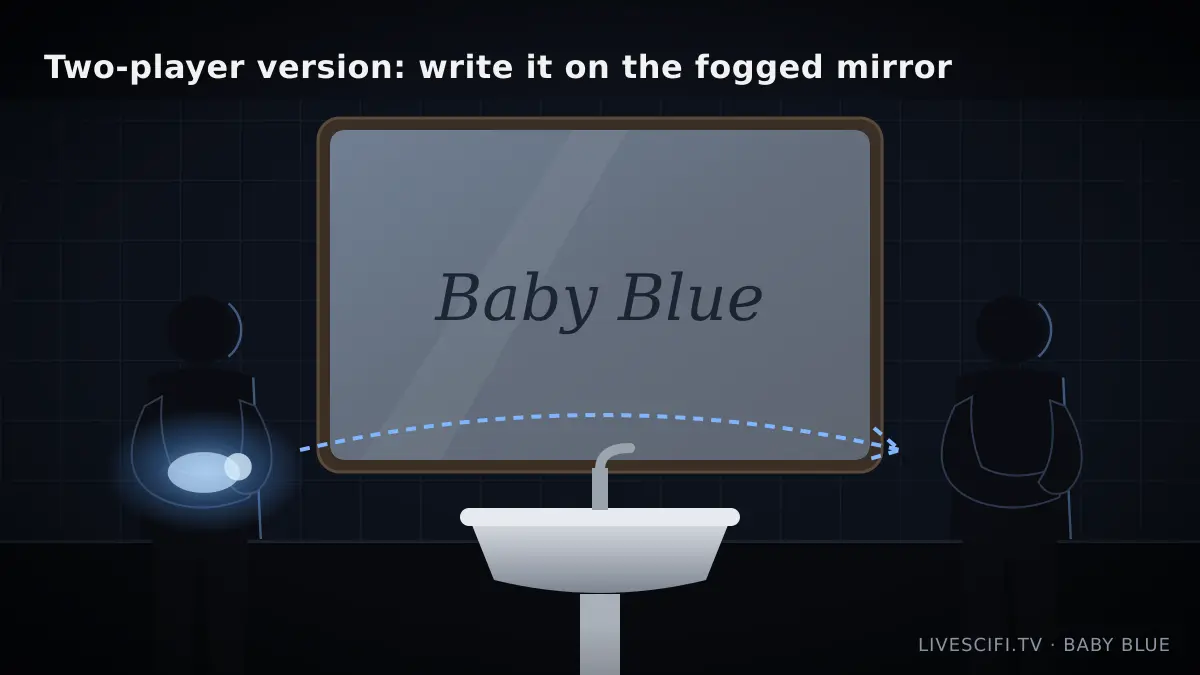
A second way to play needs two people. Both go into the dark bathroom and fog the mirror, either with their breath or by running hot water. One of them writes “Baby Blue” in the fog with a fingertip. The first player then cradles their arms and waits for the weight. When they feel it, they pass the invisible baby to the second player, who passes it back, and so on, with the baby said to grow heavier each time it changes hands. Whoever is holding it when it becomes too heavy has to drop it in the toilet and flush before both players run.
Safety notes
- A pitch-dark bathroom with a locked door is an easy place to slip, hit your head or panic. Keep the floor dry and know where the lock is.
- Never lock a younger child in a dark room as part of the game, and never dare someone who is already frightened.
- If you feel dizzy or panicked, stop, turn on the light and leave. Nothing in the rules is worth a fall.
- Mirrors can break. Do not hit or lean on the glass.
What Happened When LiveSciFi Played Baby Blue
Tim Wood’s 2018 broadcast treated Baby Blue as an experiment more than a dare. The question was simple: if the legend says something answers when you call it, will a voice recorder pick anything up? He used a Panasonic IC digital recorder, asked questions out loud, and played each file back live so that viewers could hear the result at the same moment he did.
The stream opens at 0:00 with Tim explaining the legend to the live audience: stand before a mirror, cradle your arms as if holding a child, and call Baby Blue by name. At 5:15 he makes a first recording with the IC recorder and plays it back, setting a baseline for what the room sounds like when nothing is being asked.
The living room mirror
The first full attempt, starting at 8:35, takes place in front of a large living room mirror, which is not where the legend says to play. Tim recites the chant and asks whether Baby Blue is present and whether it wants to be comforted, questions closer to an EVP session than to the playground version of the game. On playback of the recordings he labels File 06 and File 07, faint whispers can be heard under his own voice. Tim interprets two of them as replies: “Yes, I’m blue” and “she’s not here.”
The bathroom mirror
Viewers in the live chat pointed out that Baby Blue, like Bloody Mary, belongs in a bathroom. At 26:15 Tim moves the experiment there, sets the recorder beside the sink, and repeats the ritual the traditional way, saying the name 13 times directly into the bathroom mirror with his arms cradled.
The playback at 32:40 is the centre of the episode. In the bathroom recording Tim reports several faint voices that were not heard in the room at the time, and interprets them as the words “baby,” “sorry” and “I’m here.” He closes the stream at 35:10 by going back over what was captured in both rooms.
What the episode offers is the audio: short whispered sounds, recorded in two different rooms, that Tim hears as answers to the questions he asked. Watch the playback and judge the files for yourself.
Key moments with timestamps
- 0:00 Introduction to the Baby Blue mirror ritual
- 5:15 First IC recorder attempt and playback
- 8:35 Living room mirror ritual and EVP recording session
- 26:15 Bathroom mirror Baby Blue ritual, 13 repetitions
- 32:40 Playback of the bathroom recording and the voices Tim hears
- 35:10 Wrap-up and reflection on Baby Blue
Watch the full Baby Blue episode on LiveSciFi. More recordings like these are collected in the LiveSciFi EVP evidence archive and on the mirror experiments page. If you want another ritual game with full instructions, see One Man Hide and Seek.
Is the Baby Blue Challenge Real?
The game is real in the sense that people really play it, and many of them really do feel something. The harder question is what they are feeling. Hold your arms out in a cradle for a minute or two and they will begin to ache and feel heavy with nothing in them at all. Add darkness, a locked door and a story that tells you to expect a weight, and the sensation is easy to read as a baby.
The mirror does its own work. Staring at a face in very dim light for a minute or more makes it appear to distort, darken or change into someone else’s, an effect psychologists have studied under the name “strange-face illusion.” It is the likely engine behind Bloody Mary, and Baby Blue uses the same conditions.
Whispered voices on a recorder have ordinary explanations as well. Small recorders pick up breathing, clothing, plumbing and sounds from other rooms, and the human brain is very good at hearing words in noise once it has been told what to listen for. That is why LiveSciFi describes the words on these files as what Tim interprets them to be, and why the playback is shown unedited so viewers can decide for themselves.
There is no record of a real child or a real death behind Baby Blue. The story has no source that anyone has been able to trace, and it behaves like every other mirror legend: the rules stay, the details drift.
Baby Blue and Bloody Mary: How They Compare
The two games share a room, a mirror, the dark and a chant with a fixed count. In both, the player calls something by name and waits for the mirror to answer. Many tellers join them into one story by making Baby Blue the child Bloody Mary lost.
The difference is what the player has to do. Bloody Mary is passive: you say the name and watch. Baby Blue gives the player a job and a deadline. You are holding something, it is getting heavier, and you have to act before someone comes for it. That ticking clock is what makes Baby Blue feel more frightening to many people who have tried both, and it is why the game films so well: the audience can see the moment the player decides to let go.
Frequently Asked Questions
What is the Baby Blue challenge?
It is a mirror game played alone in a dark, locked bathroom. The player cradles their arms, chants “Baby Blue, Blue Baby” 13 times, and is said to feel the weight of an invisible baby, which must be dropped into the toilet and flushed before its mother appears in the mirror.
How do you play the game Baby Blue?
At night, go into a bathroom alone, lock the door and turn off the lights. Face the mirror, hold your arms as if rocking a baby and chant “Baby Blue, Blue Baby” 13 times. When your arms feel heavy, drop the weight into the toilet, flush and leave quickly.
What are the rules for Baby Blue?
Play at night, alone, with the door locked and the lights off. Say the chant 13 times without a mistake, do not look away from the mirror, and let go of the baby before it becomes too heavy. The game ends when you flush and leave the room.
What is the Blue Baby story?
The legend says the baby belongs to a woman who appears in the mirror, screaming for her child, if the player holds on too long. Many versions say she is Bloody Mary. No real person or event has been linked to the story.
Is Baby Blue a real story?
No source for it has ever been found. It is an urban legend passed between children and teenagers, most likely an offshoot of Bloody Mary, and it spread worldwide through TikTok.
Why do you say Baby Blue, Blue Baby 13 times?
Thirteen is the traditional unlucky number, and several versions of Bloody Mary also use a count of 13. A fixed number gives the game a clear moment when something is “supposed” to happen.
What happened when LiveSciFi played Baby Blue?
In an April 28, 2018 live stream, Tim Wood recorded faint whispers that he interpreted as “Yes, I’m blue” and “she’s not here” in the living room, and “baby,” “sorry” and “I’m here” in the bathroom. The bathroom playback begins at 32:40.
Sources
- “Playing Baby Blue – BABY BLUE CAUGHT ON TAPE,” Tim Wood, LiveSciFi live broadcast, April 28, 2018
- The Most Dangerous Games: Blue Baby, Baby Blue, Lucia Peters, The Ghost in My Machine, 2017
- Baby Blue, USC Digital Folklore Archives
- Alan Dundes, “Bloody Mary in the Mirror: A Ritual Reflection of Pre-Pubescent Anxiety,” Western Folklore, 1998