
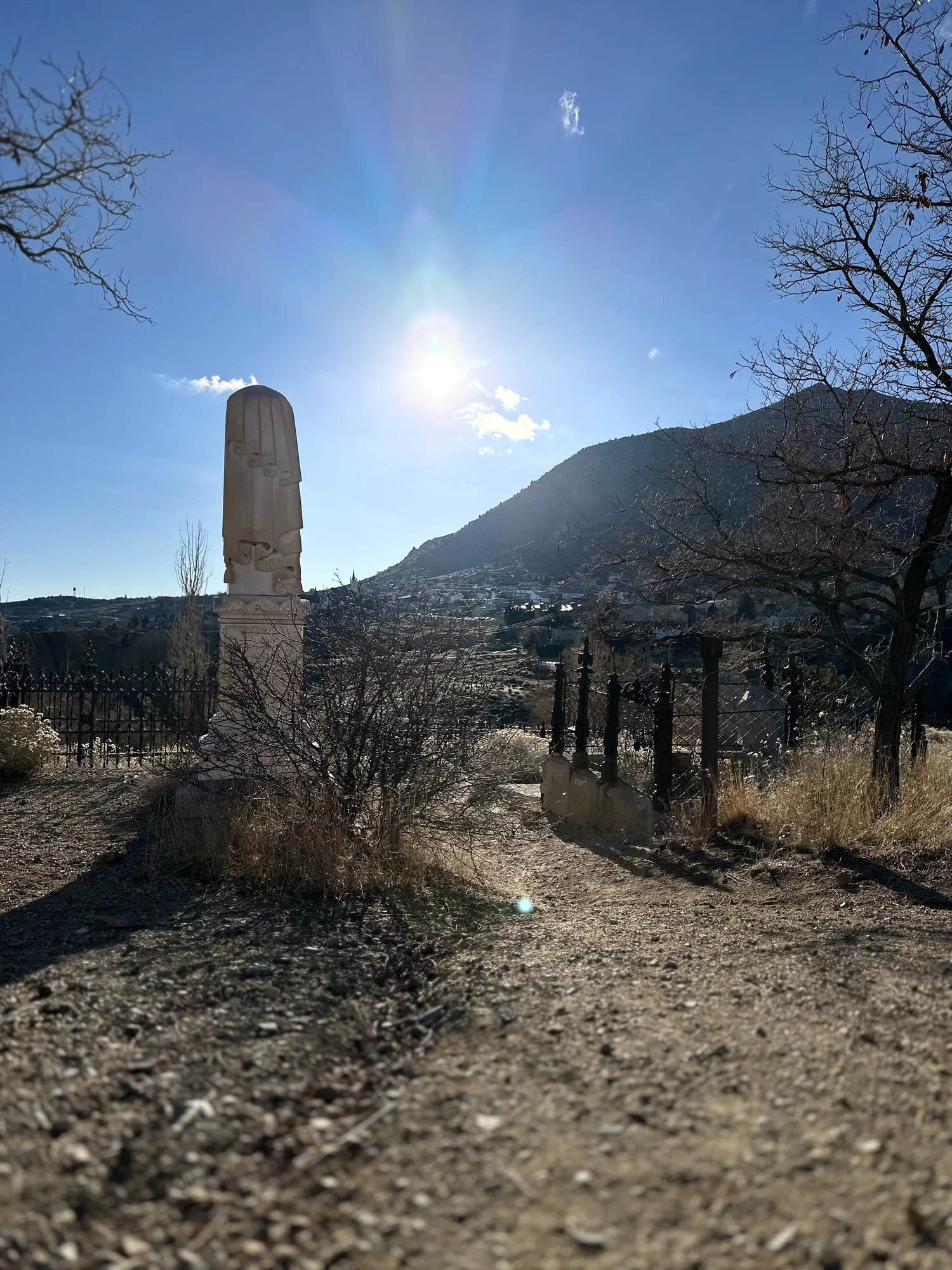
Silver Terrace Cemetery is a Comstock-era burial ground on the steep, windswept hillside at the north end of Virginia City, Nevada. It isn’t one cemetery but a collection of about 14, laid out on terraces by the fraternal orders, churches and civic groups of the 1860s silver boom. Several thousand Comstock residents are buried here, most of them miners, shopkeepers and their families, and most of the graves date to before 1920.
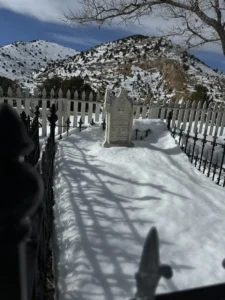
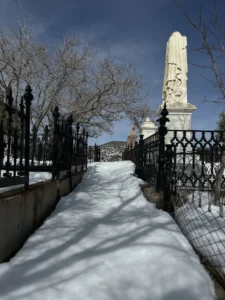
Walking the terraces today, you see what made the cemetery famous across the West: Italian marble headstones, carved wooden markers, and Victorian iron fences around nearly every plot, all looking down on the town those people built. It is also one of the places in Virginia City most often linked to ghost stories.
Silver Terrace Cemetery at a Glance
| Name | Silver Terrace Cemetery |
|---|---|
| Location | Virginia City, NV |
| Year built | Laid out in the 1860s; first burial 1867 |
| Built by | Fraternal orders, churches and civic groups of Virginia City |
| Type of site | Group of about 14 terraced Victorian cemeteries |
| Historic designation | Within the Virginia City Historic District (National Historic Landmark, 1961) |
| Present use | Open daily, sunrise to sunset; free; cared for by the Comstock Cemetery Foundation |
| LiveSciFi investigations | N/A |
| Photographs | 48 photos from the location |
See 48 Silver Terrace Cemetery, Virginia City location photos
History of Silver Terrace Cemetery
Before Silver Terrace: Virginia City’s First Cemeteries
Silver Terrace wasn’t Virginia City’s first cemetery, and it wasn’t meant to be. When prospectors struck the Comstock Lode in 1859, nobody expected the camp to last, and the dead were buried wherever there was open ground. The first formal cemeteries on the Comstock were started at Gold Hill that same year (Comstock Cemetery Foundation).
In 1860 Virginia City laid out Mount Pleasant Cemetery on Flower Hill, and a Catholic cemetery followed shortly after on Scorpion Hill. A plat dated August 25, 1860 describes one of them as ten acres. In all, more than a dozen small cemeteries appeared around the town and in Gold Hill during those first years (Travel Nevada).
There was a reason they were scattered so far out. The town’s founders placed the earliest cemeteries well away from the ore veins, since no one wanted graves sitting on top of silver that might be mined (historical marker). But in a town of steep hills and hard winters, carrying a coffin to a distant hillside was miserable work. The remote cemeteries proved too hard to reach, and Virginia City went looking for a site closer to town.
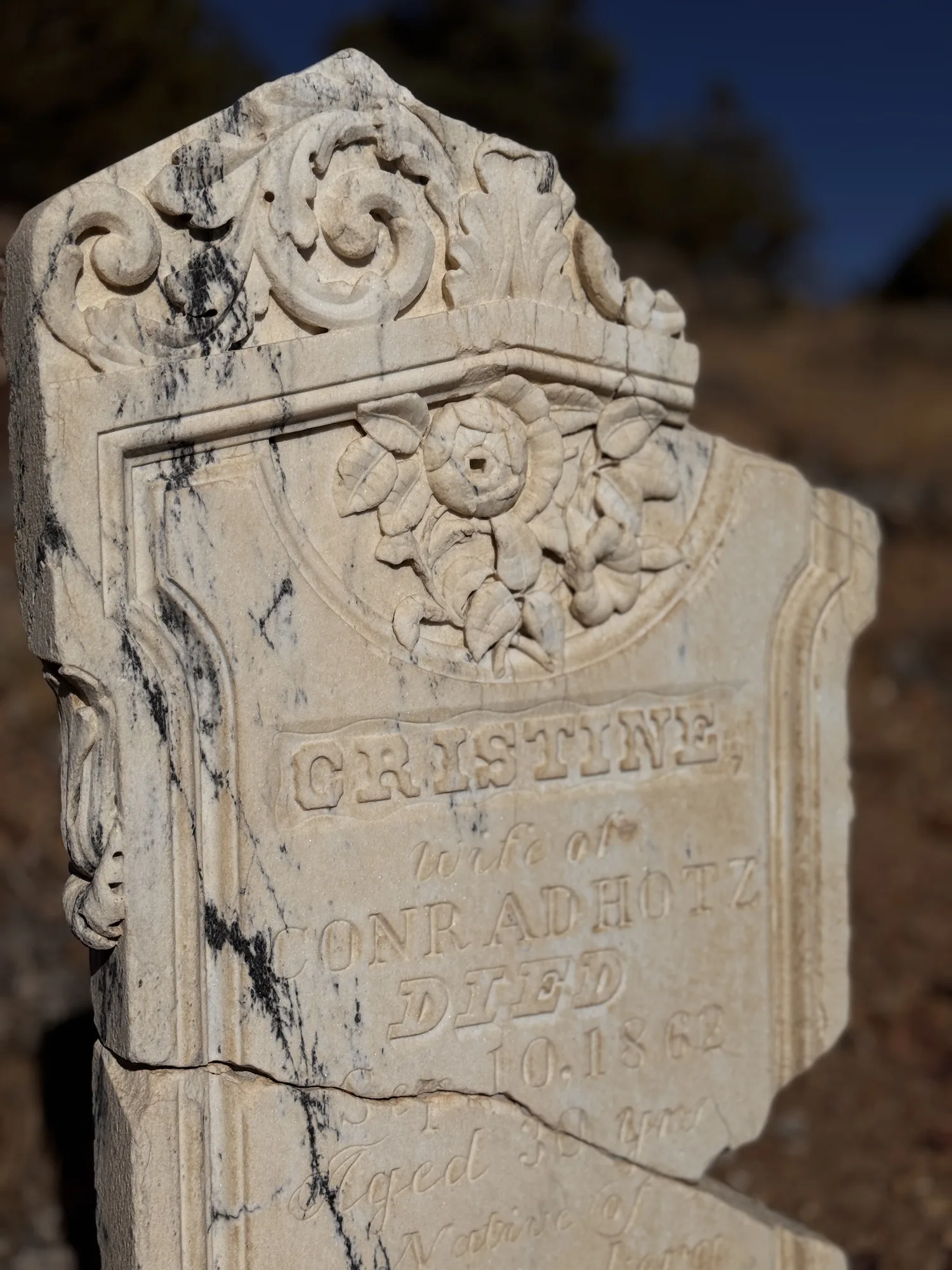
County Surveyor S. H. Marlette surveyed the Silver Terrace site in December 1861 and January 1862: 25¾ acres, plus a tiny extra parcel. The first burial took place in 1867, and most of the graves from the town’s earlier cemeteries were moved up the hill to join it (Find a Grave). That’s why some stones here are older than the cemetery itself. Cristine Hotz’s headstone, for example, records her death in 1862.
Why It’s a Cemetery of Cemeteries
Victorian towns commonly divided their dead by belonging: lodge, church, trade, class and race. Each group bought its own plat on the hill, fenced it and buried its members and their families there. The sections included (National Park Service, Travel Nevada):
- Masons. Two Masonic lodges were meeting in Virginia City before Nevada became a state in 1864 (Nevada Ghost Towns & Mining History). Their section is marked by the gate with Masonic symbols at the cemetery entrance.
- Independent Order of Odd Fellows. Like most lodges of the era, the Odd Fellows worked as a mutual-aid society. Dues covered sick pay for members and a decent burial, which mattered in a town where a mine accident could leave a family with nothing.
- Knights of Pythias. A newer fraternal order founded during the Civil War that spread quickly through Western mining towns.
- Pacific Coast Pioneers. A society for people who had come west in the early gold and silver rush years, proud to be buried among others who arrived first.
- Virginia City (Exempt) Firemen. Volunteer firefighters were heroes in a town built of wood. “Exempt” firemen were veterans who had earned their place through years of service, and their companies buried their own.
- Improved Order of Red Men. A fraternal society, popular in the late 1800s, that borrowed Native American imagery for its rituals.
- Wilson & Brown. The section run by the Wilson & Brown funeral house, one of the town’s undertakers (Find a Grave).
- Roman Catholic. The Catholic section served Virginia City’s large Irish and other Catholic immigrant community, the parish of St. Mary in the Mountains.
- City and County. Public ground for those who belonged to no lodge or church, or couldn’t afford a plot.
The divisions show how Comstock society saw itself. A miner’s lodge membership often said more about his life than his job did, and it followed him into the grave.
A Garden in the Desert
Around 1867 the terraces were planted like a Victorian garden cemetery. Locust or elm trees lined the main paths, gravity-fed irrigation kept them alive, and white picket fences surrounded each cemetery. Visitors called it the most beautiful burial ground in Nevada.
Who Is Buried Here
Life on the Comstock was short. Harsh winters, disease and dangerous work in mines that reached 3,000 feet deep kept life expectancy low. Most of the people buried at Silver Terrace were immigrants who came for the silver boom, and few adults were born in Nevada. Many headstones still name birthplaces across Europe and the eastern United States. There are no famous names here, only the miners, shop owners and families who built the Comstock. Estimates put the number of burials at around 4,000 to 5,000.
How People Died on the Comstock
The headstones at Silver Terrace rarely say how someone died, but the history of the mines below fills in the story.
- Heat. The deepest shafts, like the Combination Shaft at 3,250 feet, reached about 130°F at the bottom. Miners worked roughly 30 minutes at a time before retreating to “ice rooms” to cool down (Las Vegas Review-Journal).
- Fire. On April 7, 1869, a fire 800 feet underground in the Yellow Jacket Mine at Gold Hill filled the Yellow Jacket, Kentuck and Crown Point mines with smoke and gas. About 37 miners died, and some were never brought out. Read more in our article on the haunted Gold Hill Hotel and the Yellow Jacket mine fire.
- Accidents. Falls, cave-ins and runaway cages were constant. One 1880 study counted 12 accidents in the Comstock mines in August 1877 alone, killing six men and injuring nine (John A. Church).
- Dust. Rock dust scarred miners’ lungs with silicosis, then called miner’s consumption. One Nevada geologist said most of the men “never made it to their 40s.”
- Disease and winter. Disease spread fast through a crowded town at more than 6,000 feet, and long, harsh winters hit children hardest.
- The Great Fire of 1875. On October 26, 1875, fire destroyed about three-quarters of Virginia City and left around 2,000 people homeless.
Walk the terraces with that in mind and the rows of young men and small children’s graves make sense. Silver Terrace is, in a very real way, the other half of the Comstock story: the cost of the silver that built San Francisco.
Decline and Preservation
As the mines played out after 1878, Virginia City emptied and the cemetery fell into neglect. Theft and vandalism took a heavy toll, and only about 1,300 headstones remain. Restoration began in the 1960s under Father Meinecke of St. Mary in the Mountains, and today the nonprofit Comstock Cemetery Foundation looks after the grounds as an outdoor museum. Stealing from or damaging the graves has been a felony in Nevada since 2005, and the site is monitored around the clock.
What to Look For at Silver Terrace
- The Masonic gate. The main entrance carries Masonic symbols, a reminder that the lodges built and ran much of the hill.
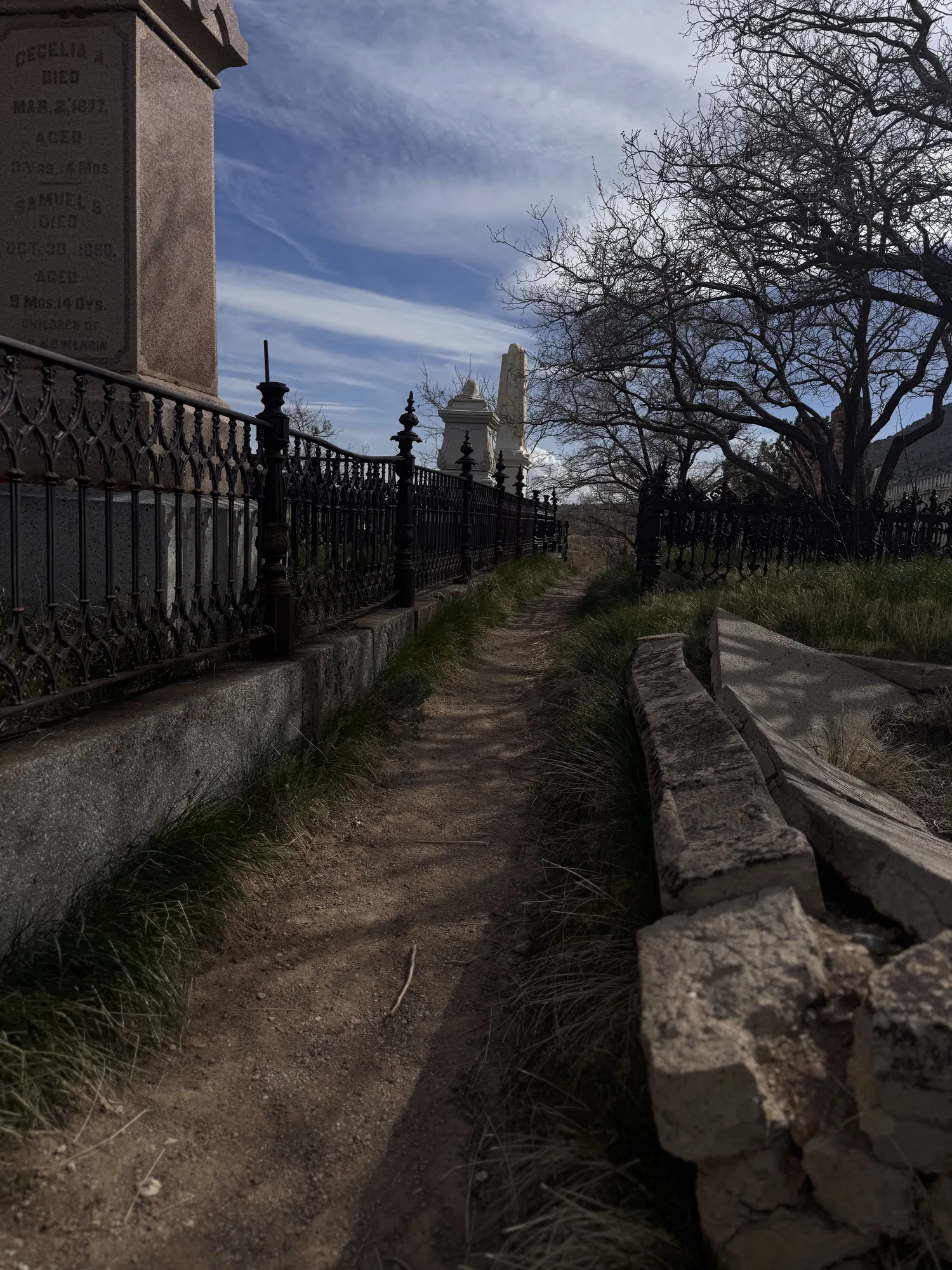
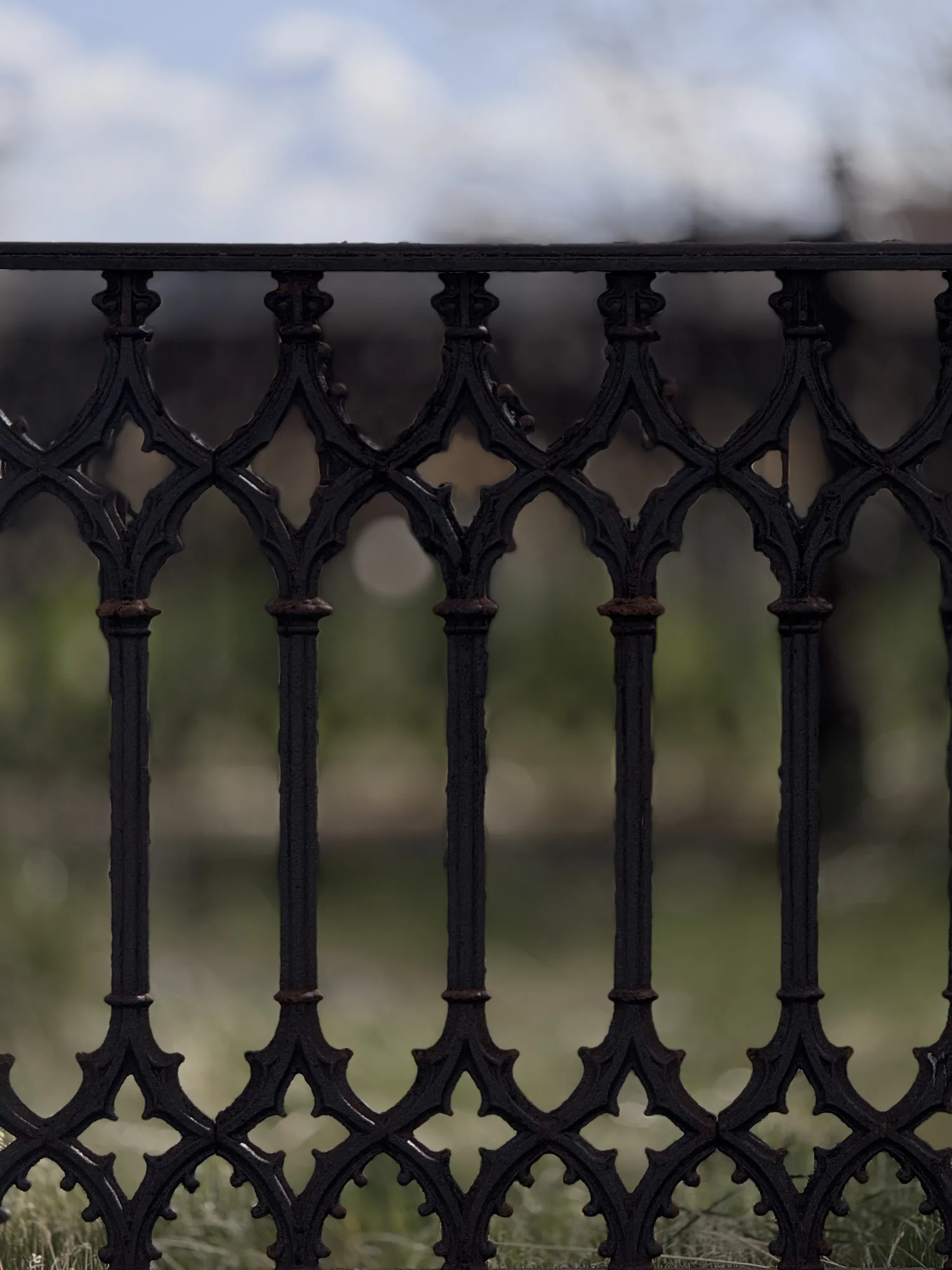
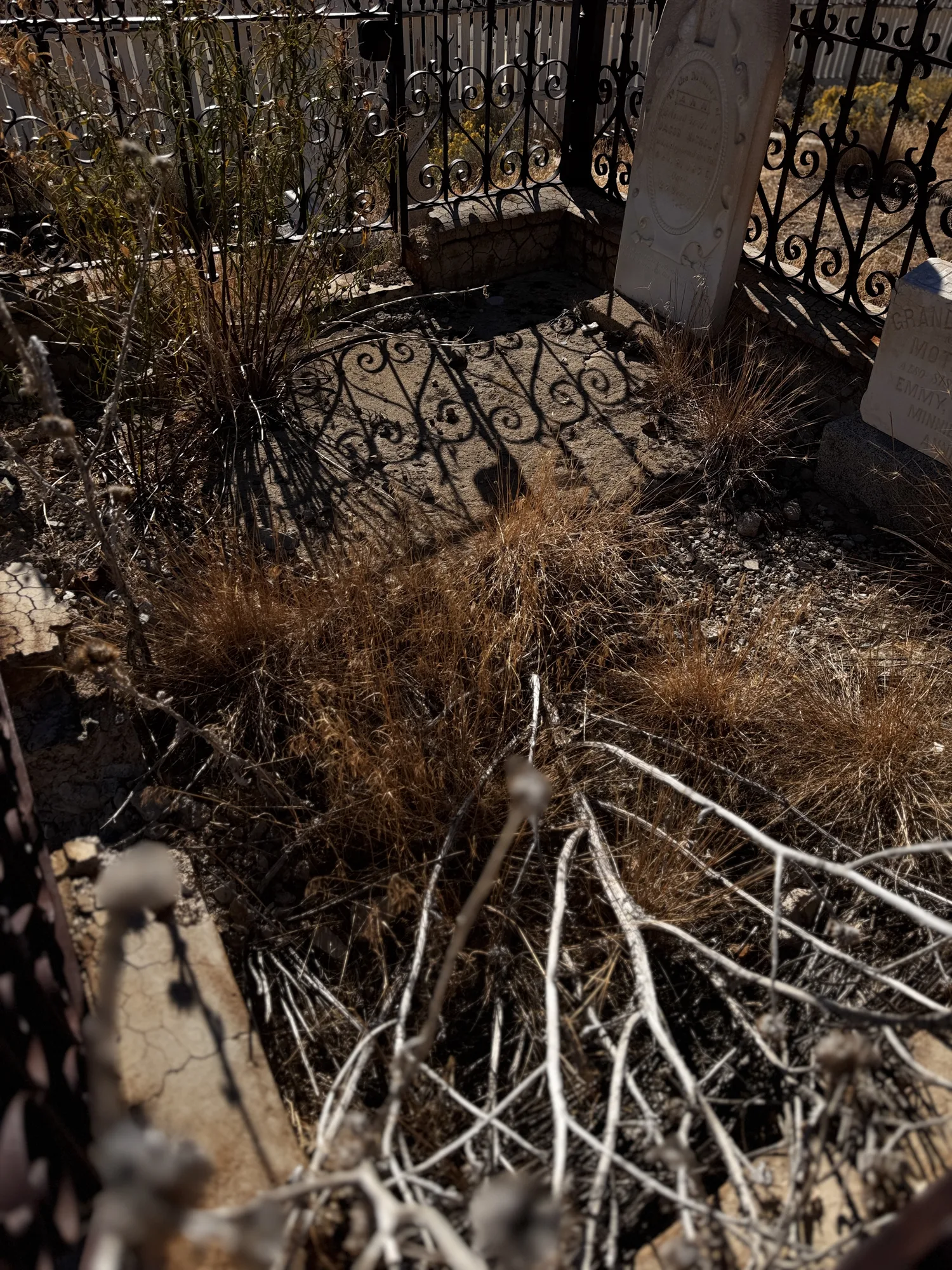
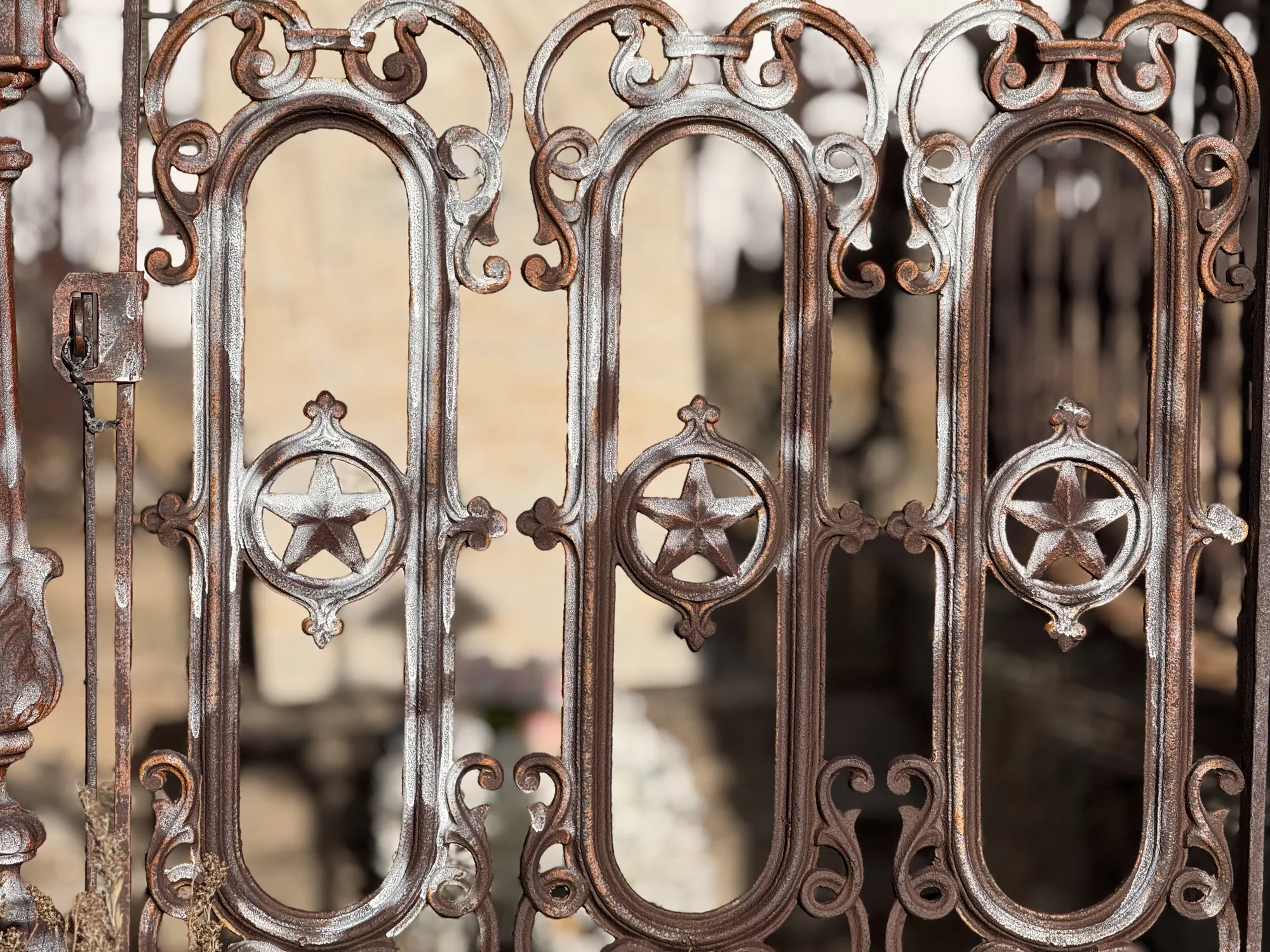
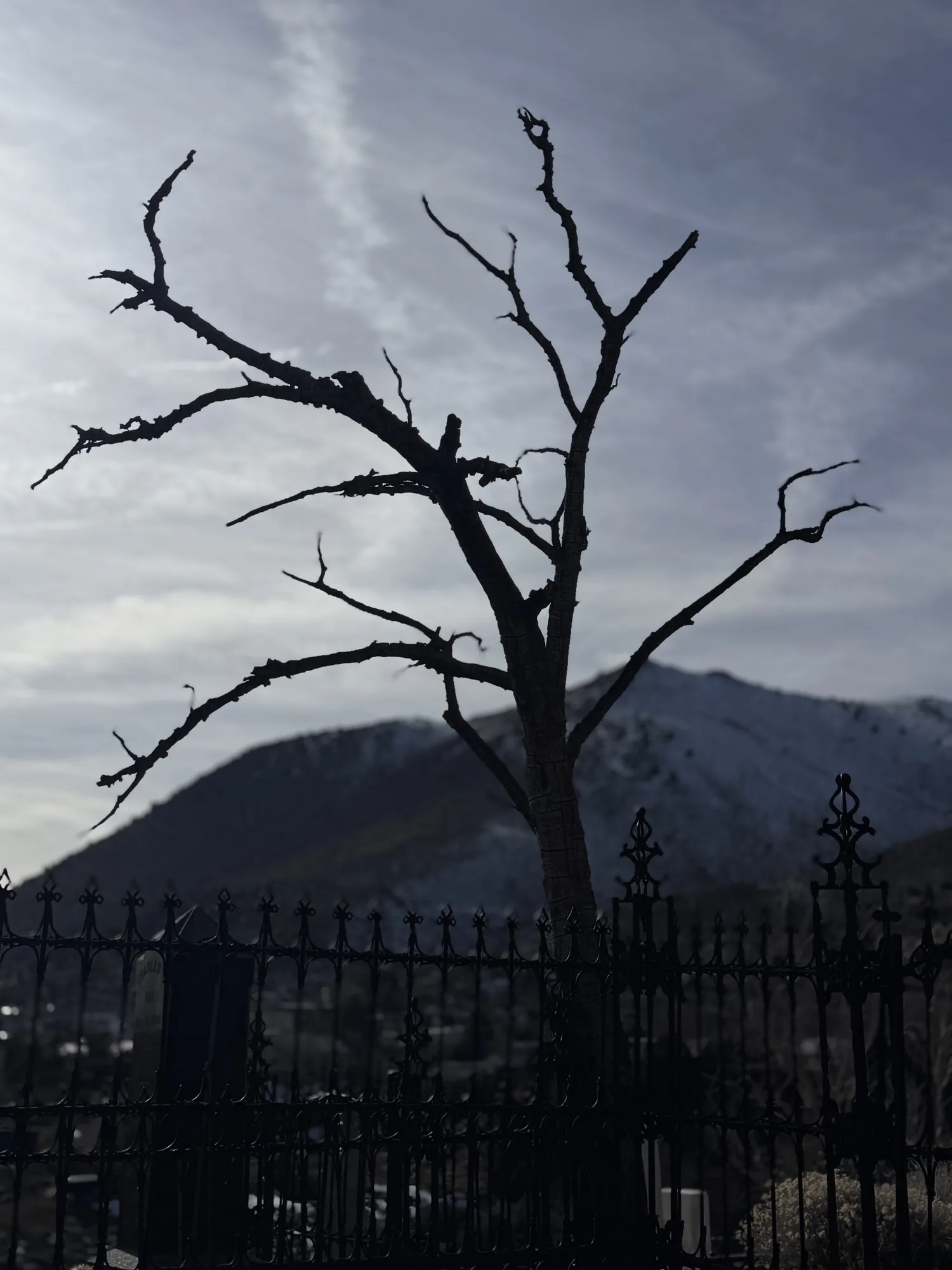
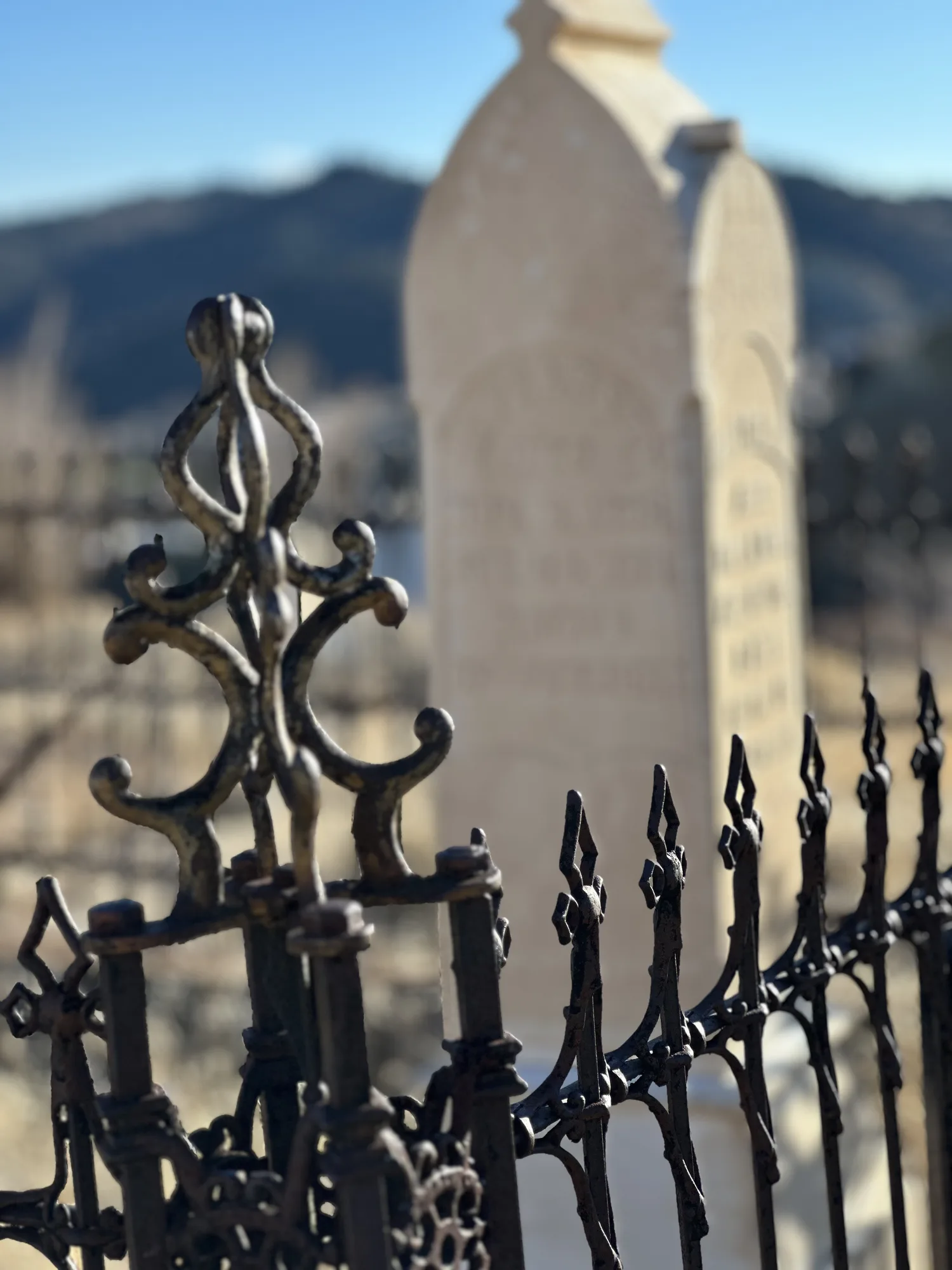
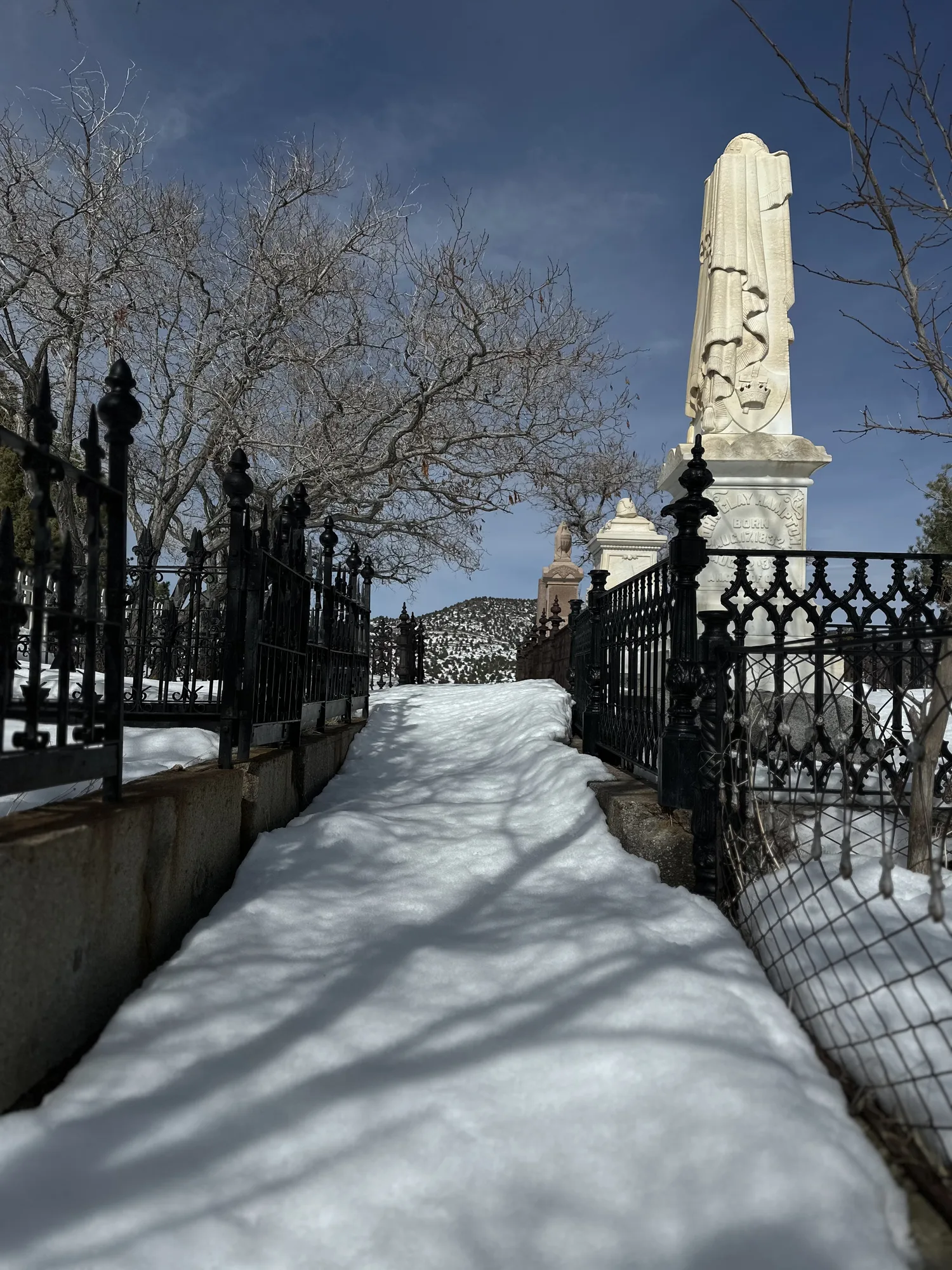
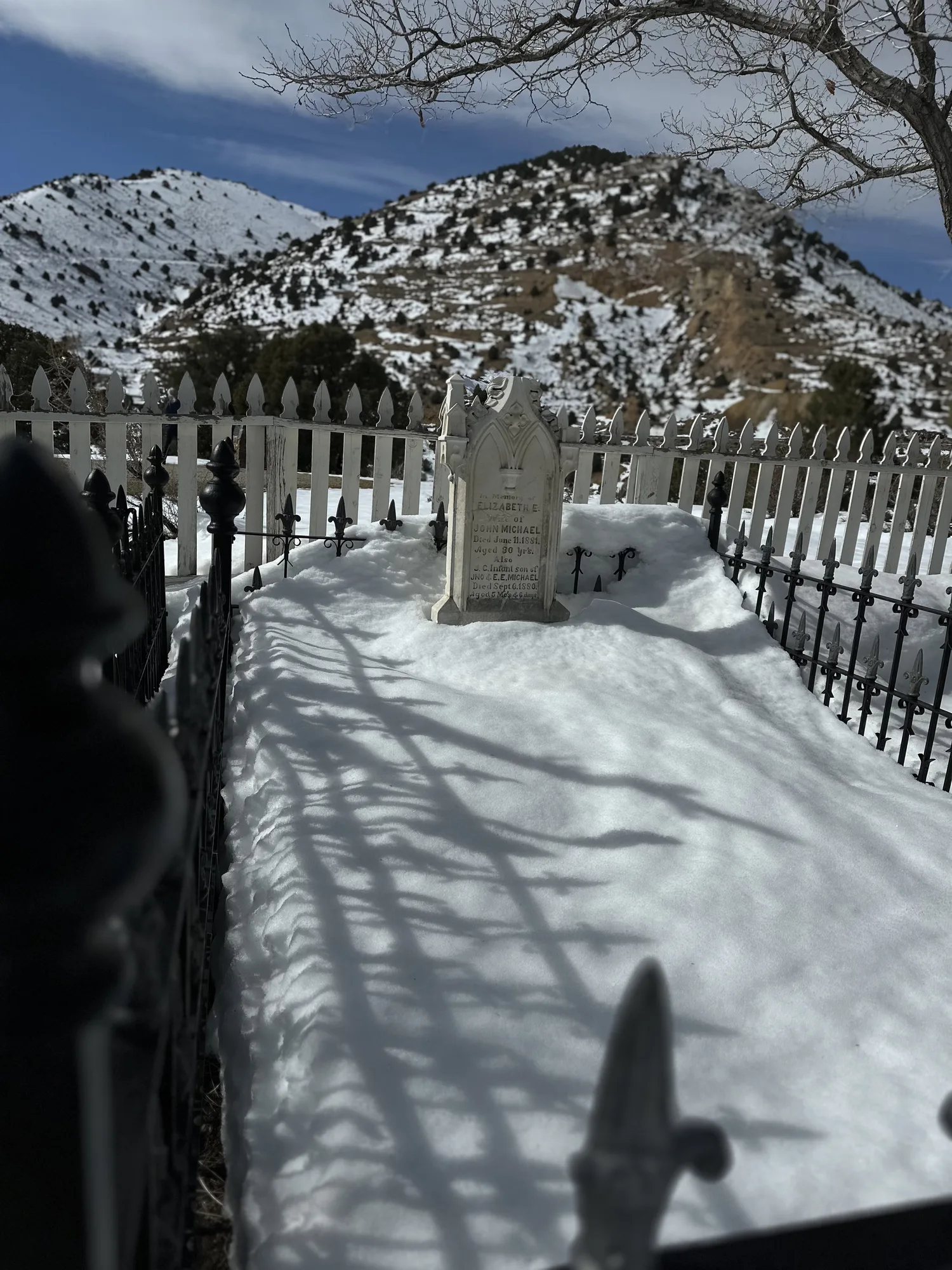
- Victorian iron fences. Nearly every plot is fenced or bordered, many with ornate cast iron that was costly to haul up to the Comstock.
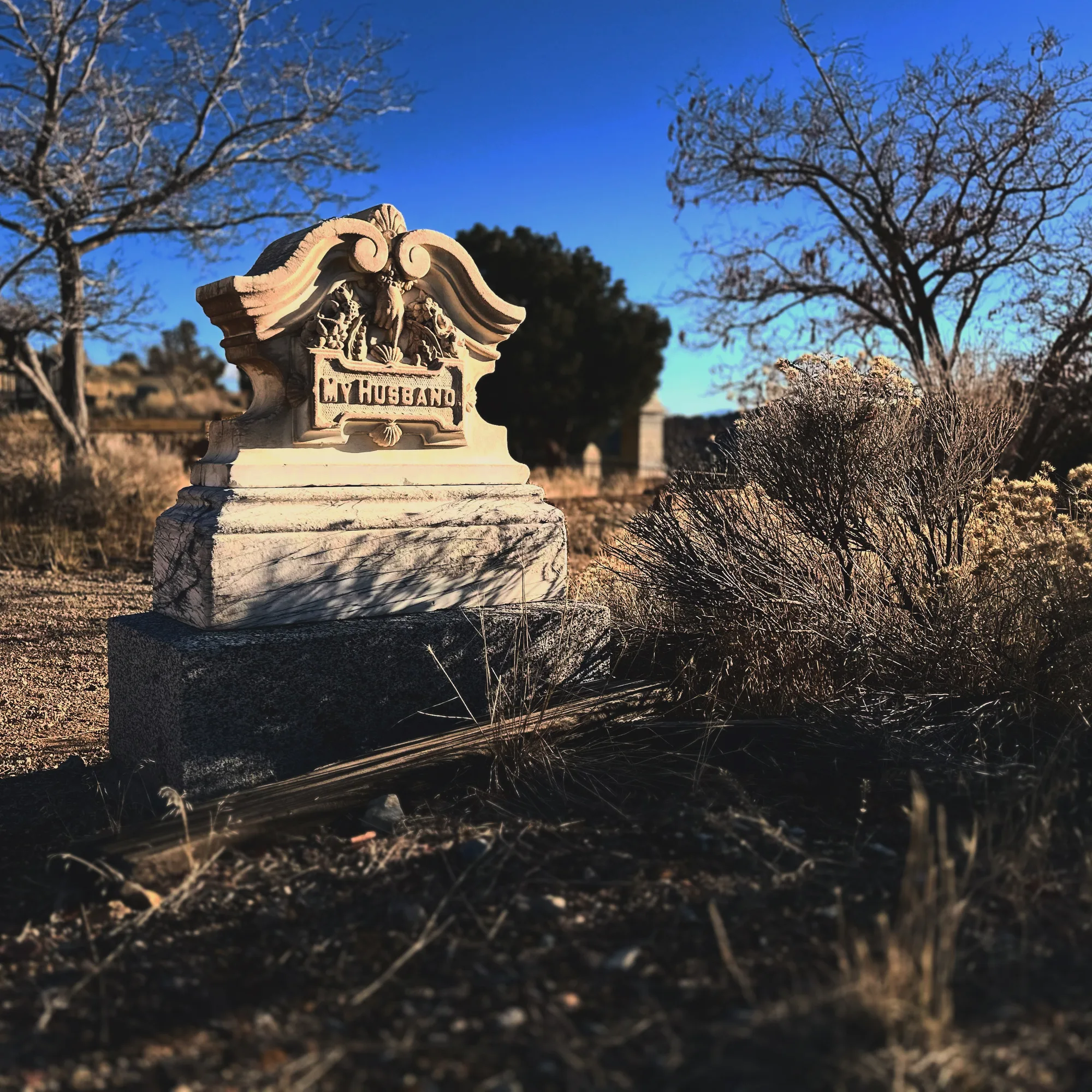
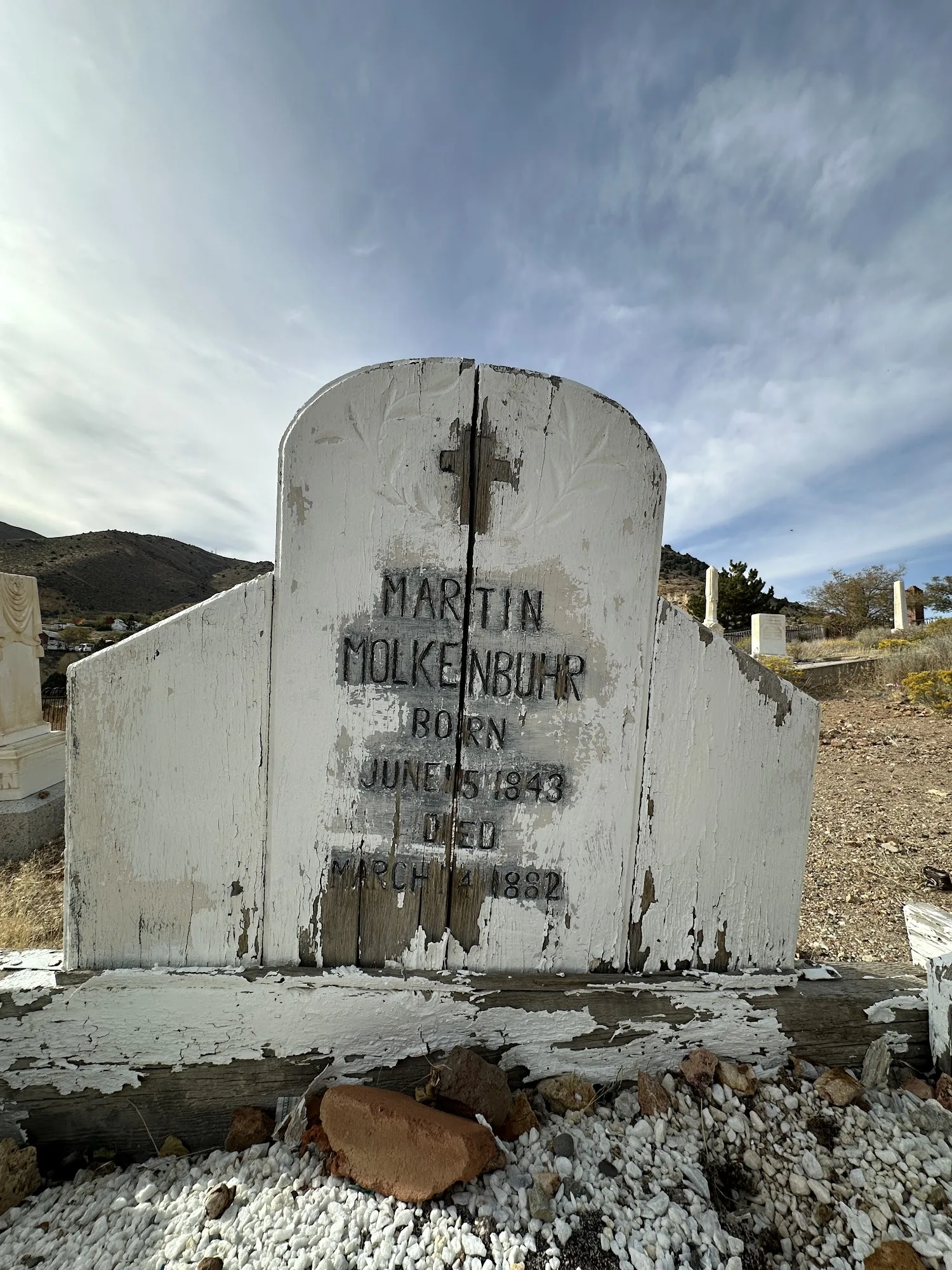
- Markers of every kind. Italian marble, cut stone, carved wood and metal sit side by side, showing who could afford what.
- Birthplaces carved in stone. Many inscriptions record where the person was born, from across Europe to the eastern states.
- Children’s graves. Small markers throughout the terraces are a sobering record of how many Comstock children didn’t survive.
- The view. From the top terraces you look south over Virginia City, the mine dumps and the Sierra beyond.
- The caretaker’s cottage. A miner’s cabin built around 1870 was moved here and is being restored by the Comstock Cemetery Foundation as a visitor and research center.
Graves to Find at Silver Terrace
These are some of the stones we photographed on our visits. Each one is a small piece of Comstock history.
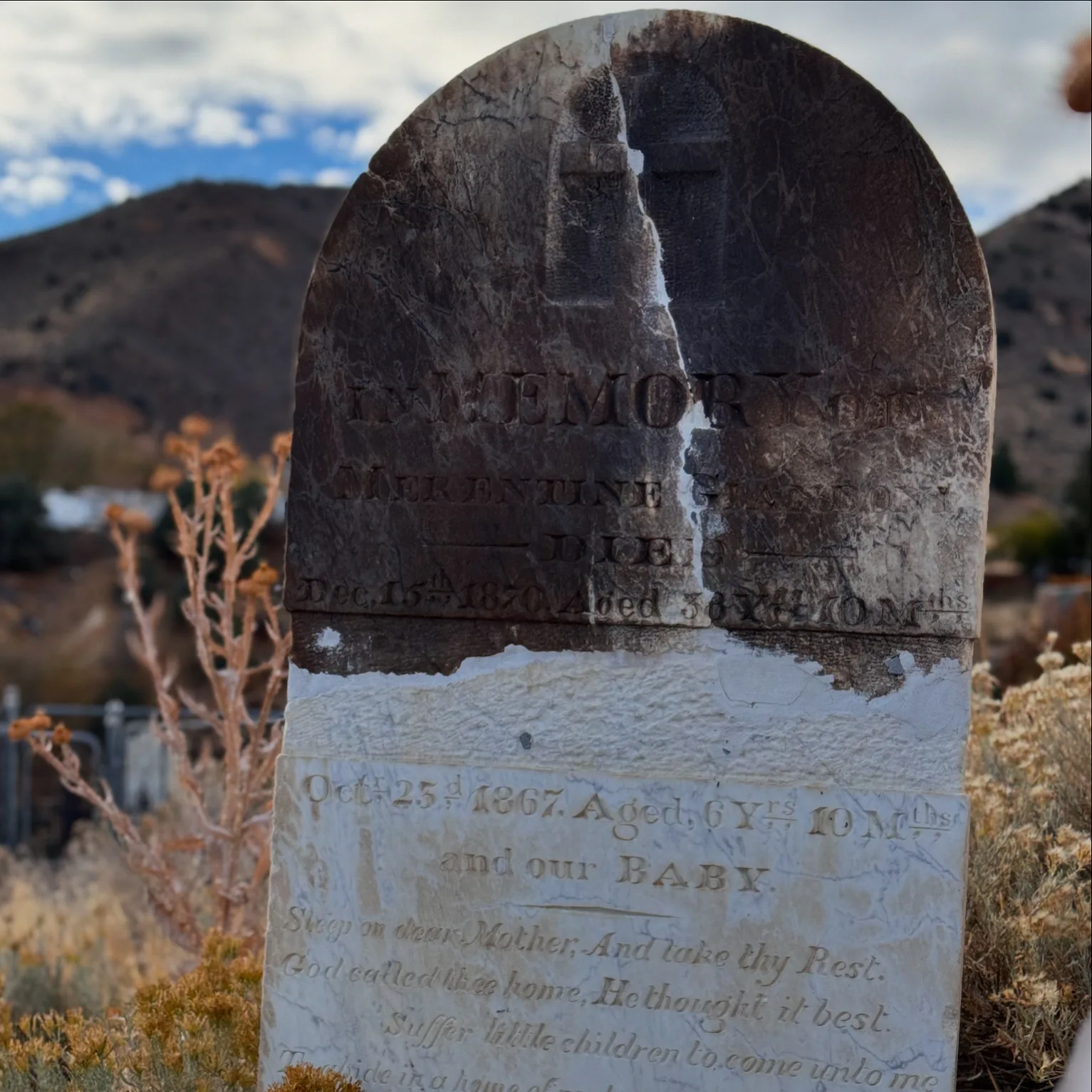
- Cristine Hotz (died 1862). The cracked marble stone for Cristine, wife of Conrad Hotz, predates the cemetery itself, so her grave was likely moved here from one of the earlier town cemeteries.
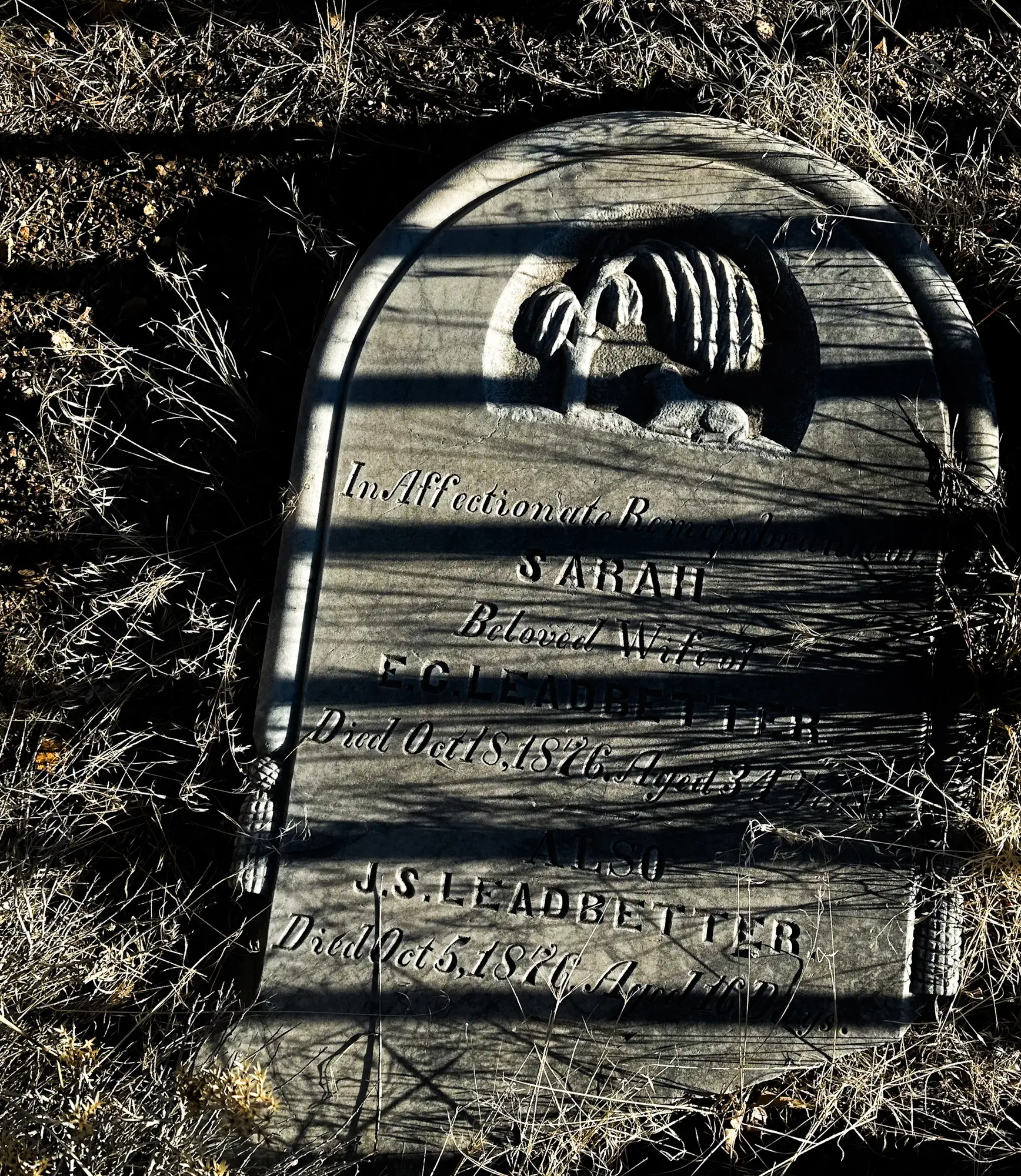
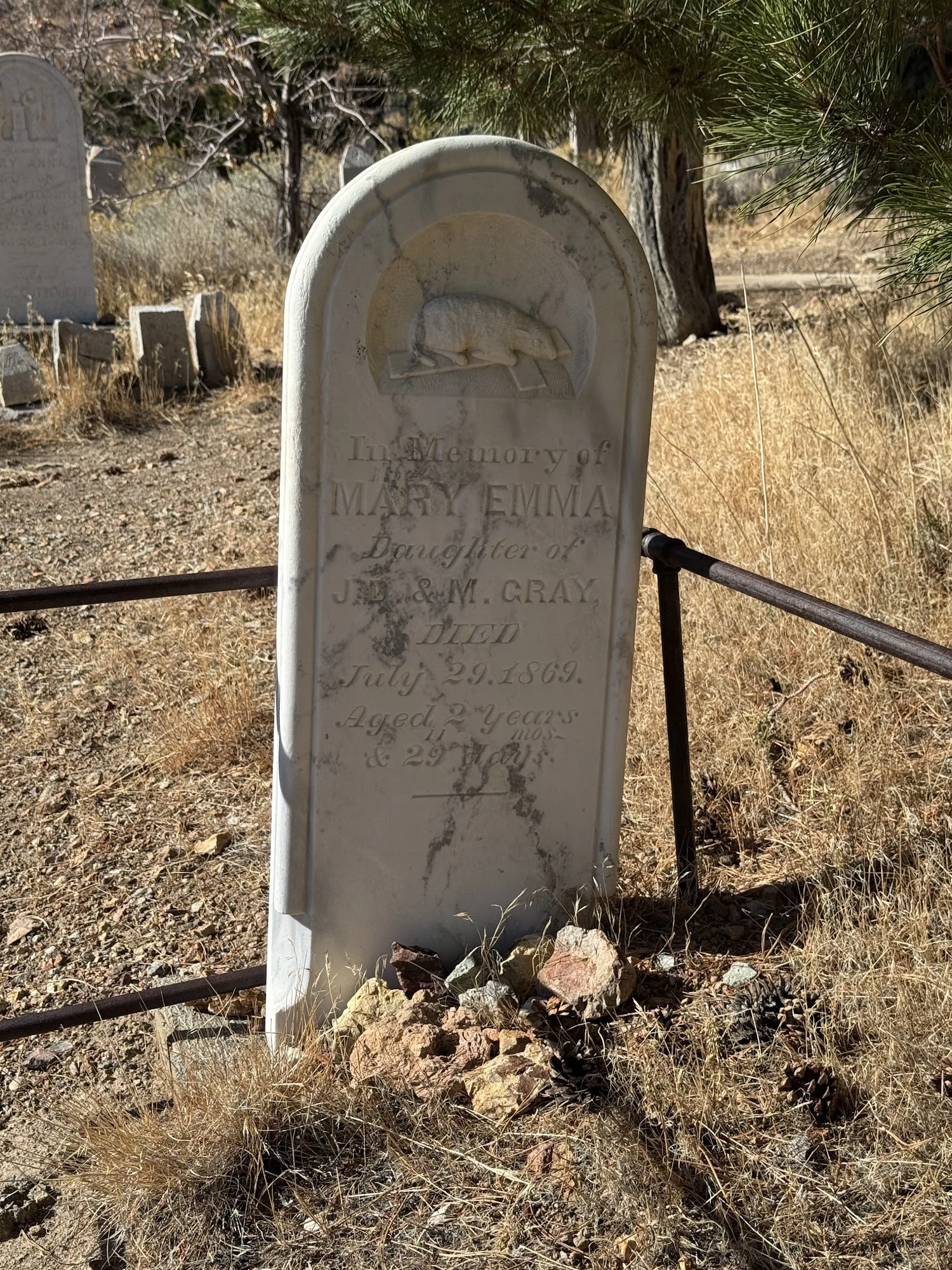
- Mary Emma Gray (died 1869). An arched marble headstone carved with a resting lamb, a common symbol on children’s graves, inside a pipe enclosure.
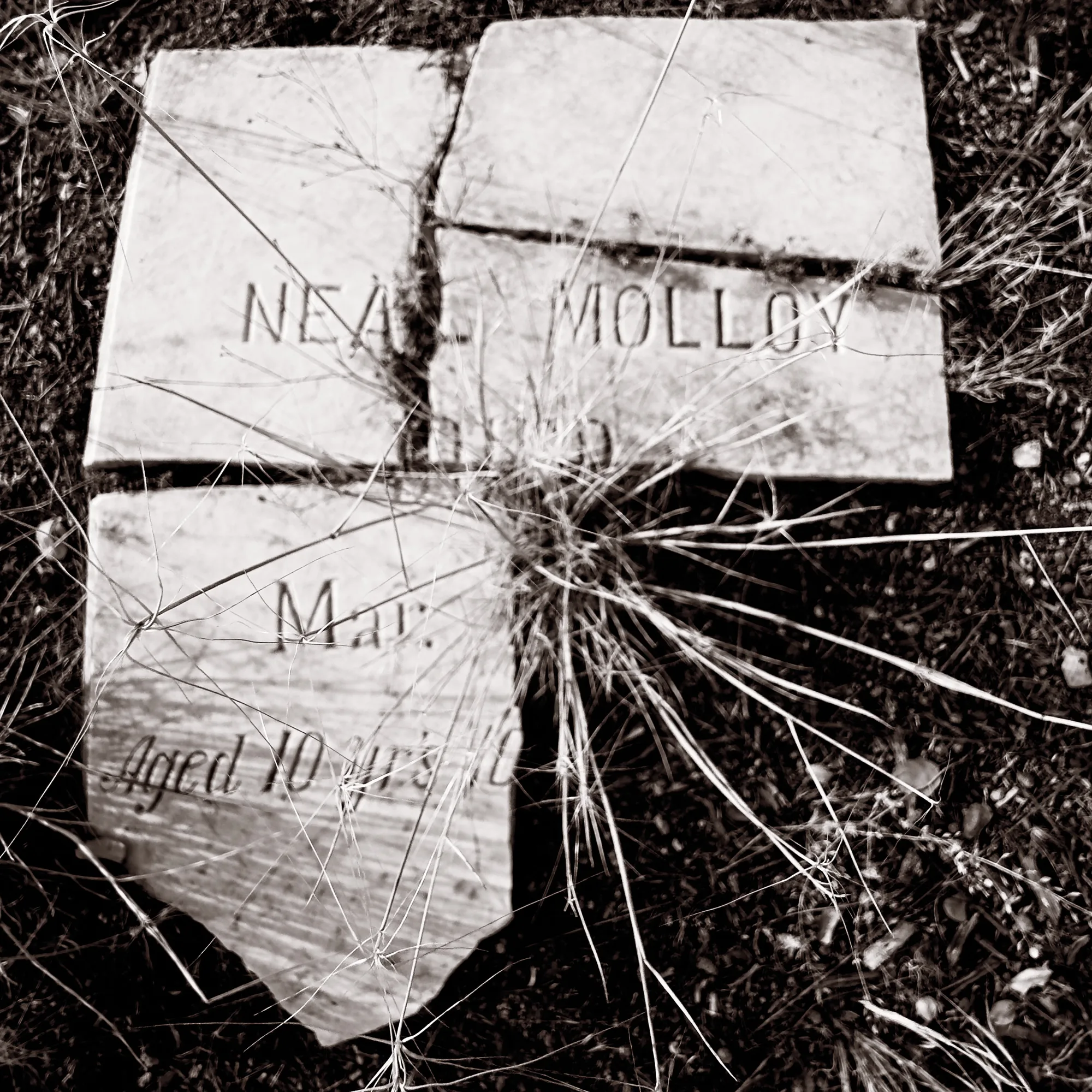
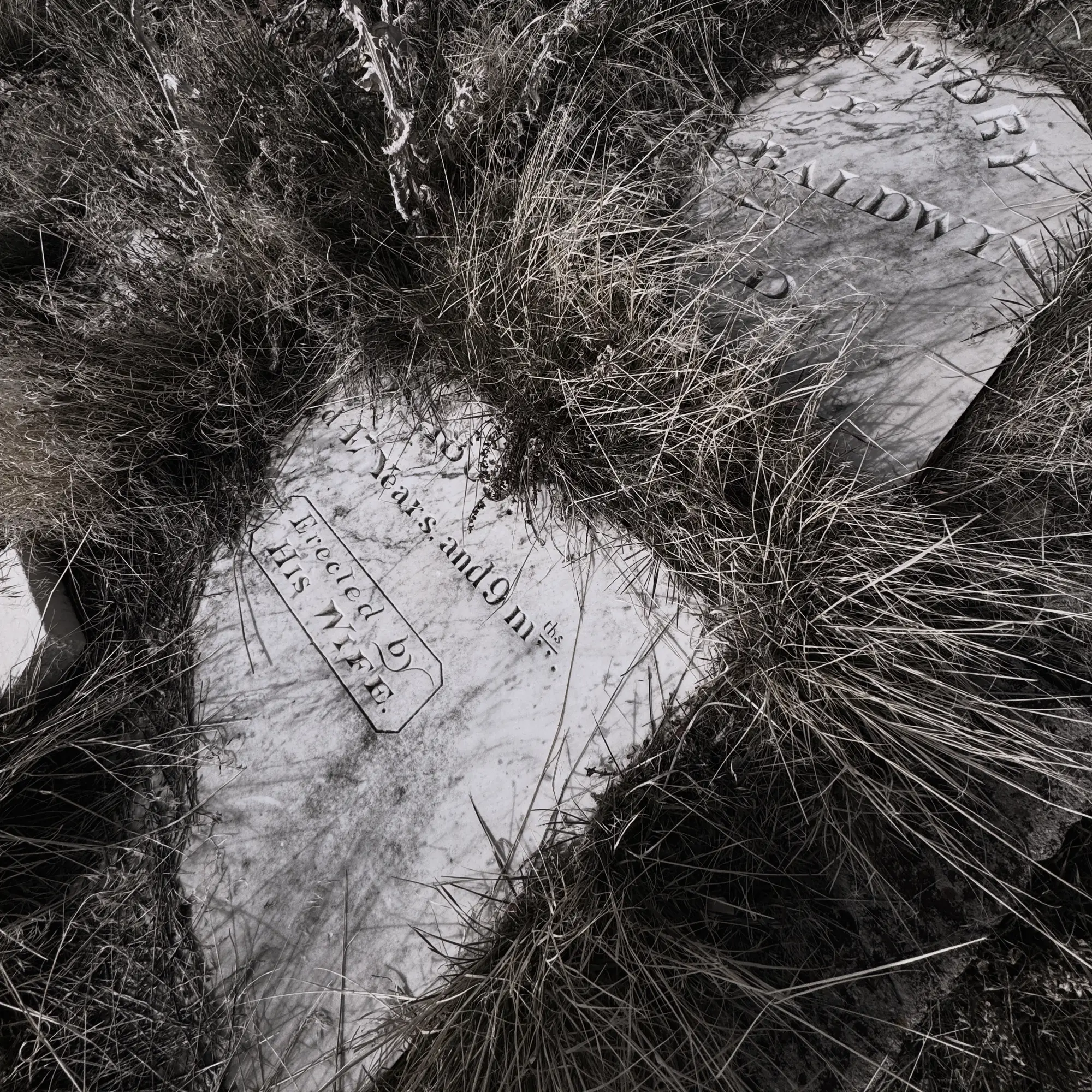
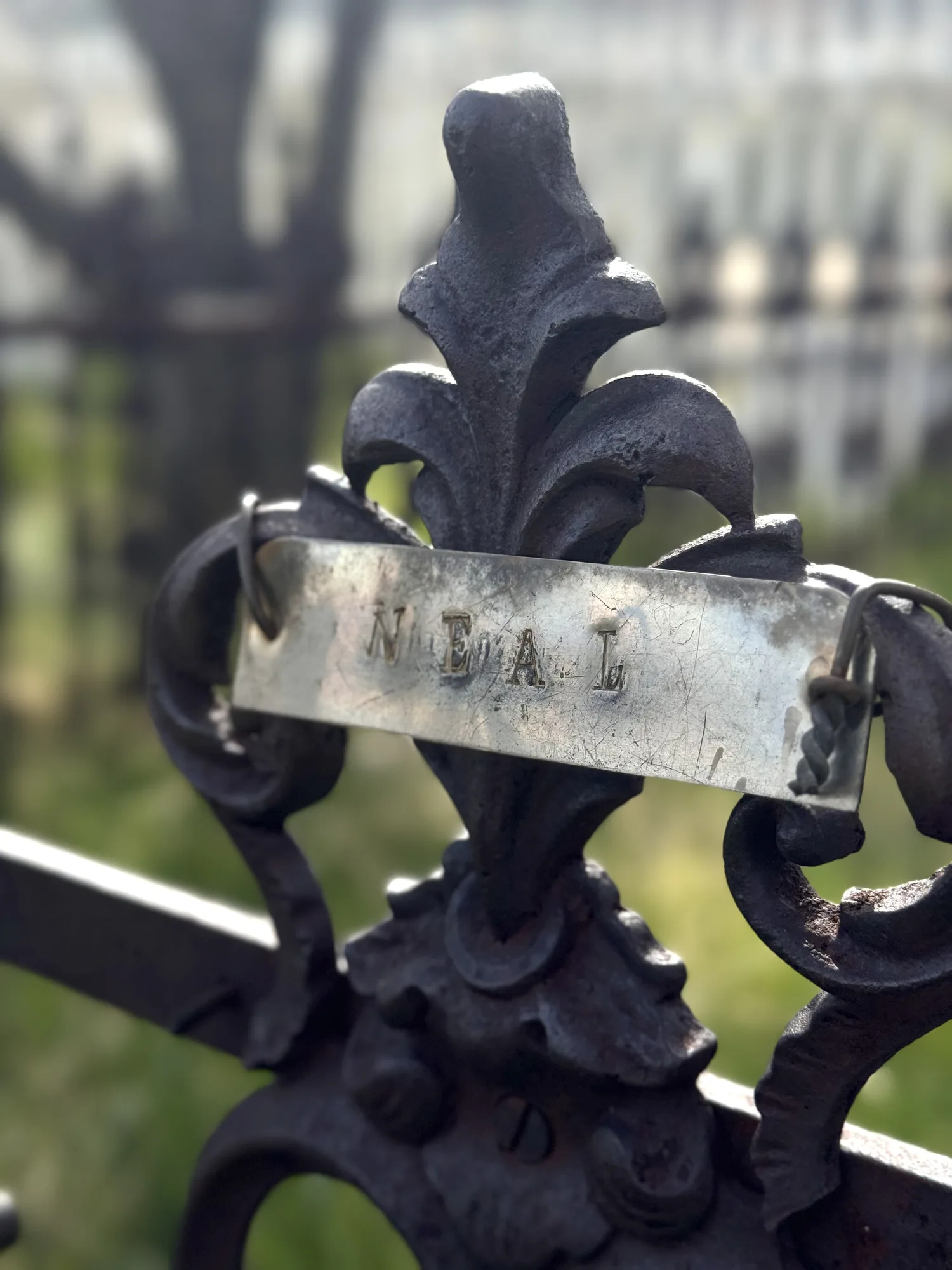
- Neal Molloy, aged 10. His headstone now lies in broken pieces in the dirt.
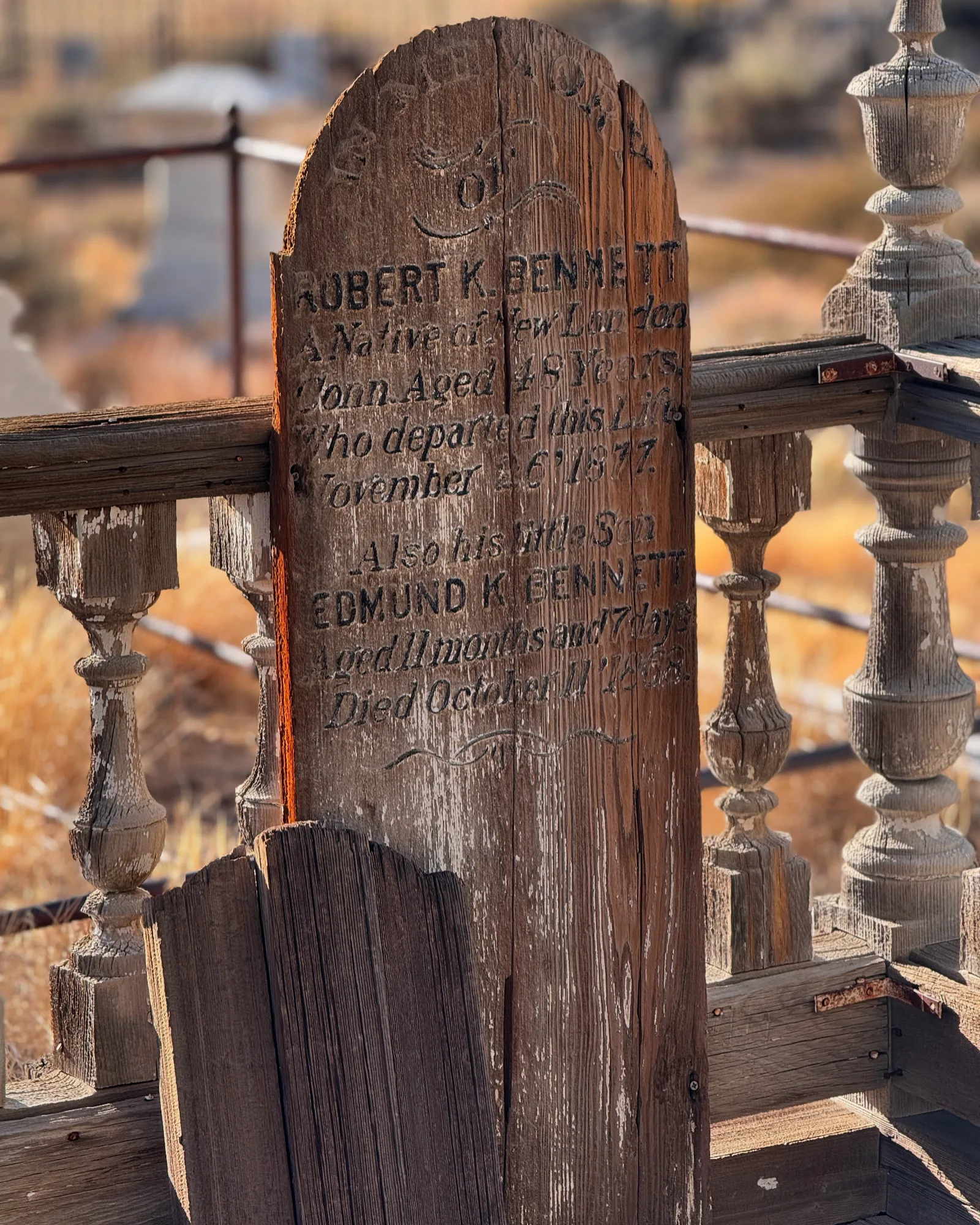
- Robert K. Bennett and his son Edmund. A weathered wooden headboard inside a wooden railed fence remembers a father and his young son.
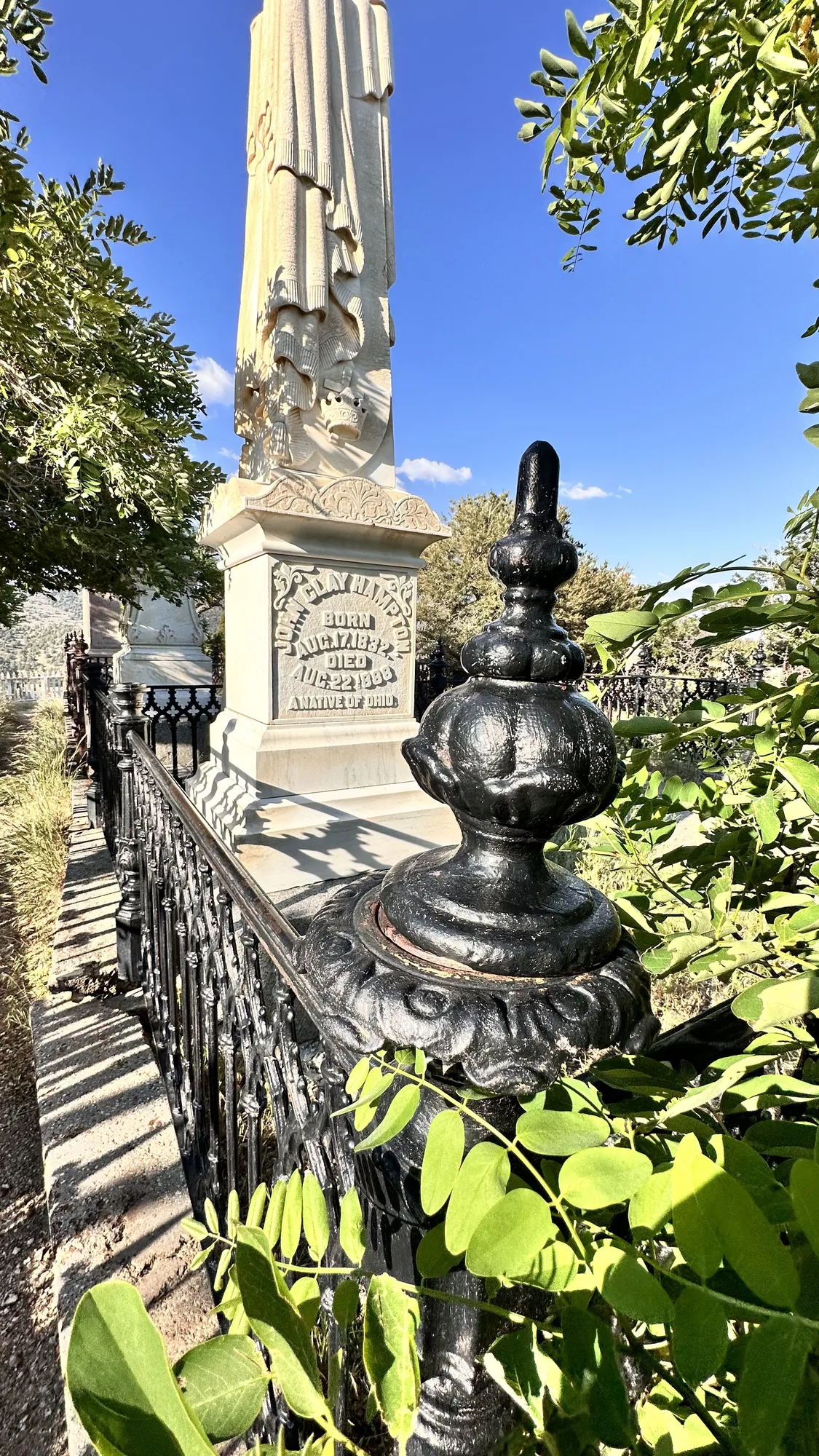
- John Clay Hampton. A stone monument behind a black iron fence.
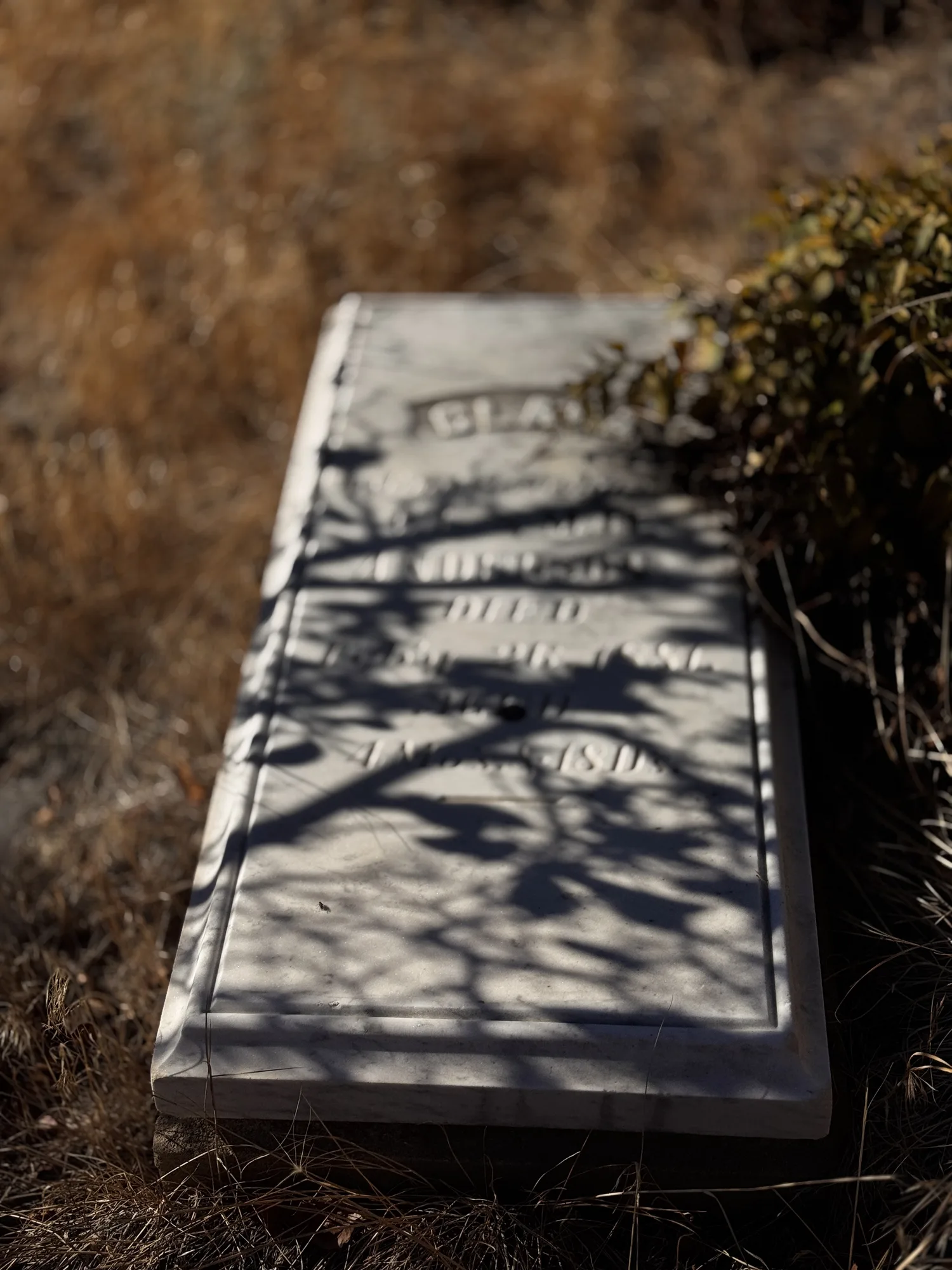
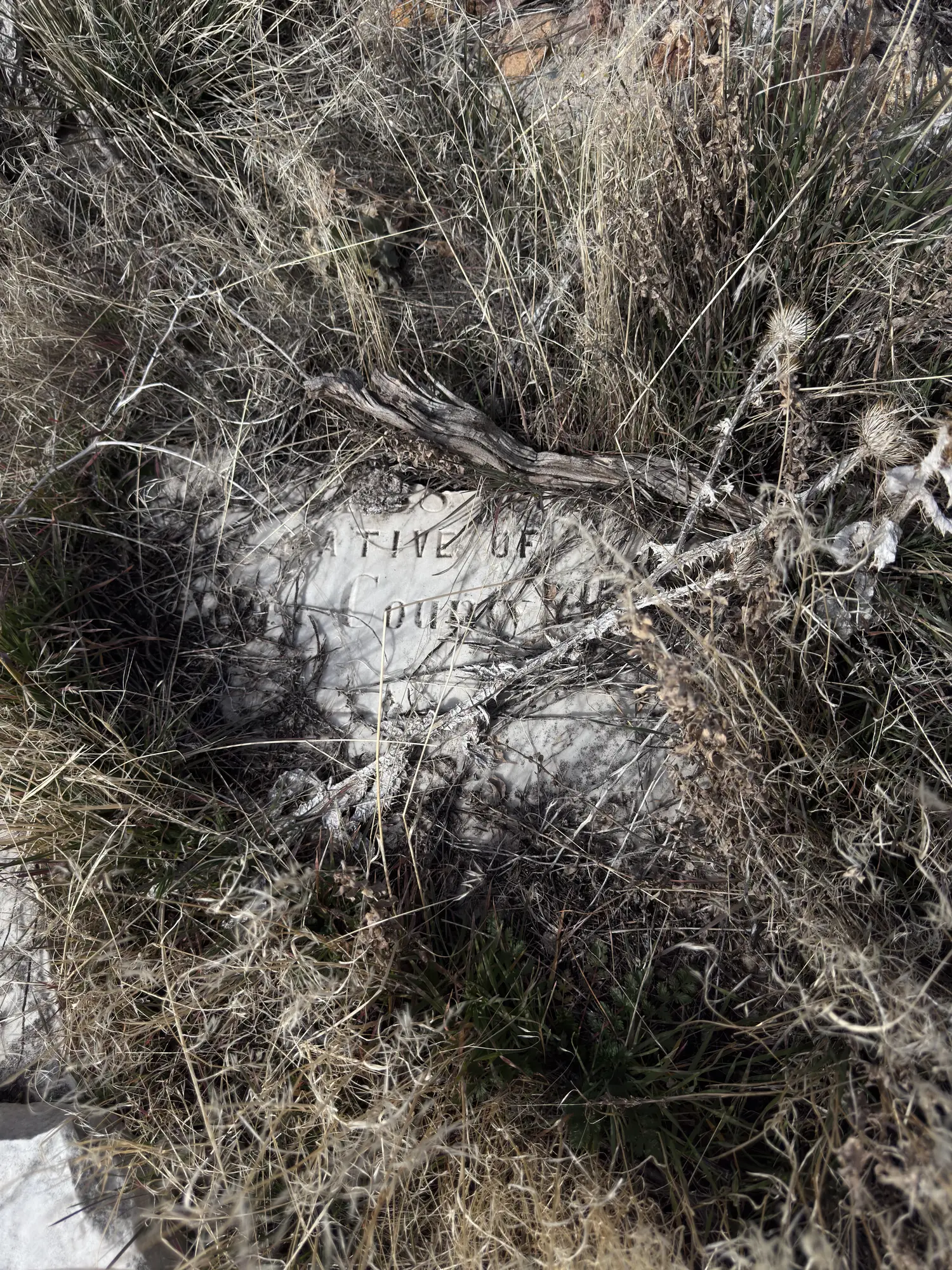
- R. W. Chase (May 18, 1889). A broken marker lying in the grass beside an iron fence.
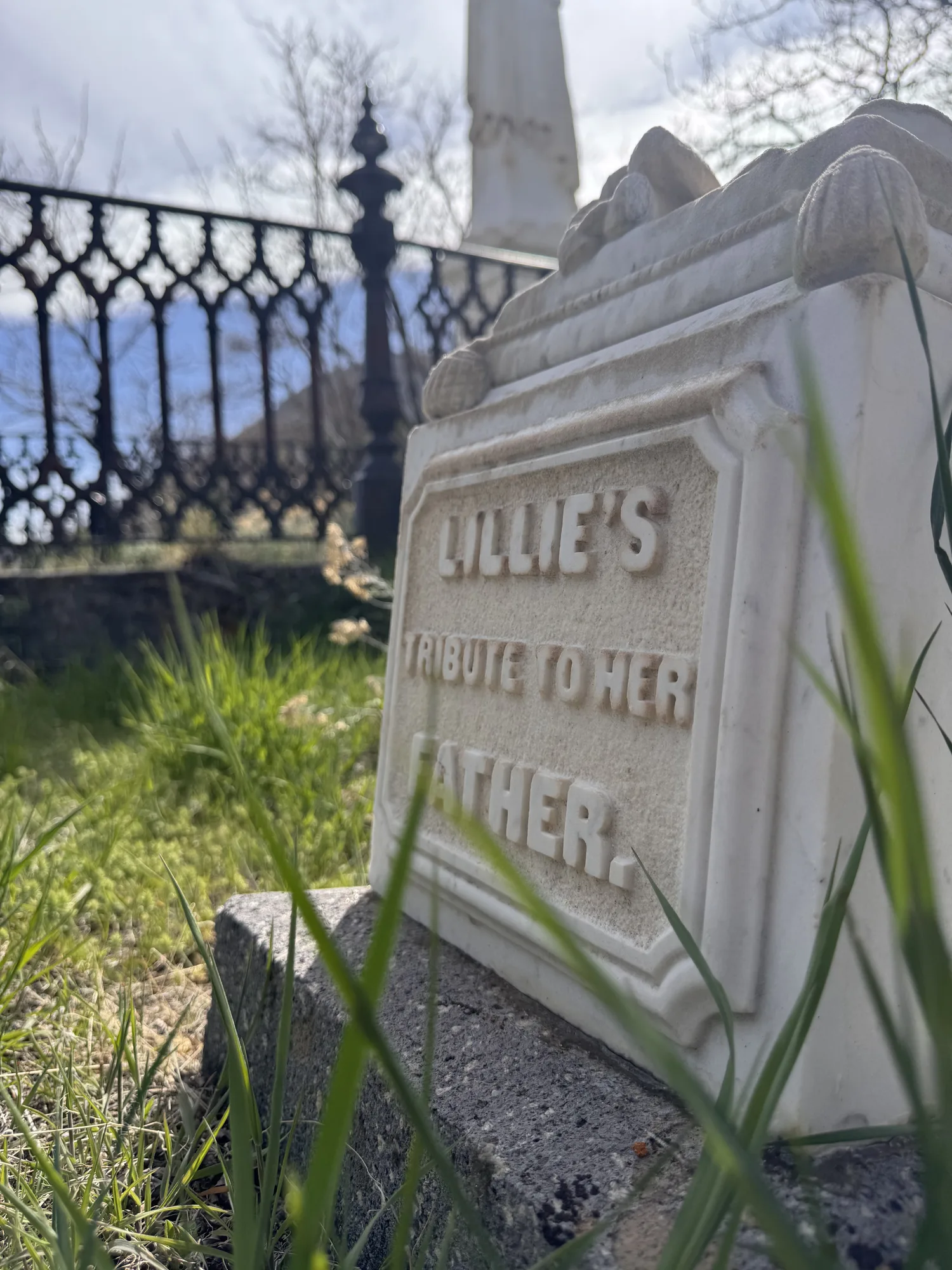
- “Lillie’s Tribute to Her Father.” A small carved stone left by a daughter.
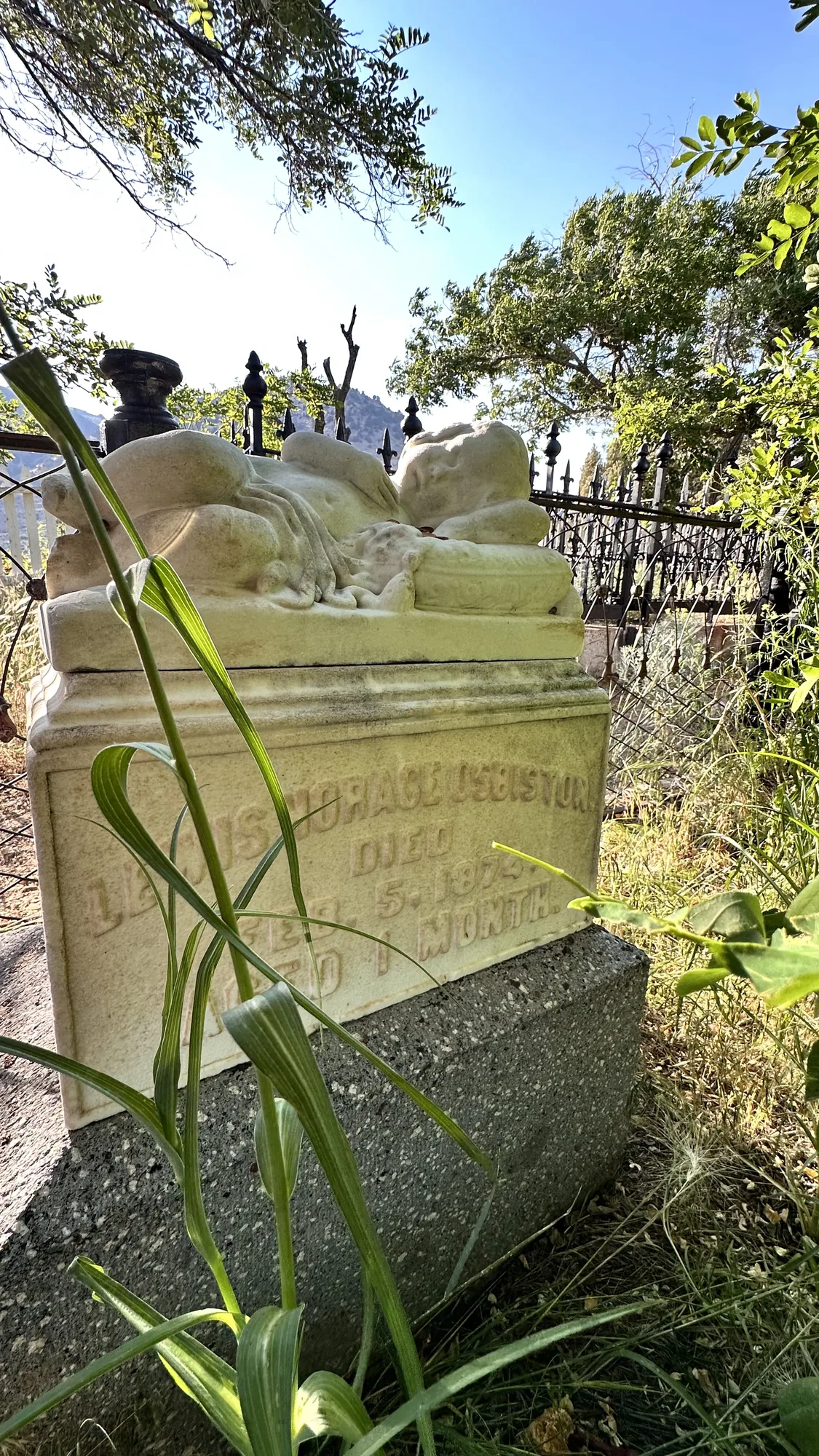
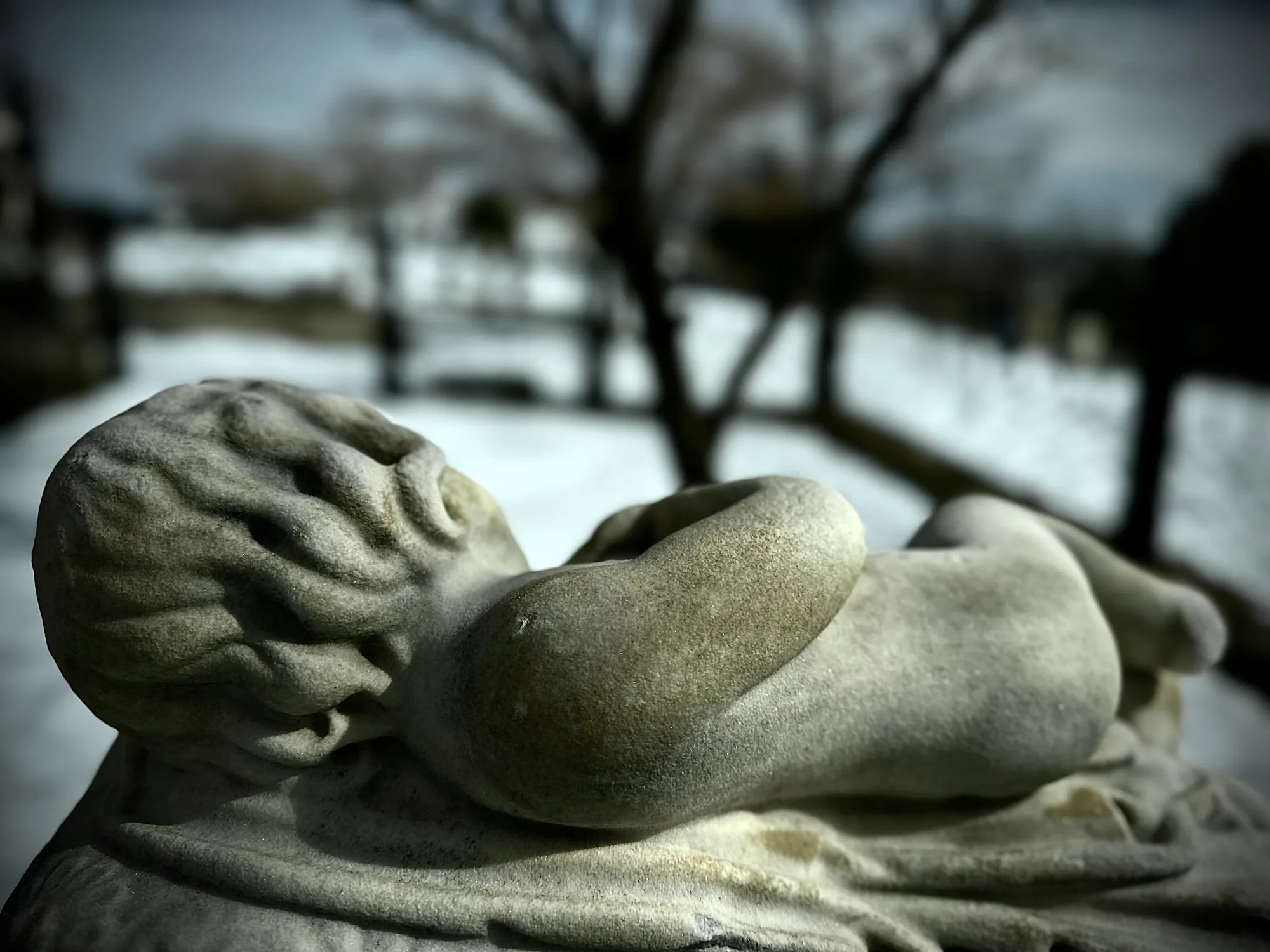
- The sleeping infant. A marble monument topped with a sculpted sleeping child, one of the most photographed graves on the hill.
Reading the Symbols on the Stones
Victorian gravestones were meant to be read, and the carvings at Silver Terrace carry messages most visitors walk right past. These are the ones you’ll see most often:
- Lamb. Innocence, and almost always the grave of a child. You’ll find lambs on many of the small stones on the terraces.
- Sleeping child. A sculpted infant at rest, showing death as peaceful sleep. It was an expensive choice that says a great deal about the parents’ grief.
- Weeping willow. Mourning and sorrow. A willow and cross are carved on the broken marble stone of John Jos Killoy.
- Drapery. Cloth carved over a monument or urn stands for the veil between life and death.
- Hands. A hand pointing upward means the soul rising to heaven. Clasped hands mean a farewell, or a reunion after death.
- Square and compass. The emblem of the Masons, found throughout their section.
- Three links of chain. The sign of the Odd Fellows, standing for friendship, love and truth.
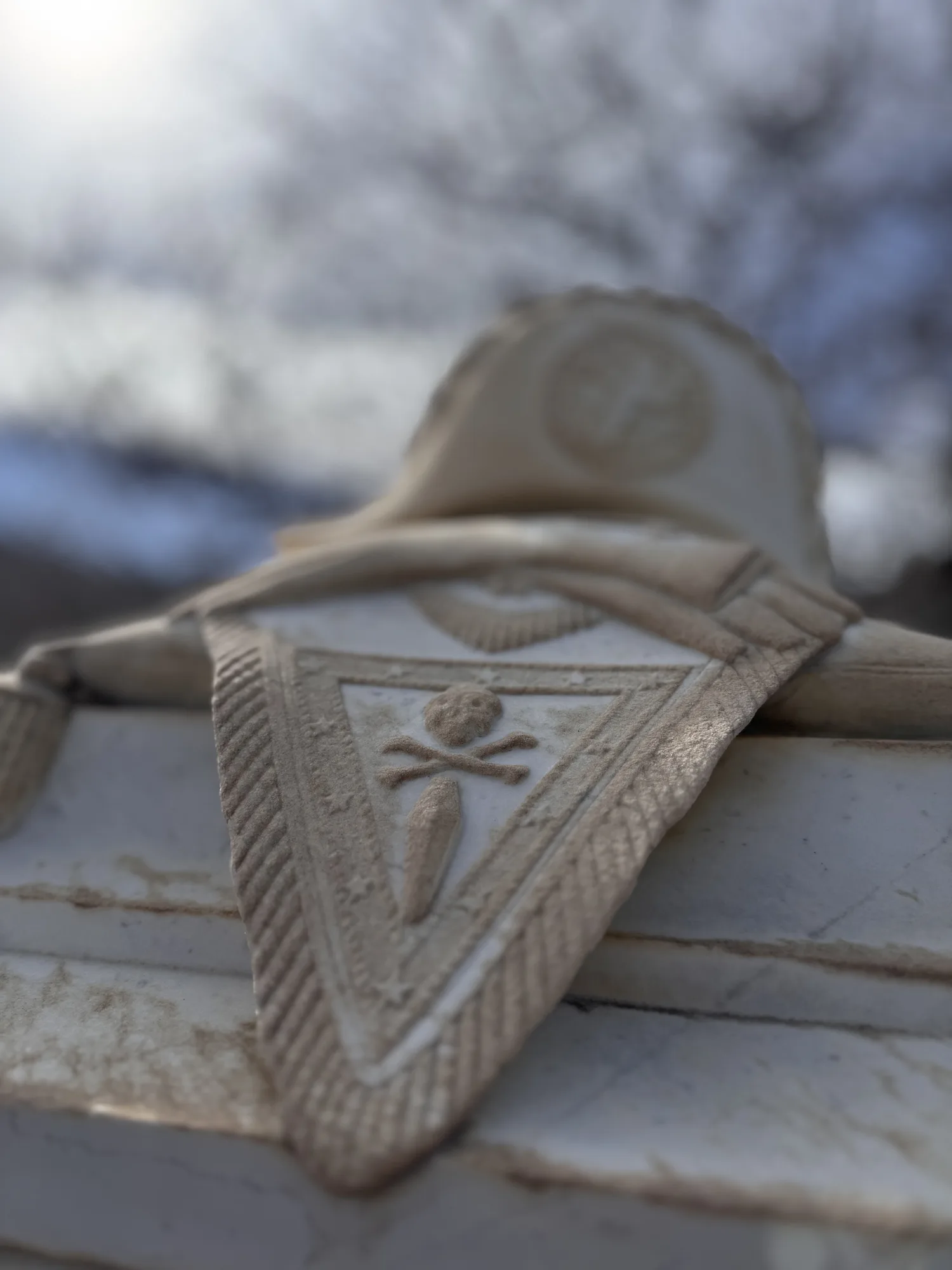
- Skull and crossbones. On a Victorian stone this isn’t a pirate flag. Inside a triangle or on a draped apron, it’s a fraternal symbol of mortality used by the Knights Templar, a Masonic order.
Once you know them, the symbols turn a walk through Silver Terrace into a way of reading the lives of the people buried there.
Is Silver Terrace Cemetery Haunted?
Silver Terrace is one of the most talked-about haunted cemeteries in Nevada, and it isn’t hard to see why. Thousands of people were buried here after short, hard lives, many of them killed young by mine fires, cave-ins, extreme heat and disease. Some were never brought up from the tunnels at all.
The stories most often told about the cemetery (Only In Your State, The Nevadan):
- The woman in brown. A thin young woman in a brown dress with a velvet collar has been reported walking among the graves.
- The glowing girl. A little girl surrounded by a soft light is said to wander between the headstones.
- The gates. Cemetery gates are reported to swing open and shut on their own.
- Shifting graves. Visitors have described headstones and tombs that seem to have moved.
- Ghost lights. Lights drifting across the terraces after dark have been reported and filmed by investigators.
The Moved Graves
There’s one part of Silver Terrace’s history that paranormal investigators point to again and again. When the cemetery opened in 1867, most of the graves from Virginia City’s earlier cemeteries were dug up and carried up the hill. Records from that era were thin, and moving hundreds of burials by wagon over rough ground was not careful work. It would be surprising if every grave was found, or if every marker made the trip.
In ghost lore, a disturbed grave is one of the oldest explanations for a restless spirit. At Silver Terrace, many of the dead weren’t just buried once. They were buried, unearthed and buried again, often far from where their families first laid them to rest. Stones like Cristine Hotz’s, dated five years before the cemetery opened, are a quiet reminder that some of the people here have already been moved once.
The cemetery also sits in the middle of one of America’s most haunted towns. The Mackay Mansion, Silver Queen Hotel, Old Washoe Club and the Spite House are all a short walk away, and in 2026 Virginia City was named America’s most haunted town.
Our Investigation at Silver Terrace
The LiveSciFi team has returned to Silver Terrace several times since 2023. During our 2023 investigation we documented the broken headstone of 10-year-old Neal Molloy, one of the many children’s graves on the hill that have been damaged over the years.
Visiting Silver Terrace Cemetery
| Address | 381 Cemetery Road, Virginia City, NV 89440 (north end of town, at the end of North E Street) |
| Hours | Open daily, year round, sunrise to sunset. Closed after dark. |
| Admission | Free. Donations go to the Comstock Cemetery Foundation; there’s a donation tube at the gate. |
| Size | About 31 acres on a steep hillside |
| Managed by | Comstock Cemetery Foundation |
Tips for your visit
- Wear real shoes. The paths are steep, gravel and uneven, and the wind on the hill can be strong.
- Go early or late in the day for the best light on the headstones and the view over town.
- Don’t come after dark. Trespassing after hours is taken seriously, and the site is monitored 24 hours a day. Watch for special events, like the late Halloween openings the foundation has held.
- Touch nothing. Don’t make rubbings, move markers or take anything. Theft and damage are felonies in Nevada.
- Take a tour. The Comstock Cemetery Foundation runs guided tours, and a free self-guided audio tour is available on the izi.TRAVEL app.
- Make a day of it. Silver Terrace is the natural start of a haunted Virginia City walk. From the cemetery gates, head down to C Street for the Old Washoe Club and the Silver Queen Hotel, then up to D Street for the Mackay Mansion and the Spite House. It’s all walkable, though the hills are steep.
Silver Terrace Cemetery Photo Gallery
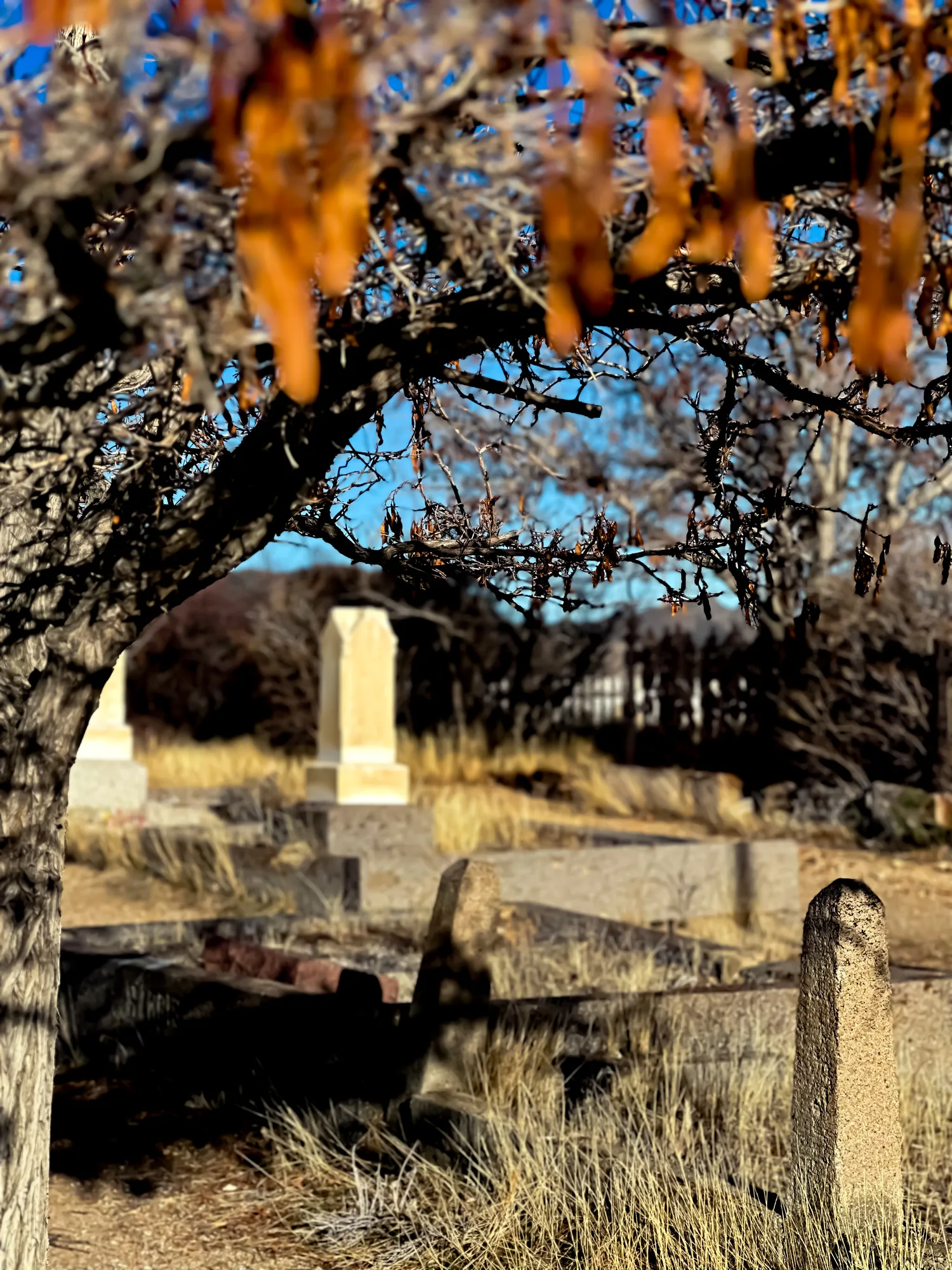
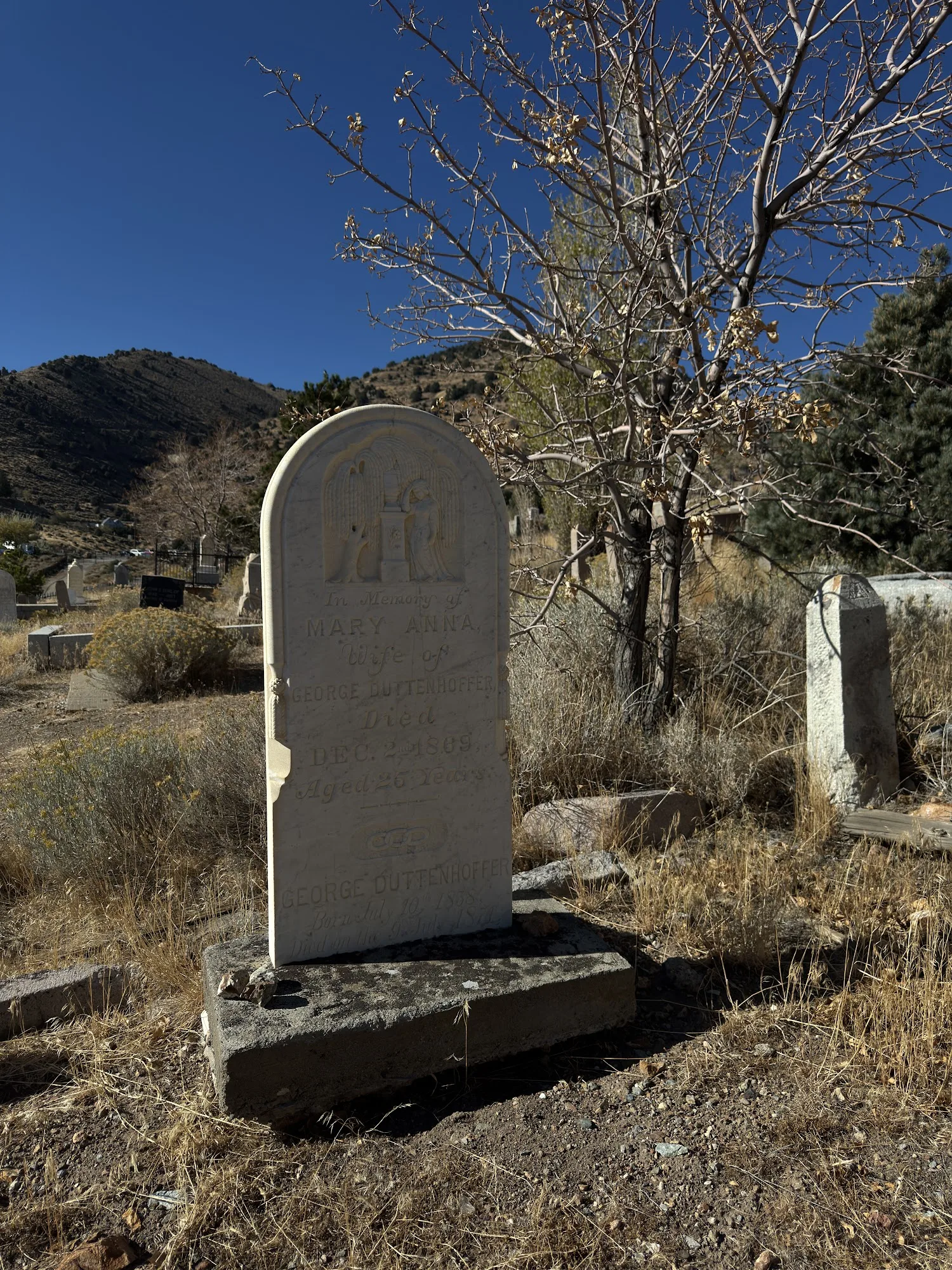
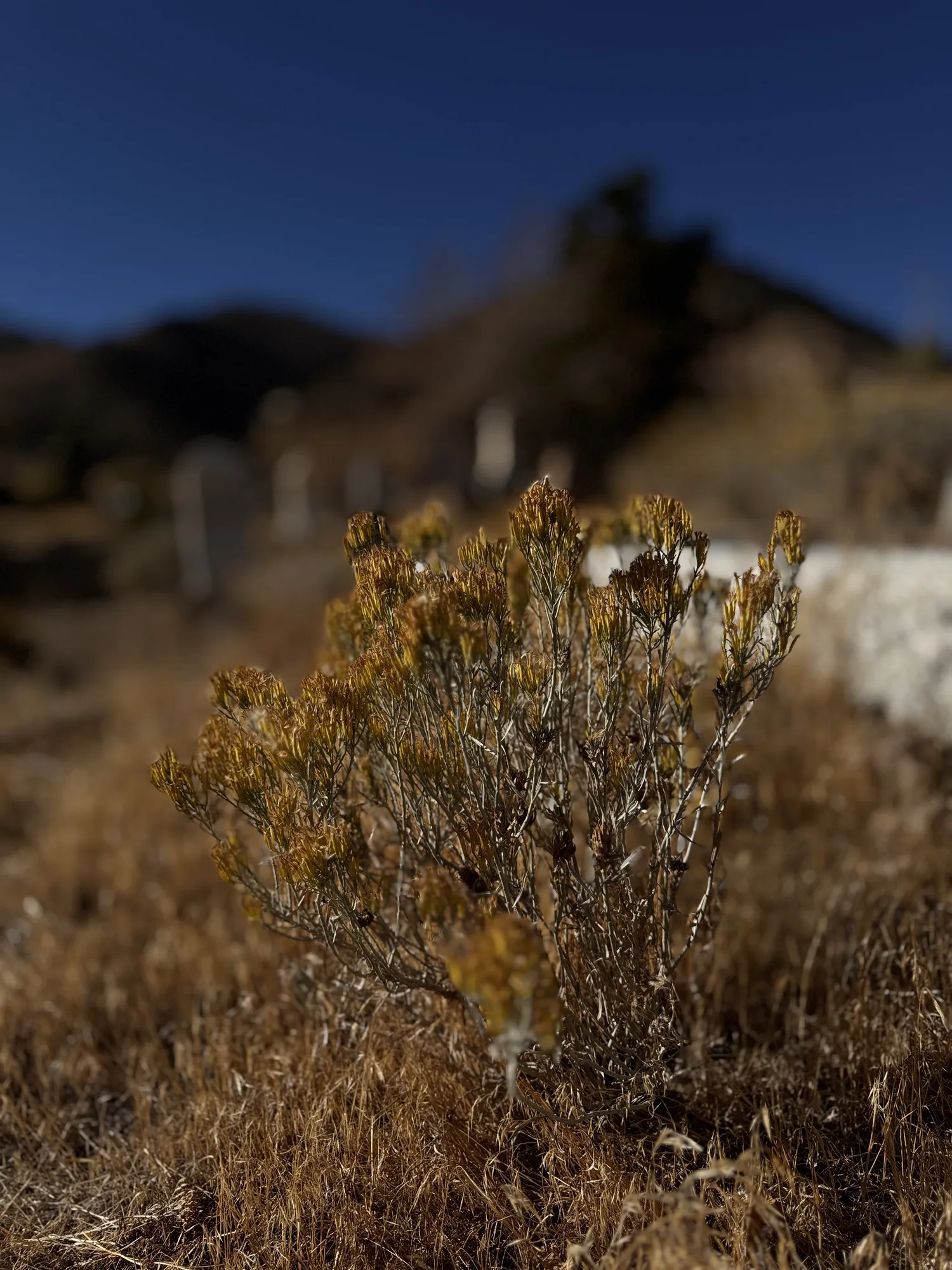
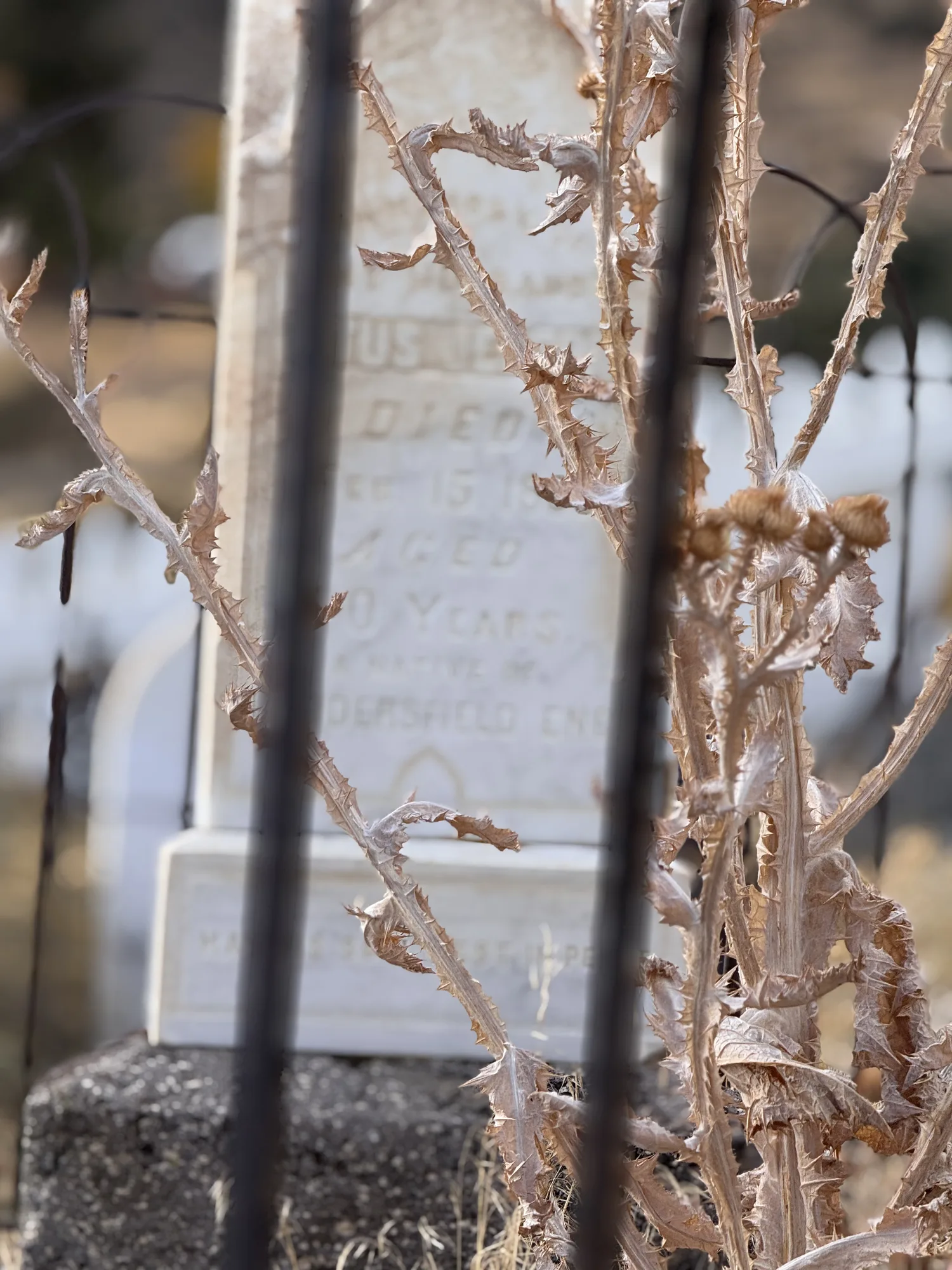
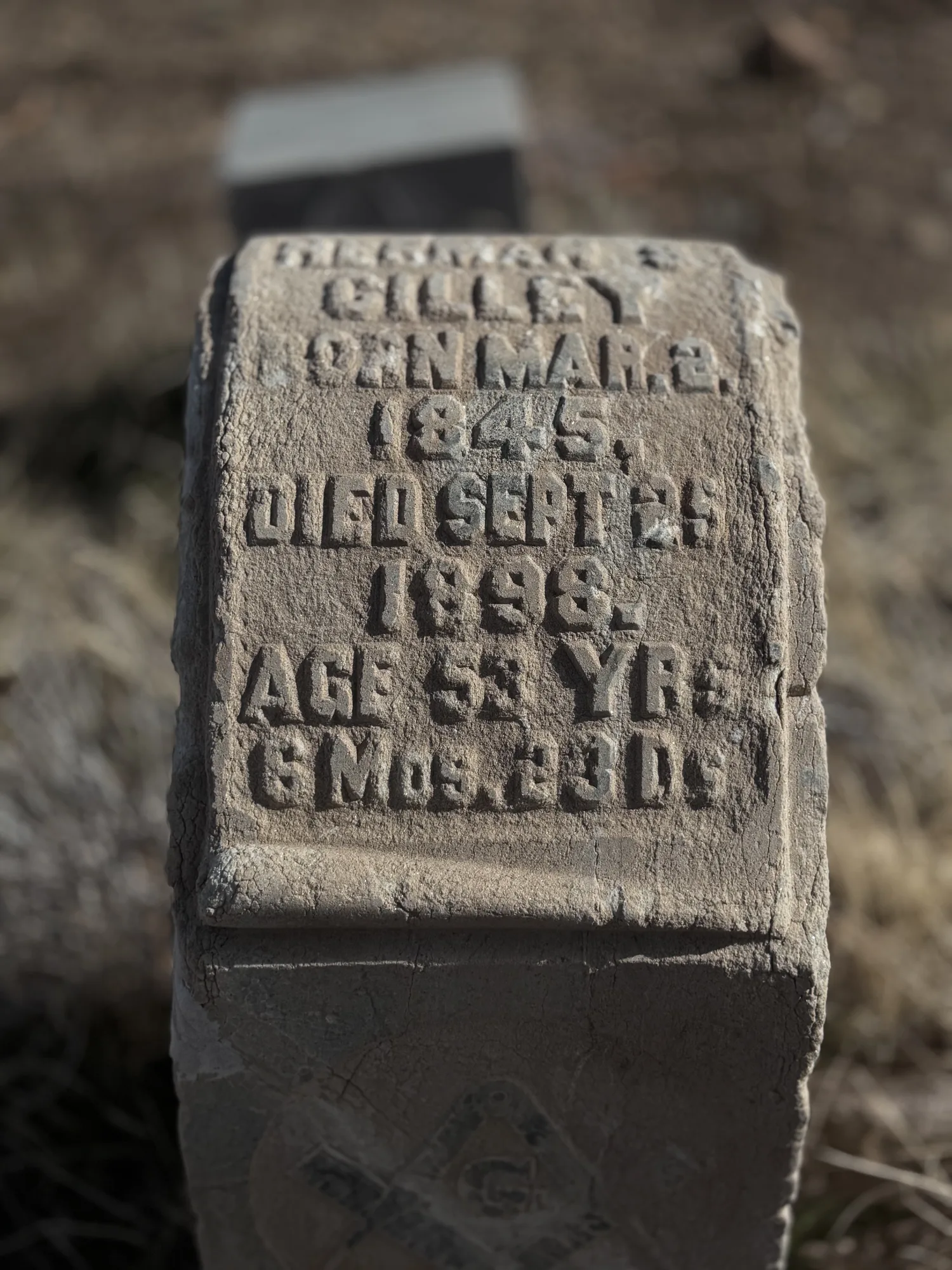
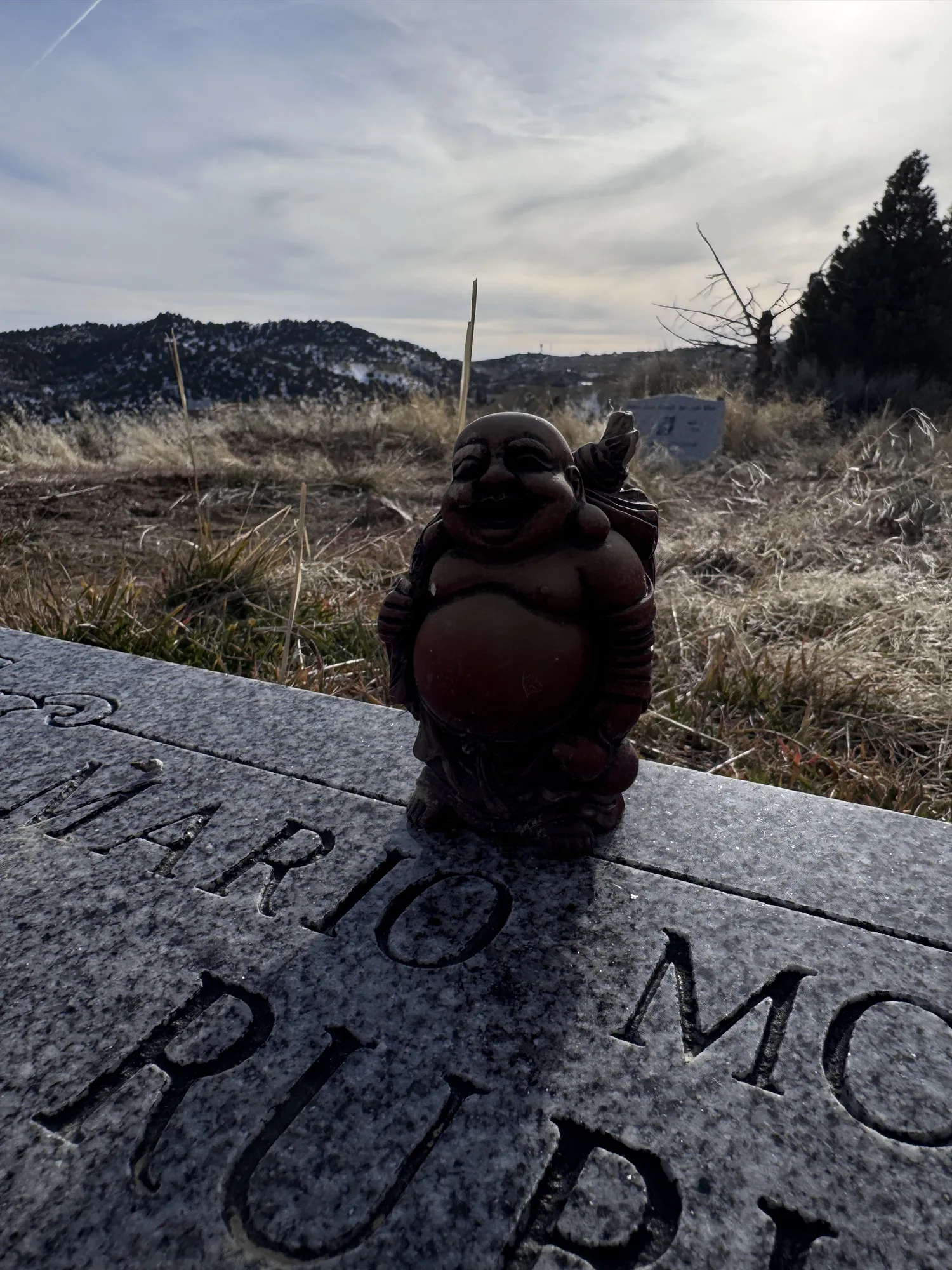
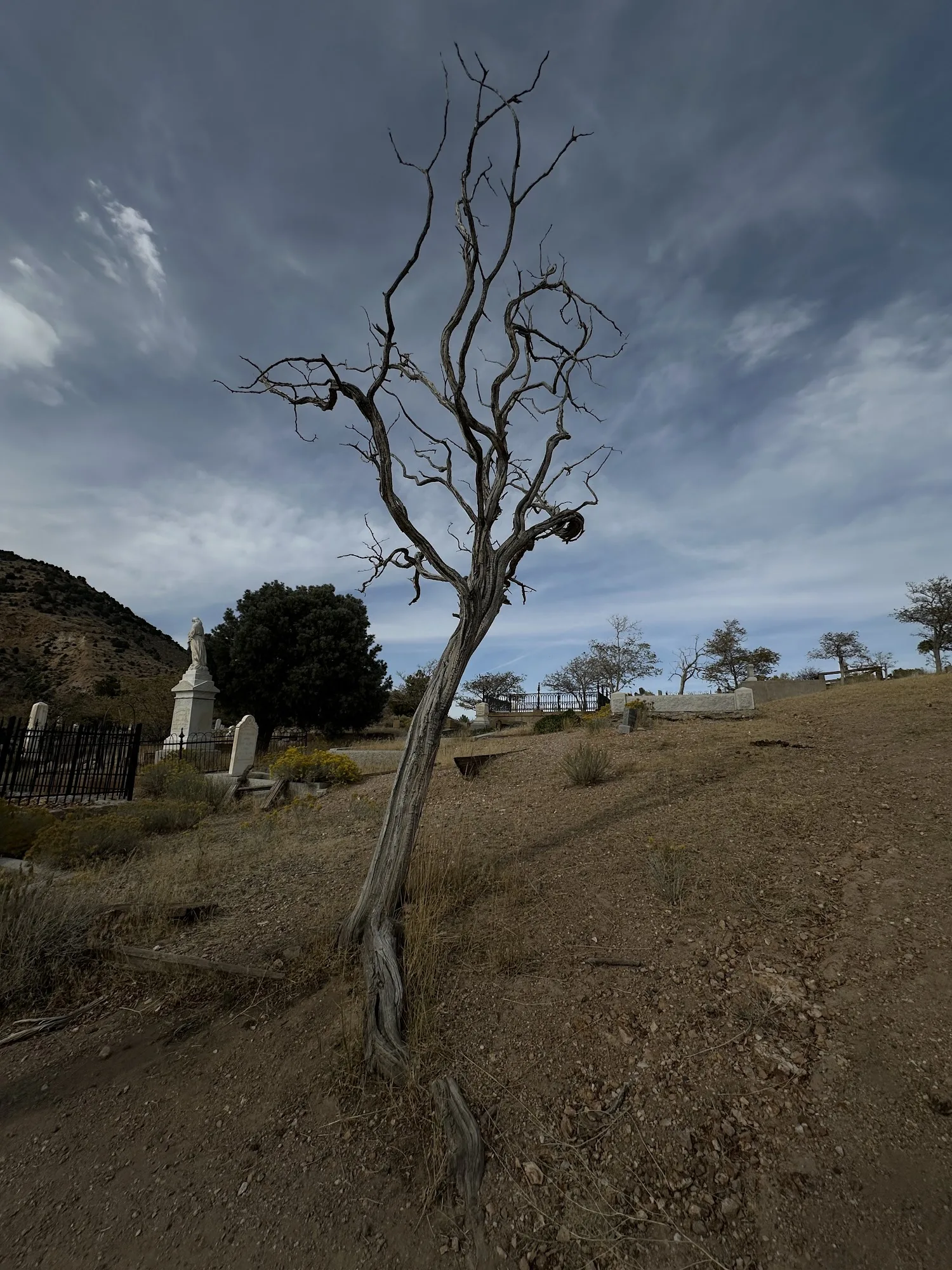
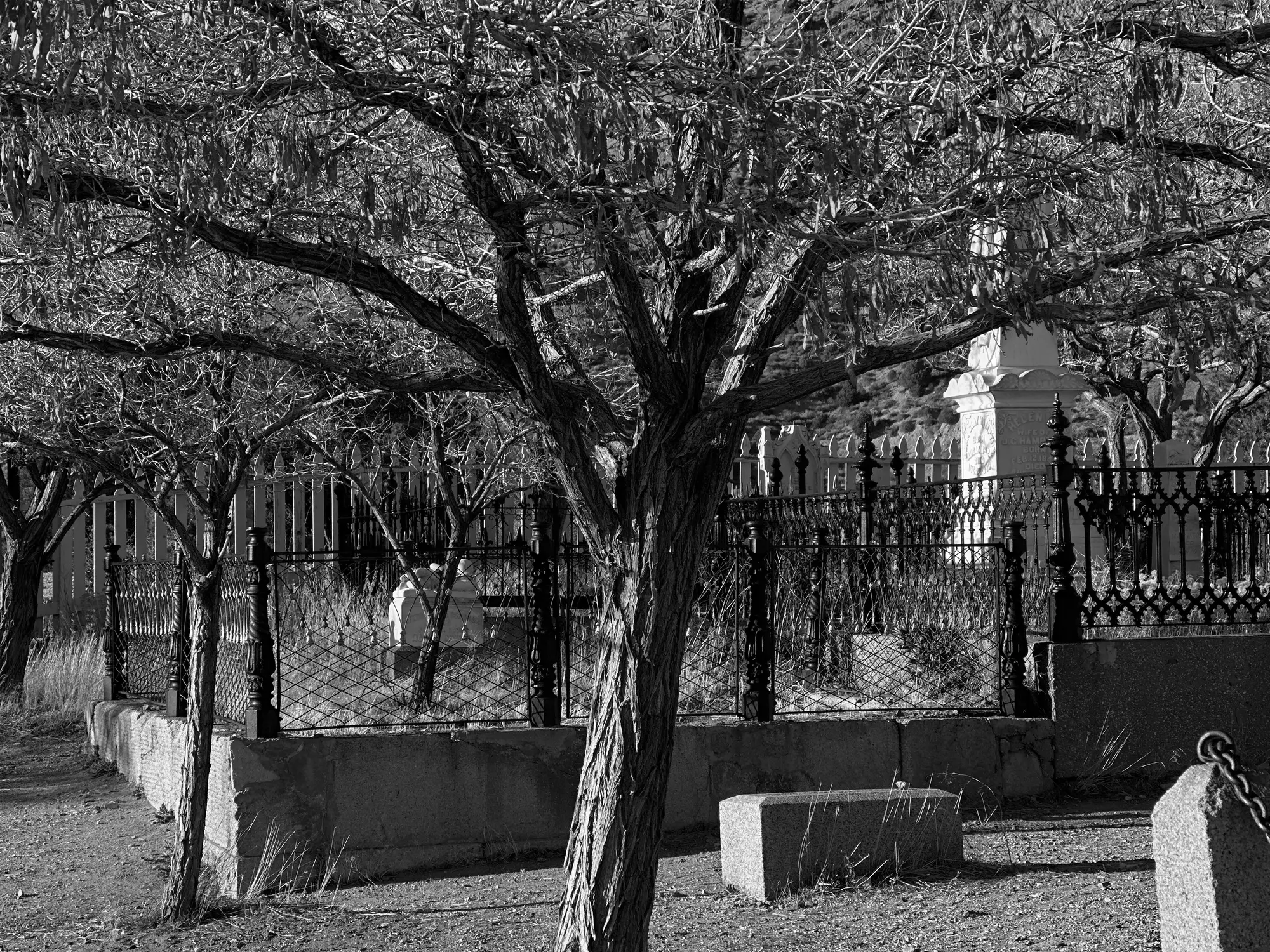
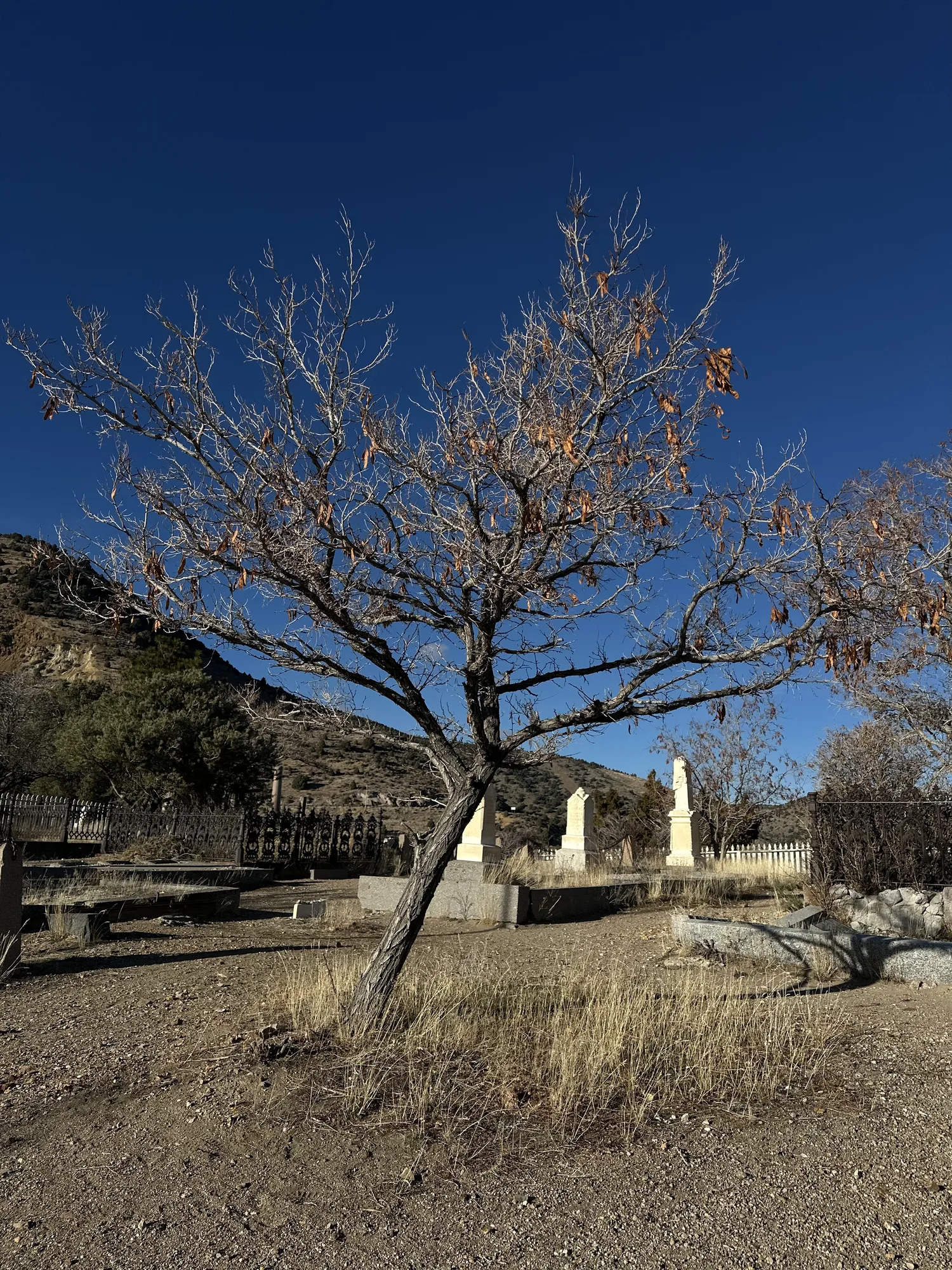
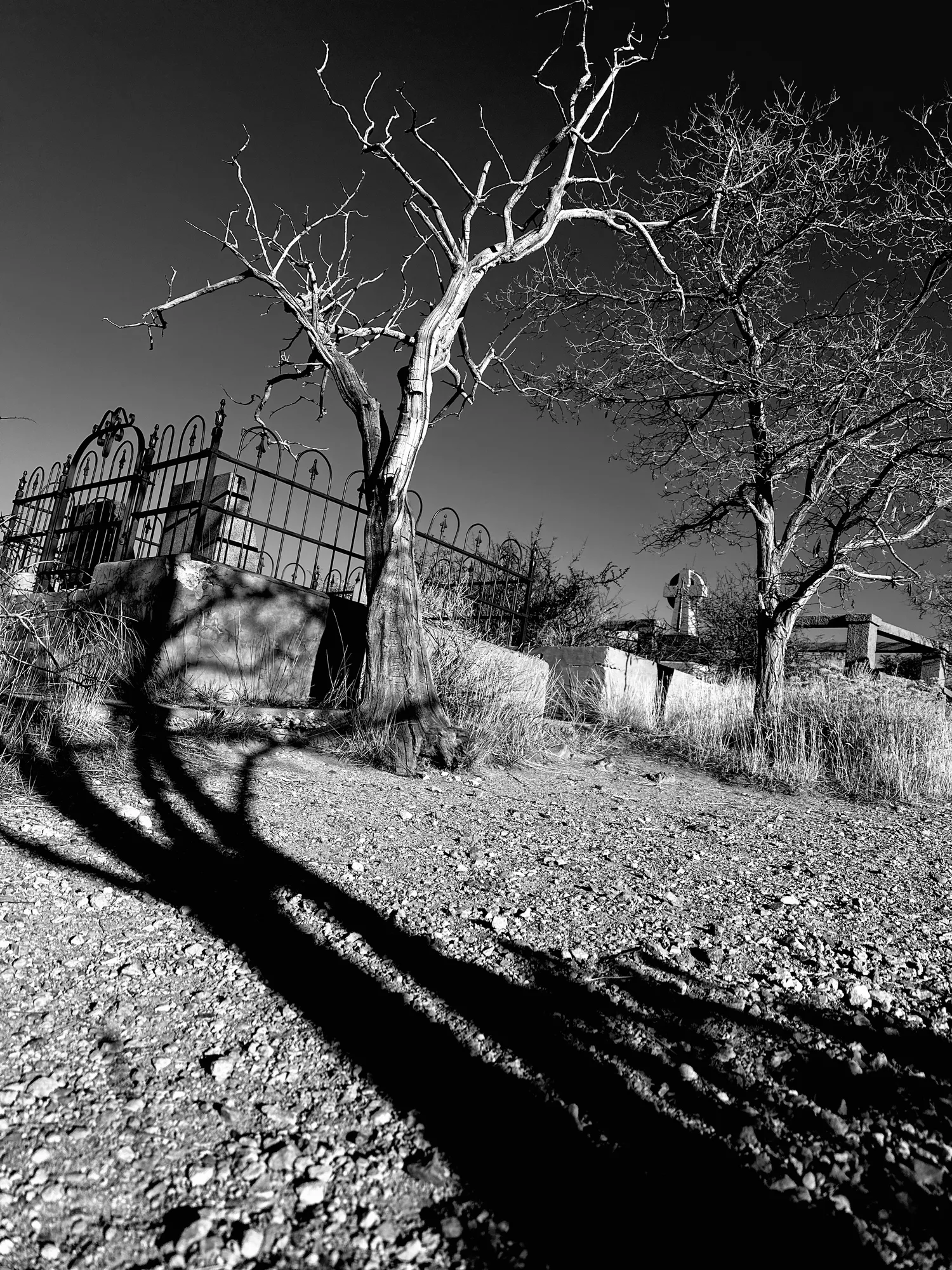
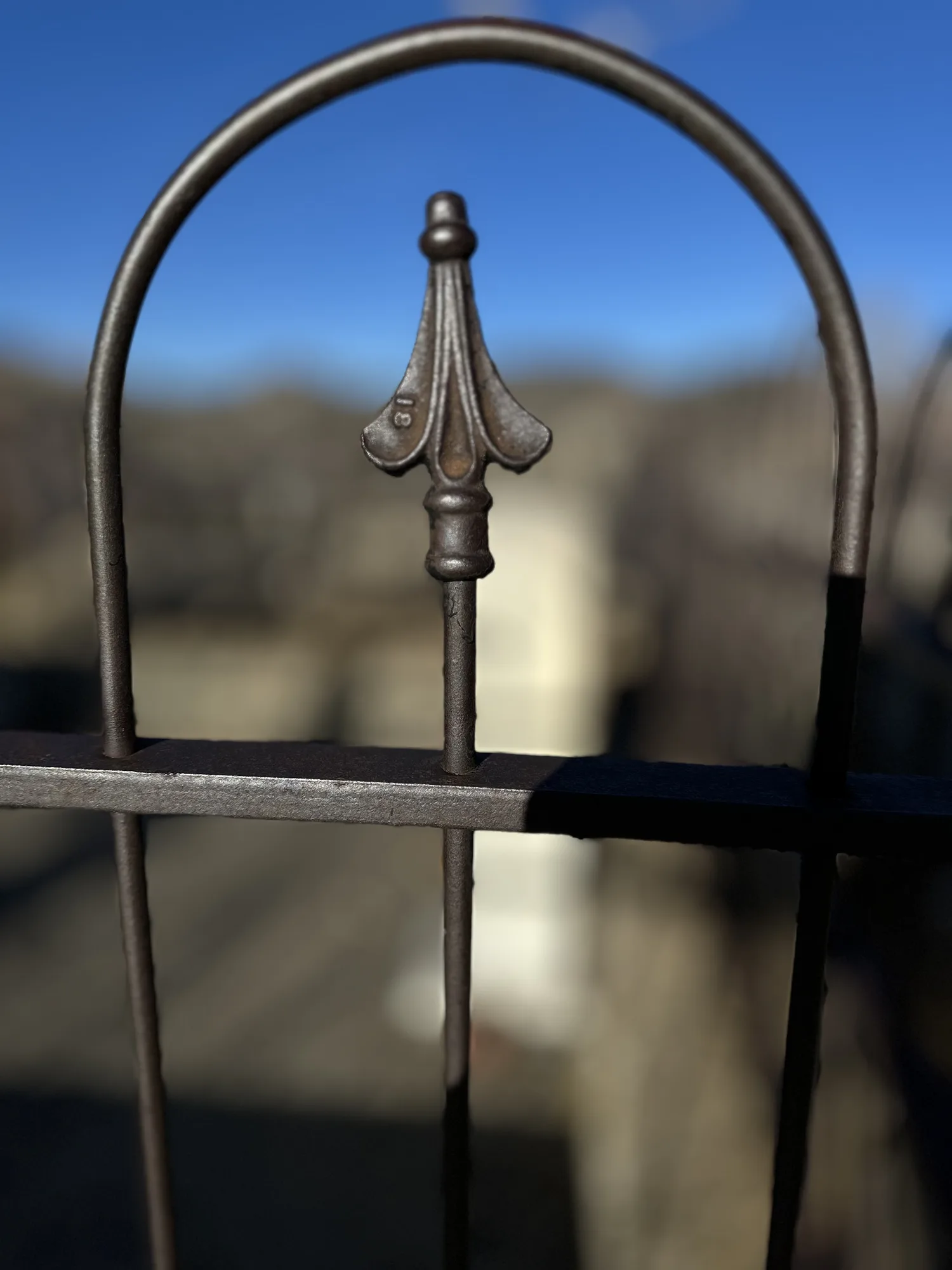
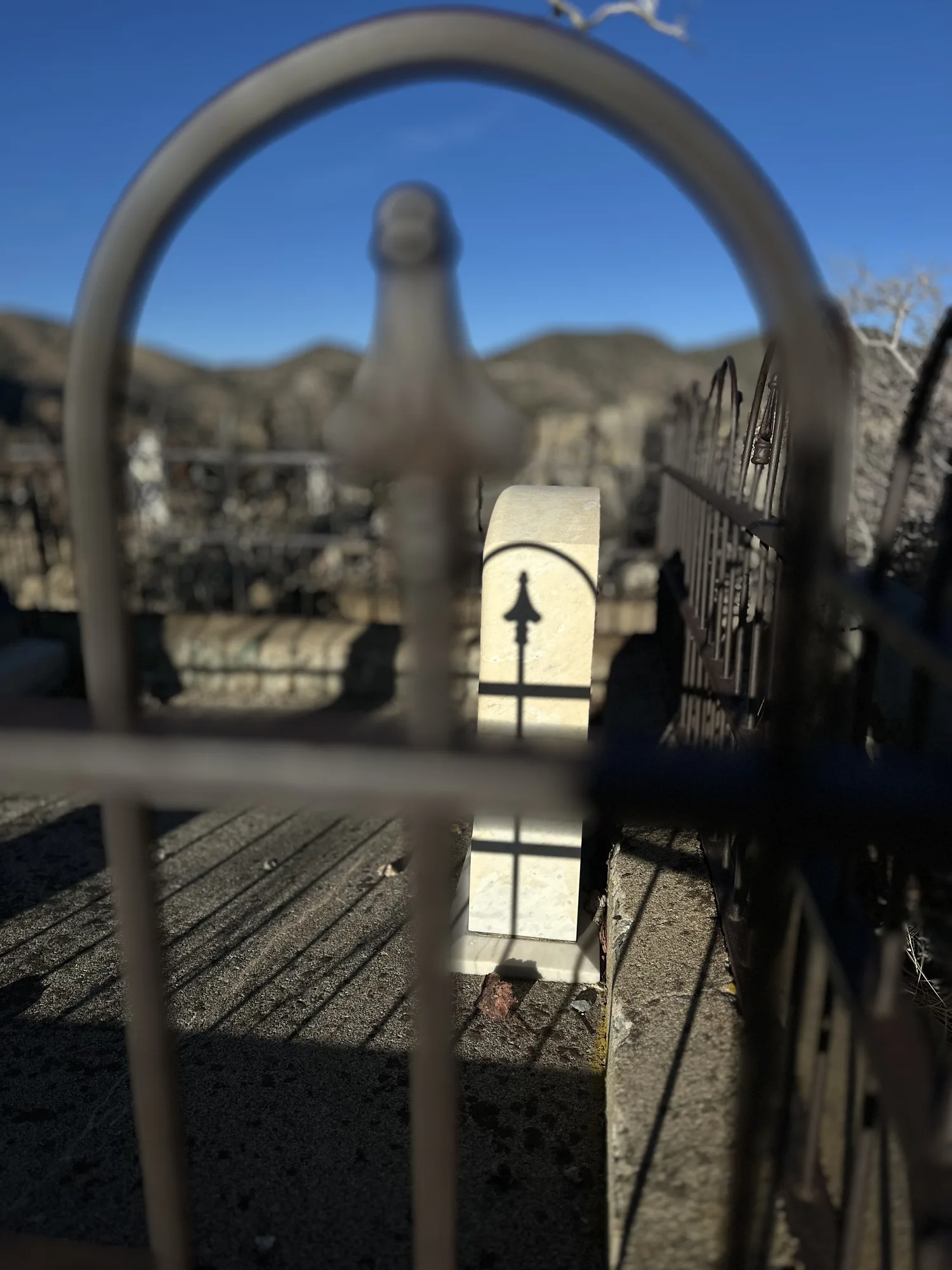
We’ve photographed Silver Terrace across several visits since 2023, in summer heat and winter snow. Here are more of our photos from the terraces: the iron fences, wooden markers, broken stones and the graves of the people who built the Comstock.







See all our Silver Terrace Cemetery photos →
From the photo archive
Silver Terrace Cemetery, Virginia City location photos

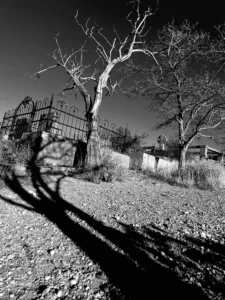
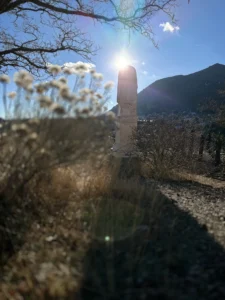
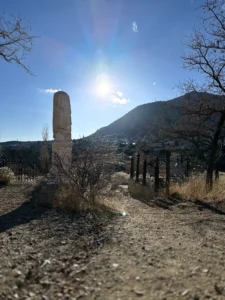
See all 48 Silver Terrace Cemetery, Virginia City location photos
Silver Terrace Cemetery FAQ
Where is Silver Terrace Cemetery?
At 381 Cemetery Road on the north end of Virginia City, Nevada, at the end of North E Street.
What are the Silver Terrace Cemetery hours?
It’s open every day, year round, from sunrise to sunset.
Does it cost anything to visit?
No. Admission is free, but donations to the Comstock Cemetery Foundation help pay for preservation.
How old is Silver Terrace Cemetery?
The site was surveyed in 1861 and 1862, and the first burial was in 1867. Most graves date to before 1920.
How many people are buried at Silver Terrace?
Estimates range from about 4,000 to 5,000, though only around 1,300 headstones survive.
Is anyone famous buried there?
No. The graves belong to the miners, shopkeepers and families who built the Comstock.
Is Silver Terrace Cemetery haunted?
It’s one of the most reported haunted sites in Virginia City, with stories of a woman in a brown dress, a glowing little girl, gates that move on their own and lights on the terraces at night.
Can you visit at night?
No. The cemetery closes at dusk and is monitored around the clock. Join an organized event if you want to see it after dark.
Sources
- Silver Terrace Cemeteries, National Park Service
- History of the Silver Terrace Cemeteries, Comstock Cemetery Foundation
- Silver Terrace Cemetery, Travel Nevada
- Silver Terrace Cemeteries marker, Historical Marker Database