
St. Ignatius Hospital in Colfax, Washington, is one of the most memorable haunted locations we have explored at LiveSciFi. The red-brick building has more than a century of documented medical history, decades of abandonment, and a collection of ghost stories that continue to draw investigators to the Palouse. In 2016, our crew spent three nights investigating the former hospital. I went in expecting an imposing building with a reputation for paranormal activity. What has stayed with me is the combination of its real history, the unusual experiences our team reported, and how difficult it can be to explain an event in a place like this without jumping to conclusions.
People searching for the haunted hospital in Colfax, St. Ignatius Hospital ghosts, or the Colfax WA haunted hospital are usually asking two different questions: What actually happened here, and what do investigators say they encountered? Those deserve separate answers. Below, I revisit the history, the accounts recorded in our original article, the first-hand details of our 2016 ghost hunt, and the TV episodes that made St. Ignatius known far beyond Washington.
Watch our filmed investigation: Devil’s Asylum — the St. Ignatius haunted hospital episode from The Demon Files. That episode is a companion to this historical article, not a substitute for the original extended ghost-hunt footage.
Where Is St. Ignatius Hospital in Colfax, WA?
St. Ignatius Hospital is at 1009 South Mill Street in Colfax, Whitman County, Washington. The old medical building overlooks a community in the Palouse region of eastern Washington. Unlike a purpose-built haunted attraction, it began as a working institution where people sought treatment, gave birth, trained as nurses, recovered from illness, and sometimes died. Those human stories should come before the legends.
Its institutional past is important when assessing reports of voices, footsteps, figures, or rooms associated with named patients. A haunting legend is not a hospital record, and an unusual sound in a deteriorating structure is not automatic evidence of a ghost. Still, that historical context was part of why our LiveSciFi investigation mattered to us.
The History of St. Ignatius Hospital: From 1893 to Abandonment
The Catholic Sisters of Charity, associated with the Sisters of Providence, established St. Ignatius in the 1890s. Construction began in 1893, and the brick hospital opened in 1894 as Whitman County’s first hospital. The Sisters initially cared for patients in nearby temporary buildings while work continued. The hospital grew alongside the surrounding farming and railroad communities, providing medical care in a region where such services were difficult to reach.
Records and preservation accounts describe major alterations in 1917 and 1928, reflecting an expanding institution that had to adapt to changing needs. The St. Ignatius School of Nursing formed part of its history: the original LiveSciFi article records its first graduating class in 1911 and identifies an early milestone for male nursing graduates in 1941. Those details are part of the article’s historical record, although the precise nursing-school milestones warrant confirmation against school archives.
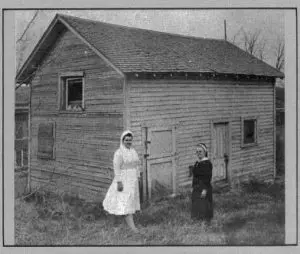
As medical standards and infrastructure requirements changed, the old building became harder to maintain. By 1964, the local hospital board had chosen to relocate services rather than completely rebuild the facility. Hospital operations continued until 1968, when Whitman Community Hospital opened. The distinction matters: 1964 is often repeated online as the year St. Ignatius closed, but local historical accounts document the replacement hospital’s dedication in November 1968.
The building did not simply become vacant overnight. It was subsequently used as St. Ignatius Manor, caring for older residents and adults with developmental disabilities. Accounts differ slightly on whether the last residents departed in 2000 or the facility finally shut down in 2003. What is clear is that the complex was no longer operating as the original hospital, and later years of vacancy left it vulnerable to water damage, vandalism, and neglect.
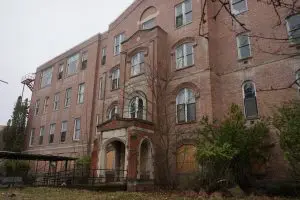
The hospital’s preservation story is as significant as its ghost stories. The Washington Trust for Historic Preservation listed St. Ignatius among its most endangered places in 2015. Community-organized tours helped bring attention to the endangered building. In 2021, Austin and Laura Storm purchased the property and became involved in efforts to protect and revive it. A former medical institution that might otherwise disappear has become a place where local history, preservation, and paranormal tourism intersect.
Is St. Ignatius Hospital Haunted? The Stories Behind the Reputation
The St. Ignatius haunted hospital reputation comes from reported apparitions, shadow figures, unexplained voices, and experiences attributed to former patients. Some stories are tied to named individuals; others are anonymous accounts retold by visitors and paranormal teams. I think it is important to distinguish the three categories we often see mixed together online: documented events, personal testimony, and a researcher’s interpretation of that testimony.
We can document the building’s age, the transition from hospital to manor, and the history of filmed investigations. We can report that people have described strange experiences. We cannot establish that the cause was supernatural merely because a sound or shadow felt out of place. With a complex old building, settling materials, echoes, airflow, wildlife, and electrical problems must remain possible explanations.
F. E. Martin and the Shadow-Figure Legend
One of the most repeated St. Ignatius Hospital ghost stories concerns F. E. Martin, a railroad worker reportedly injured between railcars in 1893. The current tour operator identifies Martin as an early recorded death linked to the facility. Over time, his name became associated with stories of a dark figure seen on the first and fourth floors. That proposed identity is local paranormal lore, not a demonstrated identification of an apparition.
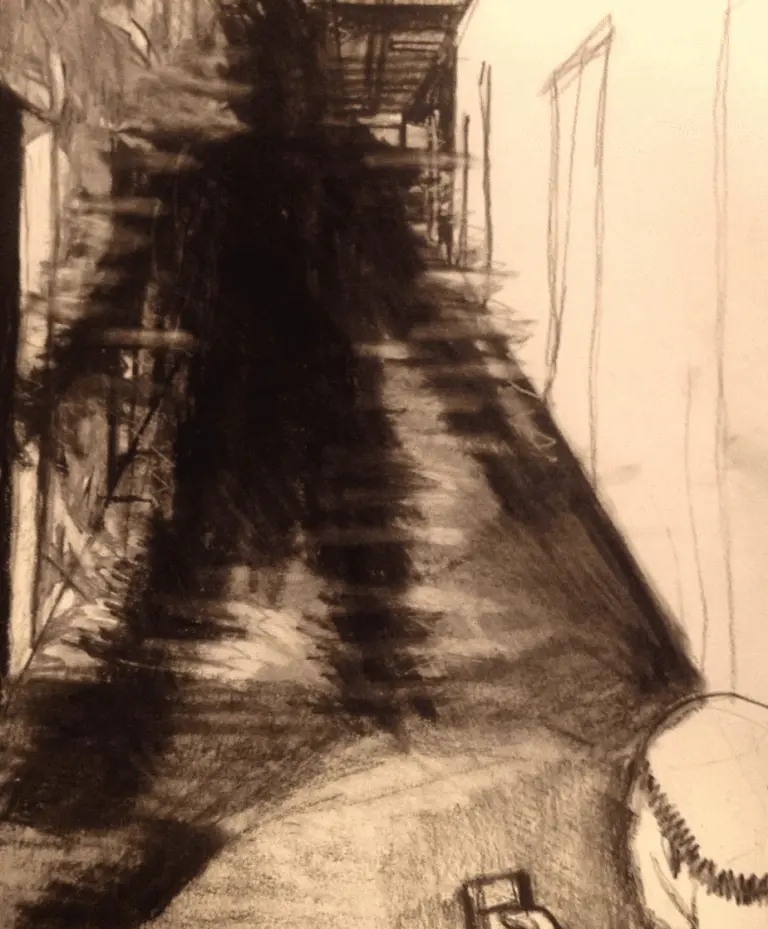
In our 2016 investigation, a psychic sketch artist reported repeatedly perceiving a shadowy figure and associated the impression with a severe accident. Our original account discussed an apparent resemblance between that impression and the Martin story. It is an intriguing connection, but a psychic impression and a historical account do not independently prove who — or what — was present.
Rosie’s Room, Disembodied Voices, and Equipment Problems
Another part of the hospital that stayed with our team was Rosie’s room on the third floor. During the 2016 investigation, we described what seemed like poltergeist activity, audible voices without an immediately identifiable speaker, and equipment behaving unexpectedly. These were things we experienced or interpreted during the ghost hunt — not laboratory-confirmed findings.
When you’re inside a large abandoned hospital at night, a sound can appear to come from somewhere it does not. A voice heard in the moment may sound different when recordings are reviewed later. Electronic devices can malfunction for ordinary reasons. This is why I prefer preserving recordings and giving viewers the opportunity to listen and watch for themselves instead of asking them to accept a dramatic label.
The “Emily” Ouija Board and EVP Session
Our archived account also described a Ouija-board session in an area the team referred to as the “left is dead” section. During that session, the name Emily appeared on the board, and investigators later interpreted a response from an electronic voice phenomenon (EVP) session as a possible match. That is what the team reported. The coincidence is not proof of communication with a deceased person; ambiguous audio and the involuntary movement that can occur with a planchette are important alternative explanations.
For more background on how we evaluate these sessions, see our Ouija board rules and precautions article. At LiveSciFi, the most valuable part of a session is its recorded context: what was asked, who was present, and what can actually be heard afterward.
Inside LiveSciFi’s 2016 Three-Night Ghost Hunt
Our visit to St. Ignatius was a live-streamed ghost hunt, not merely a brief walk-through or an edited television segment. That distinction has been central to LiveSciFi since our early broadcasts. We wanted viewers to experience the investigation as it unfolded: the long stretches when nothing appeared to happen, the small events that caught someone’s attention, and the discussions about whether an experience had a conventional explanation.
In the original 2018 article, I described our crew as an early team to spend three nights investigating the abandoned hospital. We entered with limited expectations about what would happen and documented stories about the shadow figure, Rosie’s room, and the Emily session. Those remain our first-person reports; they are not presented here as independently proven supernatural events.
Watching longer footage can be more revealing than a short highlight. Did the sound repeat? Were other team members talking nearby? Did someone move a piece of equipment or walk through the next room? The camera does not answer every question, but it helps preserve what an investigator actually observed rather than what memory later makes of it.
Watch the Original St. Ignatius Live Ghost-Hunt Recording
This embedded recording appeared in the original article and is retained here as part of its historical record. If the archival YouTube video is unavailable in your region, use our LiveSciFi YouTube channel to browse additional restored ghost-hunt recordings.
St. Ignatius Hospital on Ghost Adventures and Paranormal Lockdown
People searching for “St. Ignatius Hospital Ghost Adventures” are looking for the Travel Channel investigation of this Colfax location. Ghost Adventures aired its St. Ignatius Hospital episode in June 2019. The program featured Zak Bagans and his team investigating reports of growls, attacks by unseen forces, and alleged spirits inside the hospital. Those were claims presented in a paranormal television format, not scientific proof of a haunting.
The location had reached national TV audiences earlier. Paranormal Lockdown, with Nick Groff and Katrina Weidman, featured St. Ignatius in an episode first released on January 6, 2017. The different productions should not be confused with LiveSciFi’s own 2016 three-night work, or with our later Demon Files presentation. Each approaches the same building from a different editorial angle.
The sequence helps explain why searches for “haunted hospital episode” may refer to several shows at once. If you’re specifically looking for our work, the on-demand episode is Devil’s Asylum: St. Ignatius Hospital — LiveSciFi’s haunted hospital episode.
Watch Devil’s Asylum: Our Haunted Hospital Episode
The Devil’s Asylum episode brings together a focused presentation of the reported activity at St. Ignatius, including EVP work, our Ouija experiment, and encounters discussed by the LiveSciFi team. It is part of the site’s on-demand paranormal video collection, while the long-form archived recording above preserves a different view of the investigation. We recommend watching both if you want to compare the finished episode with the footage and circumstances behind it.
Watch The Demon Files: Devil’s Asylum — St. Ignatius Hospital or browse more LiveSciFi paranormal episodes.
Colfax Haunted Hospital Tours: Can You Visit St. Ignatius?
If you’re researching Colfax haunted hospital tours, use the official organizers rather than an older blog listing. The Whitman County Historical Society lists St. Ignatius at 1009 S. Mill Street and states that historic and ghost tours are offered. Tour schedules, available areas, event requirements, and admission can change as preservation work continues. See the Colfax Haunted Hospital tour site for current ticket details.
This is private property: do not enter the hospital or its grounds without authorization. Our 2016 experience is not permission to explore an abandoned or actively renovated building. If you attend an organized tour, respect any restricted rooms and the volunteers and owners working to preserve the site.
What Makes the St. Ignatius Story Worth Preserving?
For me, the most compelling thing about St. Ignatius Hospital isn’t that someone calls it a haunted hospital. It’s the amount of history contained within those walls. Generations of patients and caregivers passed through the building. It later served a different population, endured years of decline, became an endangered landmark, and drew the attention of people who wanted it saved.
The paranormal experiences our team described in 2016 were real experiences for the people reporting them, even when the explanations remain uncertain. That uncertainty is a reason to keep investigating carefully, not a reason to erase the stories or to present them as established fact. Anyone looking for a haunted hospital in Colfax, Washington should come away knowing both the building’s verified past and the claims that made it famous.
Frequently Asked Questions About St. Ignatius Hospital
Where is the haunted hospital in Colfax, Washington?
St. Ignatius Hospital is located at 1009 South Mill Street, Colfax, WA. It is private property, with access provided only through authorized events and tours.
When did St. Ignatius Hospital close?
Plans to relocate the original hospital were underway by 1964, and the replacement Whitman Community Hospital opened in 1968. The old building was later reused as an assisted-care facility and became vacant around the early 2000s.
Was St. Ignatius featured on Ghost Adventures?
Yes. Ghost Adventures aired an episode about St. Ignatius Hospital in June 2019. Paranormal Lockdown also featured it in January 2017. LiveSciFi’s investigation occurred in 2016.
Does the hospital offer ghost tours?
Official sources list historic and ghost tours. Availability can change, so check the current operator’s ticket information before traveling.
Did LiveSciFi find proof of ghosts or a demon at St. Ignatius?
We reported unusual voices, apparent equipment problems, a shadow-figure account, and an EVP interpretation during our investigation. Those observations are worth reviewing, but none alone establishes the presence of a ghost or demon. Watch the footage and judge the evidence in context.
Historical Sources and Further Viewing
- HistoryLink: Colfax — Thumbnail History — background on Whitman County’s first hospital and the 1968 replacement.
- Washington Trust for Historic Preservation — construction, 1917 and 1928 alterations, and preservation status.
- Whitman County Historical Society — ownership, subsequent use, and authorized visits.
- Northwest Public Broadcasting — later reporting on tourism and preservation.
- TV Guide: Ghost Adventures episodes and Paranormal Lockdown episodes — TV broadcast context.
Keep exploring: Read our Welles House haunted history and Sallie House investigation, or subscribe to LiveSciFi on YouTube for live-streamed ghost hunts and investigation archives.
Join the Conversation
Have you experienced something unexplained? Share your thoughts and experiences with the LiveSciFi community.