
Ed and Lorraine Warren’s paranormal cases remain among the best-known—and most debated—haunting stories in American history. Movies such as The Conjuring and The Amityville Horror made their investigations famous, but the movies, the witnesses’ accounts, and what investigators documented are not the same thing.
I’m Tim Wood, founder of LiveSciFi.tv. Since 2006 I’ve explored haunted locations and produced livestreamed ghost hunts so viewers could see investigations unfold instead of only edited highlights. The Welles House at 46 South Welles Street in Wilkes-Barre, Pennsylvania is personal to me: I purchased it in 2013 and broadcast live investigations from inside. Unlike the other cases below, I can contribute firsthand experience and original local newspaper history to the story.
These are my five featured Warren cases, with the history, the reported activity, and where the evidence remains contested. A reported paranormal experience does not by itself prove a supernatural explanation.
Who were Ed and Lorraine Warren?
Ed Warren (1926–2006) and Lorraine Warren (1927–2019) were Connecticut-based paranormal investigators who founded the New England Society for Psychic Research in 1952. Ed described himself as a demonologist; Lorraine described herself as a clairvoyant and medium. Their work became central to American ghost-hunting folklore and eventually inspired a major film franchise. Religious-studies research has examined the way their public role increasingly emphasized demonology during the 1970s.
For me there is an essential difference between a verifiable place or event, an honest witness account, and a conclusion that a demon was responsible. The first two deserve documentation; the last requires evidence that interpretations and film adaptations rarely supply. To understand how the historical language of demons developed, explore LiveSciFi’s Demons and the Occult research hub.
Ed and Lorraine Warren: Top 5 Paranormal Cases
1. Welles House — 46 South Welles Street, Wilkes-Barre, Pennsylvania
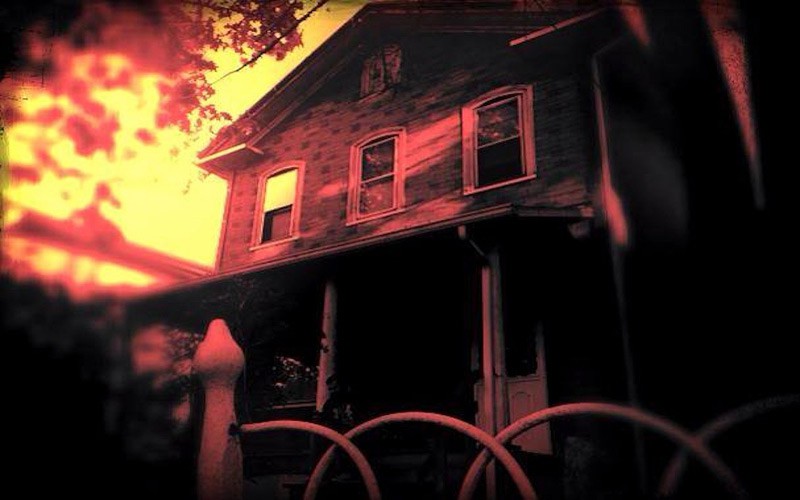
This is the haunting I know firsthand. After purchasing the Welles House in 2013, I spent time in the building and led extended live investigations with LiveSciFi. What makes the house especially interesting is that its haunted reputation existed long before our broadcasts.
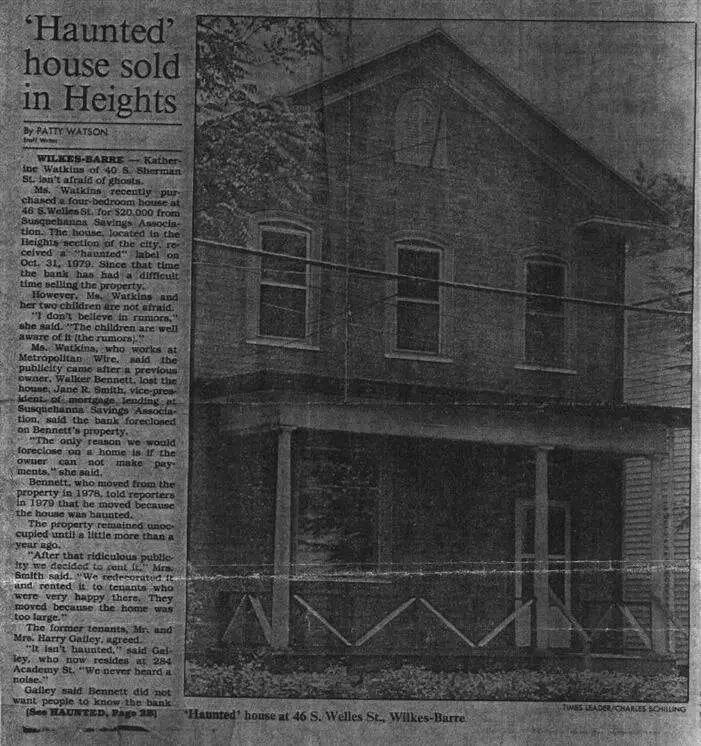
A historical Times Leader clipping supplied from the house’s newspaper archive, written by Patty Watson and headlined “’Haunted’ house sold in Heights,” documents the sale of the four-bedroom property and the rumors surrounding it. Earlier resident Walker Bennett said he had left because of a haunting, while later purchaser Katherine Watkins said she was not afraid of ghosts. Newspaper reporting documents that the claims were circulating; it does not establish that ghosts were present.
The Warrens’ reported connection is not solely a modern internet story. A 2013 account of the property’s history says Ed and Lorraine Warren toured the house in March 1980 and describes a photograph of Lorraine after she emerged. That is published secondary reporting of their involvement; the separate house-sale article is not an investigation record of the Warrens’ visit.
I was later able to investigate with someone who knew their approach personally: John Zaffis, the Warrens’ nephew. In 2014 he joined Dave Spinks and me in a LiveSciFi ghost hunt at the house. The Weekender reported on our livestream, described the equipment we used, and quoted the participants’ impressions. Our team reported unexplained noises and voice-like responses from a ghost box. Those recordings and experiences deserve examination, but a sound or electromagnetic reading alone cannot identify an entity.
When I write about Welles House, I am not repeating a movie or an anonymous ghost story. I lived with the process of investigating the location, and viewers were able to follow our broadcasts as they happened. That firsthand context is why this lesser-known case belongs alongside the more famous Warren stories here.
Read more: Welles House: A Haunting Worse than Amityville?; Haunted Real Estate: Things You Should Know. Independent coverage: The Weekender’s reporting on the 2014 investigation.
2. Annabelle — The Raggedy Ann Doll
The real Annabelle was a Raggedy Ann doll, very different from the porcelain-faced horror-film character. The Warrens said a nursing student and others around the doll experienced unusual movement and threatening incidents. They concluded that a malevolent presence was involved and later placed the doll in their occult collection.
The documented object and the legend are not interchangeable. Accounts of the doll were told and retold over many years, with differences in the details and limited independently testable evidence for a haunting. That does not resolve what witnesses felt they experienced, but it does limit what anyone can establish as fact. I find the early reporting especially valuable because it provides a timeline against which later embellishments can be judged.
The Annabelle story helped popularize the idea of a dangerous haunted object. A source-based analysis of early Annabelle coverage offers a skeptical perspective worth considering alongside the Warrens’ story.
3. The Perron Family Haunting — The Story Behind The Conjuring
The Perron family described strange experiences after moving into a Rhode Island farmhouse. The Warrens became involved during the 1970s, and the family’s story eventually helped inspire the original Conjuring movie. Andrea Perron and other family members have shared memories of the events, while the movie dramatizes them for a horror audience.
It is easy to mistake a film’s memorable images for historically verified details. A stronger approach is to ask what the family said, what was recorded at the time, and what was written for the screen. I have investigated houses where fear and anticipation shape every sound people hear. That doesn’t mean every report should be dismissed; it means investigators have to compare their observations against environmental and mundane explanations before deciding what happened.
See Entertainment Weekly’s account of the Perron case and its adaptation.
4. The Smurl Haunting — West Pittston, Pennsylvania
Jack and Janet Smurl and family members reported disturbing incidents at their West Pittston duplex, ranging from noises and odors to alleged physical attacks. Ed and Lorraine Warren joined the case in 1986 and interpreted the reports through a demonic framework. Years of press coverage, books, and television adaptations cemented the haunting in paranormal popular culture; The Conjuring: Last Rites later revisited the story.
The Smurl case and the Welles House are often grouped together because both are in northeastern Pennsylvania and became known for disturbing claims. But these are separate families, properties, and investigations. The Smurls maintained that their experiences were genuine. Skeptics, including Paul Kurtz, challenged the Warrens’ methodology and interpretation. Subsequent occupants reportedly did not experience comparable activity.
What I would want most from a case this serious is a full timeline, independent witness interviews, environmental checks, and unedited recordings. A witness’s fear can be real even when the proposed cause has not been demonstrated. See Entertainment Weekly’s historical review of the Smurl case.
5. Amityville Horror — 112 Ocean Avenue, New York
The 1974 murder of six members of the DeFeo family at 112 Ocean Avenue is a documented tragedy. Later residents George and Kathy Lutz told of frightening events they attributed to a haunting. Ed and Lorraine Warren visited the home in 1976 and came to support a supernatural interpretation, which helped cement the story in public imagination.
One of the most widely shared images is the so-called Amityville ghost boy photograph, an interior scene in which viewers perceive a childlike figure near a staircase. Its significance has been debated for decades. A photograph can record an unusual-looking figure without establishing that it is an apparition, much less identifying one.
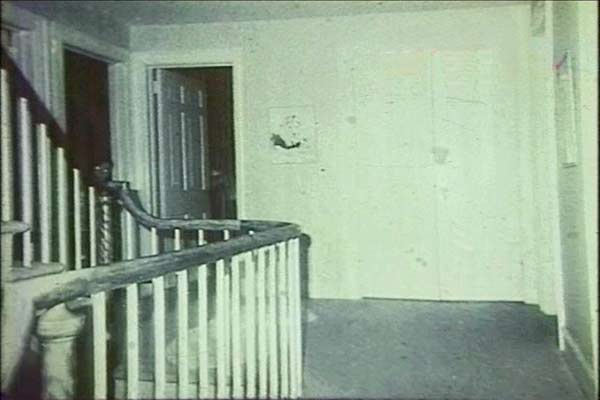
When examining Amityville, I separate the murders, the Lutz family’s claims, photographs associated with investigations, and scenes created for films. They are different types of material and should not all be presented as proven evidence of the paranormal.
Also Notable: The “Devil Made Me Do It” Case
The earlier version of this article included the Arne Cheyenne Johnson case, and it remains historically significant. In 1981, Johnson was convicted of manslaughter following the killing of Alan Bono in Connecticut. The Warren-linked story of supposed possession circulated widely, but possession was not established as a legal explanation for the crime. The case appears here as a related investigation so the article can retain a five-case focus with Welles House among the main entries. Read the legal case overview.
How I Evaluate Paranormal Claims
- Original records: contemporary reporting, documented dates, and original photographs rather than later retellings.
- Witness attribution: whose experience is being reported, and who was actually present.
- Unedited context: what happened before and after an unusual sound, image, or instrument reading.
- Alternative explanations: electrical sources, structural noises, optical effects, radio artifacts, and expectation.
- Respect for people: families and real tragedies deserve accuracy rather than sensationalized conclusions.
That is one reason I value livestreamed investigations. Viewers can see the long quiet periods, false alarms, technical problems, and actual discussions that might disappear in a short edited show. Livestreams do not guarantee a correct interpretation, but they provide more context.
Frequently Asked Questions
Were Ed and Lorraine Warren real investigators?
Yes. The couple investigated reported hauntings and became prominent authors and lecturers. Their supernatural conclusions are disputed.
Did Ed and Lorraine Warren visit Welles House?
A published history reports their visit in March 1980. The separate newspaper clipping documents the property’s haunted reputation, while independent news coverage confirms my later 2014 LiveSciFi investigation with their nephew John Zaffis.
Is the Amityville ghost boy photograph proof of a ghost?
No. Its interpretation is disputed, and an unusual appearance in a picture by itself cannot establish a supernatural explanation.
How many cases did the Warrens investigate?
Thousands of cases have been claimed on their behalf, but I do not treat an unaudited number as a verified historical count.
Watch LiveSciFi’s Original Investigations
Explore my full Welles House history, investigate the real-estate story behind haunted properties, and watch our paranormal episodes and livestreamed ghost hunts.
Originally published May 16, 2021. Restored and expanded with primary archival material, original LiveSciFi investigation history, and later historical reporting. Witness claims and supernatural interpretations are distinguished from verified records.
Join the Conversation
Have you experienced something unexplained? Share your thoughts and experiences with the LiveSciFi community.