
Waterdog Lake in Belmont, California, has always been more than another supposedly haunted location to me. I grew up hearing stories about its wooded trails, the lake, and a terrible crime. On October 2, 1984, I was at soccer practice at the middle school when 12-year-old Lance Turner disappeared and was murdered nearby. That personal connection is why the story has stayed with me—and why I eventually returned to the area to investigate its paranormal reputation for LiveSciFi.
When people ask whether Waterdog Lake is haunted, I think it is important to start with what we can actually document. The homicide was real. The court record is extensive. Reports of ghosts, strange sounds, and tunnels associated with occult activity are a different kind of claim. In this article, I want to explain the history, the crime that changed the community, what I experienced during my ghost hunt, and what remains unproven.
Where Is Waterdog Lake, and Why Is It Considered Haunted?
Waterdog Lake sits within a network of wooded hills and trails in Belmont, San Mateo County, California. The City of Belmont describes Waterdog Lake Open Space as a public trail area, with access points at Lyall Way, Carlmont Drive, and Hallmark Drive/Lake Road. The city says the lake takes its name from a local salamander and lists the park’s opening hours as sunrise to sunset. See Belmont’s official park information.
Growing up nearby, I heard stories that the lake was haunted by the spirit of a boy who had drowned there. I also heard rumors about old tunnels and ritual activity. The atmosphere makes those stories easy to imagine: dense brush, changes in elevation, and paths that can feel isolated from the city. But atmosphere isn’t evidence. I have not found reliable documentation that establishes the alleged haunting or ritual activity as fact.
Waterdog Lake visitor information and map
Location: Belmont, San Mateo County, California. The city lists 2400 Lyall Way as one public trailhead, with others at Hallmark Drive/Lake Road and 2642 Carlmont Drive. Hours: sunrise to sunset, subject to posted closures. Follow the City of Belmont’s current access information.
Approximate open-space map center: 37.5072, -122.3120. This marks the park area, not a crime scene, tunnel entrance or approved access point. View the Waterdog Lake open-space area on a map. Stay on marked trails and respect closures.
The History of Waterdog Lake and the Ralston Estate
Long before Waterdog Lake became part of local ghost stories, the reservoir was connected to Belmont’s early development. The original LiveSciFi article described its relationship to the estate of William C. Ralston and the historic waterworks that helped serve the area. Historical material preserved by the local Belmont Historical Society also describes Chinese laborers constructing a dam for Ralston and a channel carrying water for irrigation. Read the historical newspaper clipping archived by the Belmont Historical Society.
That engineering history may also help explain why underground water infrastructure became part of the lake’s folklore. It’s tempting to turn every old tunnel into a paranormal mystery. I don’t think we need to do that. The documented history is interesting on its own; stories about rituals inside the passages should be treated as local legend unless convincing evidence emerges.
The Waterdog Lake Murder: What Happened to Lance Turner in 1984?
On October 2, 1984, 12-year-old Lance Turner was expected at soccer practice behind Ralston Intermediate School in Belmont. According to the California Supreme Court’s account in People v. Dunkle, Timothy O’Brien drove Lance and his own sons to the fields. Later, when practice ended, the adults realized Lance had not attended his scheduled practice. Other boys reported seeing him head toward Waterdog Lake, approximately three-eighths of a mile from the soccer field.
My Personal Connection to the Day Lance Disappeared
I was at soccer practice at the middle school that day. That’s the detail that makes this more than a story I researched years later. While we were there for an ordinary afternoon of soccer, a child from the same community was disappearing into an area many of us knew. Lance did not come back from what should have been an ordinary afternoon. The court record describes the attack near the lake; it does not establish a separate kidnapping before the murder.
I want to be careful not to suggest that I witnessed the attack or know what Lance experienced. My connection is that I was practicing at that school on the same day. When I later learned the details, the location and the timeline became impossible for me to separate from my own memories of growing up in Belmont.
The Search Near Waterdog Lake
By approximately 7 p.m., Lance’s mother, Margaret Turner, reported him missing. A search was already underway. The court recounts that William Russell, another parent connected to the soccer practice, joined the effort. At about 8:20 p.m., he noticed Lance’s feet among the bushes in a gully near a path leading toward the lake. Lance’s body was discovered concealed in the brush.
The medical evidence was devastating: the pathologist testified that Lance died from blood loss caused by multiple stab wounds, including fatal injuries to the heart. There were also defensive injuries. I include those facts because they are central to the documented history, not because the details should be turned into entertainment. Lance was a child, and his family and community lived with the consequences.
Witnesses, the Suspect, and the Confession
Students from Ralston Intermediate School later testified that they had encountered a young man near the lake that afternoon. He introduced himself as Jon, spoke with them, and was drinking beer. Their descriptions contributed to a police composite. The court noted that these witnesses were not asked to identify the defendant in the courtroom, a distinction worth preserving when retelling the case.
The man ultimately convicted was Jon Scott Dunkle. During questioning in December 1984, Dunkle denied being at Waterdog Lake on the day of the murder. Investigators continued their work, including an undercover operation. In 1986, while in prison on an unrelated conviction, Dunkle gave accounts of the killings to a fellow inmate and later spoke with FBI agents.
In his account of the Turner killing, Dunkle said he had been drinking in the area, had encountered three girls, and then approached a boy jogging near the lake. He described attacking Lance with a knife and hiding his body in the brush. These statements were part of the evidence described by the court; they are not my reconstruction of what someone saw that afternoon.
The Other Murder Linked to the Case: John Davies
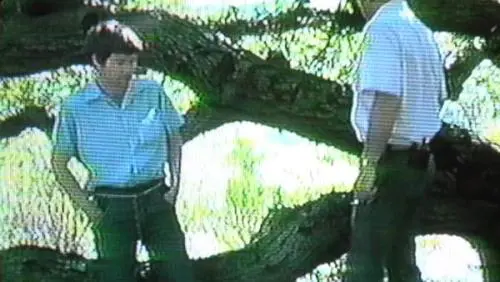
The investigation also brought answers in a separate tragedy. John Davies, 15, disappeared from Belmont in November 1981. According to the Supreme Court’s opinion, Dunkle was close to the Davies family. Years after John disappeared, Dunkle’s statements directed investigators to evidence connected to John’s death near Edgewood Park. The jury convicted Dunkle of the first-degree murders of both John Davies and Lance Turner.
That is an important part of the Waterdog Lake story. Lance’s murder was not merely an isolated piece of spooky local folklore; it became part of a major criminal case involving multiple victims. The California Supreme Court affirmed Dunkle’s convictions and death judgment in 2005. That is the historical appellate ruling, not a claim about his present custody or sentence status.

Primary source: People v. Dunkle, California Supreme Court, August 4, 2005. For a contemporary news account of the ruling, see the San Francisco Chronicle report.
Is Waterdog Lake Haunted? The Stories Behind the Legend
For decades, people have repeated stories about a drowned boy, unusual sounds, and a haunting connected to Waterdog Lake. Those accounts are part of the area’s local lore, but they do not prove that a spirit is present. A listing on Haunted Places shows how residents and visitors continue to exchange different—and sometimes conflicting—memories about the site. A later regional feature also mentioned tunnel legends and supposed ritual activity, without establishing them as fact.
One thing I will not do is claim that Jon Dunkle participated in Satanic rituals or that the murders were connected to the tunnels. I found no credible evidence for that claim in the court record. There is already enough real tragedy here without inventing a supernatural motive.
Watch My LiveSciFi Ghost Hunt at Waterdog Lake
I eventually returned to the area for a LiveSciFi live-streamed ghost hunt. In the original article, I described capturing several sounds I considered possible electronic voice phenomena (EVPs) and hearing what seemed to be a disembodied voice. The recording is part of my experience at the location, but listeners should make their own judgments. Environmental sound, recording artifacts, and expectation can all shape what we think we’re hearing.
Here is the footage from my Waterdog Lake ghost hunt. Watch it and listen for yourself rather than relying on my interpretation alone.
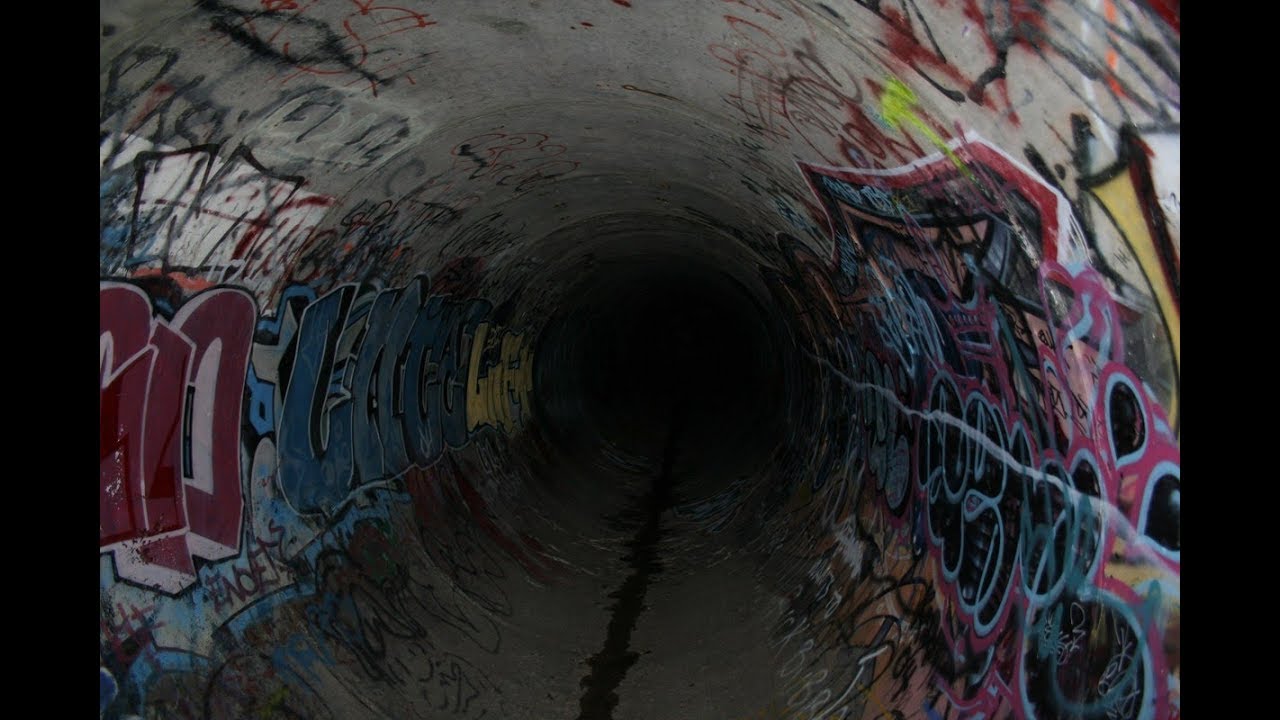
Watch the Waterdog Lake investigation on YouTube →
March 19, 2018: key moments in the original ghost hunt
The timestamps below refer to the full 1-hour, 4-minute Waterdog Lake investigation linked above. The archive marks its caption-derived chapter timings as checked by Tim Wood. Two additional moments are viewer reports and remain unverified. Select a timestamp to open the episode at that moment; playback starts muted where required by your browser.
- 0:00 — Heading to Waterdog Lake
- 0:38 — Local stories discussed as background
- 2:09 — The man-made lake
- 4:37 — Tunnel ghost lore
- 6:42 — Safety and equipment checks
- 9:20 — Listening along the trail
- 11:37 — First outdoor EVP recording
- 19:03 — Unclear sound in the dark
- 31:13 — Viewer-reported possible “no” — unverified
- 34:06 — Exploring the tunnel
- 35:47 — Viewer questions a voice’s source — unverified
- 50:29 — Additional noise in the recording
April 2, 2018: a separate tunnel-and-trail investigation

In this later visit, I repeatedly acknowledge wind, running water and limited tunnel clearance while attempting recorder sessions. The chapter notes also preserve an ordinary explanation for a ghost-like image: a cracked phone. These review points come from the archive’s transcript-supported chapter list; they identify sessions and interpretations, not confirmed spirits.
- 6:00 — Wind limitations for recorder work
- 11:00 — Approaching the lake tunnel
- 14:00 — First recorder questions near the tunnel
- 19:00 — Running water and low clearance acknowledged
- 21:00 — Recorder checked inside the cramped tunnel
- 27:00 — Unclear audio attributed to wind; test restarted
- 30:00 — Tentative number or word interpreted
- 39:00 — Cracked phone explains a ghost-like visual effect
- 48:00 — Final sheltered recorder questions
- 50:00 — Car identified; yes-like and scream-like playback interpreted
Is It True? Waterdog Lake’s History, Tragedy and My Ghost Hunt
My connection to Waterdog Lake is personal: I grew up around the area and remember being at soccer practice at the middle school on the day the community learned of a child’s disappearance. The murder documented in the court record is a human tragedy that deserves to be told carefully. Years later, I returned to explore the haunted reputation of the lake and surrounding tunnel and recorded what I encountered during my own LiveSciFi ghost hunts.
The lake’s ghost stories, ritual rumors and tunnel legends are part of its modern folklore; they are not a reason to mischaracterize a victim or the crime. The historical sources below establish the people and events, while the linked investigation videos let visitors hear the sounds, see the setting and follow my reactions as they occurred.
| Claim | What the evidence supports |
|---|---|
| A child was murdered near the lake. | Documented. The court record describes Lance Turner’s 1984 murder near Waterdog Lake and Jon Scott Dunkle’s conviction. That does not establish a haunting. |
| A drowned boy haunts Waterdog Lake. | Local folklore. I have not established the drowning account or identified a spirit. It should not be conflated with Lance’s documented death. |
| The tunnel is a portal or was tied to the murders. | Not established. The court record cited here does not support linking the murders to Satanic rituals or the tunnel. |
| The videos prove ghost voices or an apparition. | They document my investigation and reported interpretations. Wind and running water affect the audio; the later recording includes a cracked-phone explanation for a ghost-like visual effect. Neither recording establishes the identity of a deceased person. |
| Tim Wood was connected to the day Lance disappeared. | My firsthand account is that I was at soccer practice at the middle school that day. I do not claim to have witnessed the crime. |
My assessment: Waterdog Lake has documented history, a real tragedy and a longstanding paranormal reputation. The recordings let viewers examine what I heard and how I interpreted it. They do not establish that a ghost, a portal or the murder victims caused the reported sounds.
How I Separate the Crime, the History, and the Paranormal Claims
After years of investigating reportedly haunted locations, I have learned that a gripping story and verifiable evidence are not the same thing. At Waterdog Lake, the 1984 murder, the victims’ identities, the search, and the conviction have a documentary record. The drowning legend, ritual stories, and reports of ghostly voices require a different standard of scrutiny.
As an investigator, I can tell you what I heard, what I recorded, and why I chose to visit. I can’t tell you that a recording proves a spirit was there. I also can’t establish that the deceased are responsible for noises or sensations at the park. The victims deserve more than to become props in a ghost story.
For me, Waterdog Lake remains one of the most personal locations I have ever covered. I know the school, the landscape, and the sense of an ordinary community changed by something terrible. That personal history is part of why I wanted to document the lake—and why I think its story needs to be told carefully.
Frequently Asked Questions About Waterdog Lake
Where is Waterdog Lake?
Waterdog Lake is in Belmont, California, within Waterdog Lake Open Space in San Mateo County. The City of Belmont lists public trailheads and says the area is open from sunrise to sunset.
Who was murdered near Waterdog Lake?
On October 2, 1984, 12-year-old Lance Turner was murdered near Waterdog Lake after disappearing from soccer practice at Ralston Intermediate School. Jon Scott Dunkle was later convicted of Lance’s murder and the murder of 15-year-old John Davies.
Is Waterdog Lake really haunted?
Residents and paranormal enthusiasts have reported ghost stories associated with the lake, but those accounts have not established a supernatural cause. LiveSciFi’s recordings preserve my firsthand experiences at Waterdog Lake and allow readers to follow what I heard and encountered during the investigation.
Can visitors go to Waterdog Lake?
Yes. The City of Belmont manages the surrounding open space and lists trails open from sunrise to sunset. Please respect the trails, neighbors, wildlife, and the memory of the victims. Do not enter closed tunnels or restricted areas.
Have You Experienced Something at Waterdog Lake?
Did you grow up in Belmont, remember the area in the 1980s, or experience something unusual around Waterdog Lake? I’d like to hear your story. Leave a comment below with what you experienced—and whether you want to see another LiveSciFi investigation at the location.
Explore more LiveSciFi ghost hunts and paranormal episodes → You can also explore my Welles House live ghost hunts and the Monroe House broadcast history for other investigations in very different locations.
About the author: Tim Wood is the founder of LiveSciFi.tv and has documented reportedly haunted locations through live-streamed ghost hunts since 2006. This article combines his personal memories and first-person investigation notes with court records and local historical sources.