
Who is ZoZo, the Ouija board demon? ZoZo is a name reported during some Ouija board sessions, often with repeated Z-O-Z-O letters and unusual planchette movements. Some witnesses interpret the experience as contact with a demon, but no verified evidence establishes that a supernatural entity causes these responses. I am Tim Wood, founder of LiveSciFi, and I have investigated ZoZo-related claims since a 2007 ghost hunt at the Stanley Hotel.
People call ZoZo a demon, a trickster spirit, or the Ouija board demon. Others see the entire phenomenon as folklore shaped by suggestion, fear, and online stories. I have spent years trying to understand why so many people report that particular name—and what my own experiences can actually tell us.
My interest comes from firsthand investigations, beginning with a 2007 LiveSciFi ghost hunt at the Stanley Hotel, and later an extended experiment I documented in my book Stalked by the Zozo Demon: Real Life Paranormal Experiment. This article is my account of the research, what I experienced, and the questions that remain.
Watch the original ZoZo investigation footage: Browse 78 searchable ZoZo Ouija episodes with recordings and key moments, including the 2016 Demon House sessions. You can also watch our October 24, 2026 ZoZo livestream. The recordings preserve what happened during the experiments; they do not, by themselves, establish a supernatural cause.
What is ZoZo, the Ouija board demon?
ZoZo is a name reported during Ouija board sessions and other attempts at spirit communication. People describe fast movement between the letters Z and O, figure-eight patterns, insulting messages, unusual sounds, and experiences that seem to continue after the session. Those similarities interest me, but repeated stories are not proof of a single supernatural source. Some users may know the legend in advance, and unconscious movements—known as the ideomotor effect—can make the planchette feel as though it is moving independently.
My approach is to separate the experience from its interpretation. What did the witnesses actually observe? Was the session recorded? Can anything in the environment explain the sounds or movements? Does the original video support the claim people are making about it?
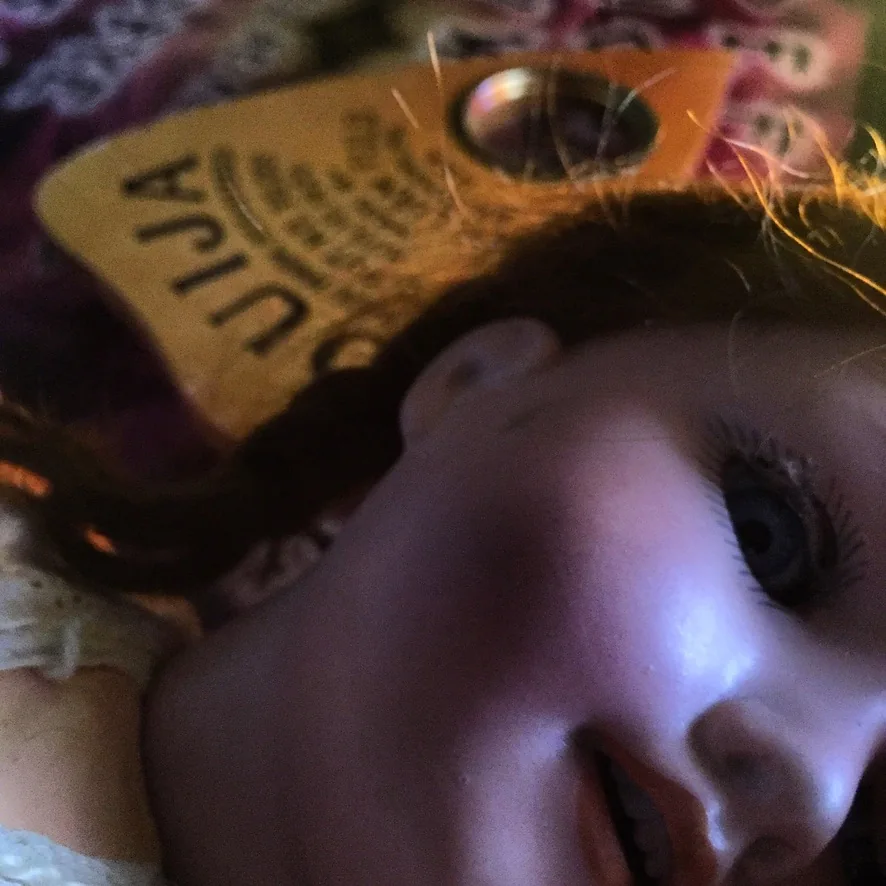
My first documented ZoZo encounter at the Stanley Hotel in 2007
I was investigating the Stanley Hotel in Estes Park, Colorado, during one of our early live ghost hunts. We wanted to document what happened at a place already famous for paranormal stories and its connection to The Shining. During the investigation, we used a Ouija board in the hotel ballroom.
The planchette began tracing a figure-eight movement. When we asked who was communicating, the letters appeared to spell Z-O-Z-O. I remember wondering whether the board had meant to spell “Bozo.” I was skeptical enough to question whether the other person at the board was moving it. We stopped because I did not understand what was happening.
That moment did not prove a demon was there. It did change the direction of my research. The name stayed with me, and subsequent reports pushed me to look at it more seriously.
Where did the name ZoZo come from?
An important historical reference appears in Jacques Collin de Plancy’s Dictionnaire Infernal, first published in 1818. The work recounts a purported possession in 1816 involving a young woman in France and names including Mimi, Crapoulet, and ZoZo. The existence of an old written account does not verify a possession or establish that today’s spirit-board experiences have the same cause.
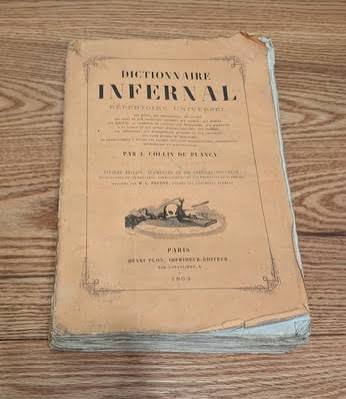
I have seen many claims linking ZoZo to ancient demons, Pazuzu, and unrelated languages or occult traditions. Similar names, symbols, or stories can be intriguing, but they should not be presented as proof of an ancient ZoZo entity without reliable documentary evidence.
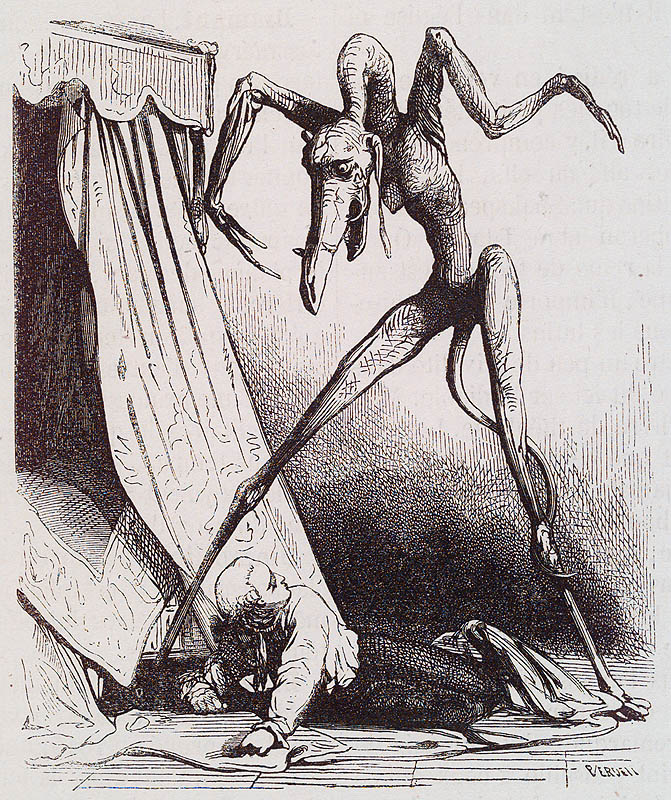
Occult imagery also gets attached to legends long after the fact. It may be visually compelling, but it is not the same thing as historical evidence.
The 2016 ZoZo Demon House live investigation
In October 2016, LiveSciFi announced a 72-hour live paranormal investigation at the Oklahoma house associated with researcher Darren Evans’s reported ZoZo experiences. The broadcast was scheduled to begin October 21, 2016. Evans had been researching and sharing accounts of ZoZo for years, and I wanted to bring our live-investigation approach to the location connected with those stories.
Our announced plan included Ouija-board experiments, electronic voice phenomenon (EVP) recording, ITC approaches, and other documentation techniques. That list describes our investigation methods; it does not demonstrate that a demon was present. The real value of the live format was allowing audiences to watch extended portions of the work rather than only a short, edited highlight.
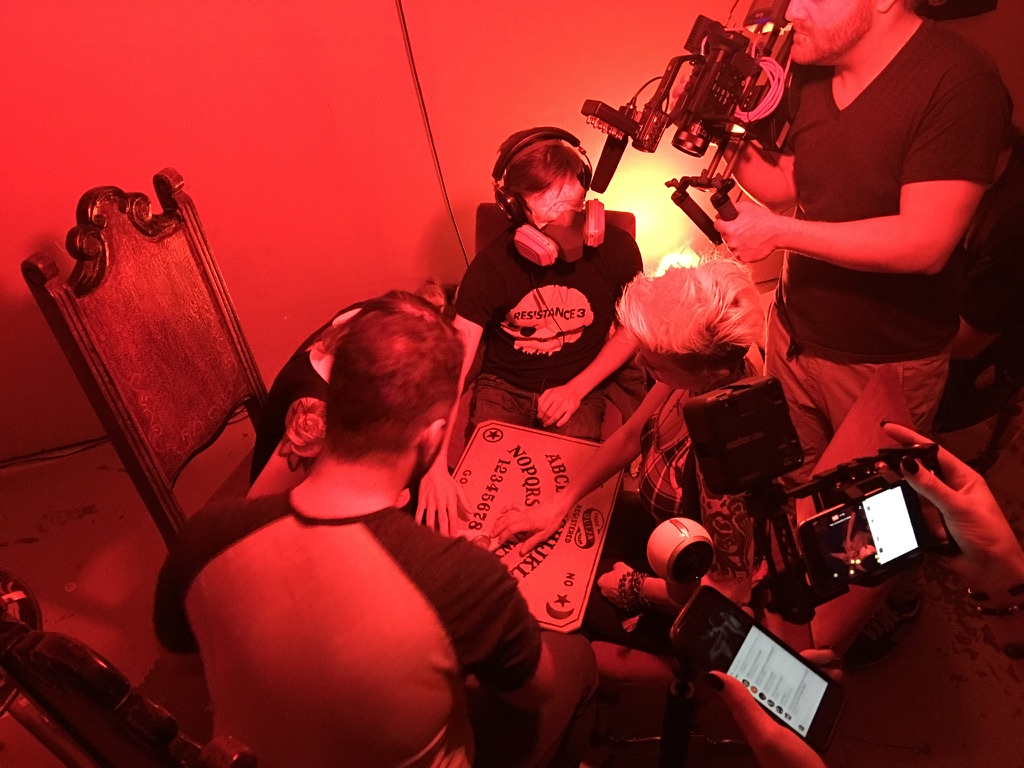
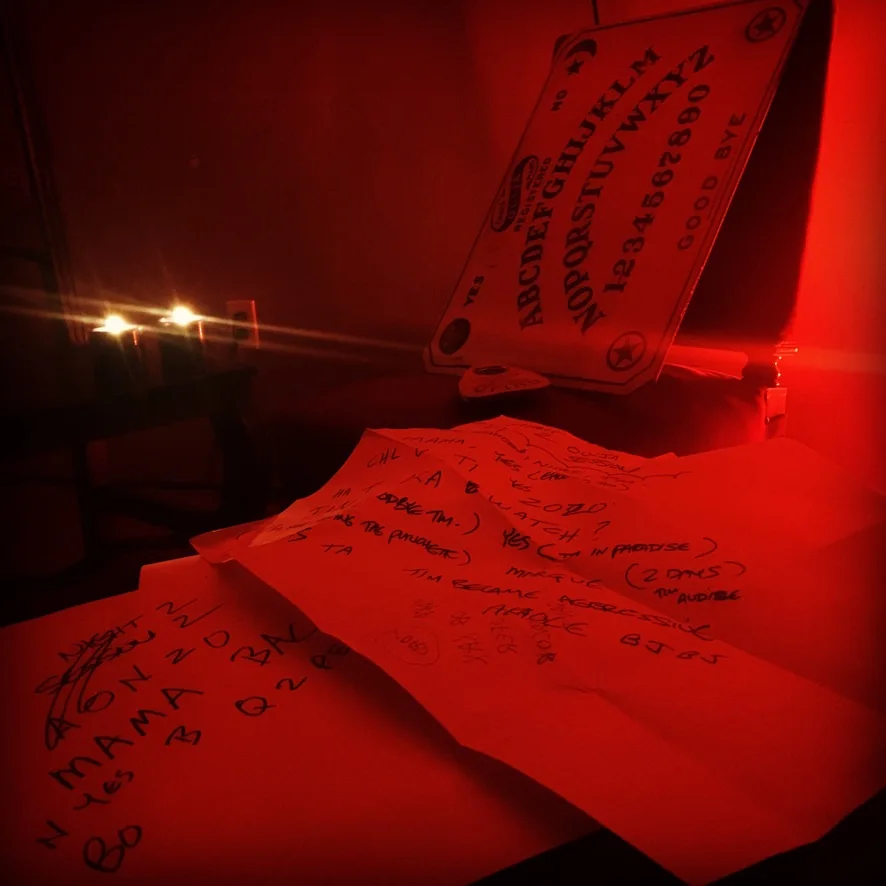
I also want to preserve the less dramatic context: camera positions, lighting, the participants present, and what equipment was running. Those details are essential when someone later asks whether a sound or apparent response can be explained normally.
For background on the 2016 broadcast, see LiveSciFi’s ZoZo Demon House investigation retrospective.
What happened during my month-long ZoZo experiment in 2017?
Beginning June 21, 2017, I conducted repeated livestreamed spirit-board experiments over approximately a month. I changed conditions, used different objects, and observed the types of responses that appeared. The purpose was to see whether recognizable patterns continued across sessions rather than treating one unusual moment as conclusive proof.
The recordings include confrontational messages, noises we could not immediately identify, and events that unsettled me personally. At the same time, working with a board without blinded controls cannot establish whether a response came from outside the participants. Changing conditions can also introduce new explanations. I am open about those limitations because they matter.
I documented these experiments in my 2017 book, Stalked by the Zozo Demon: Real Life Paranormal Experiment. My goal here is to share my investigative perspective directly and give readers a way to examine the livestream recordings alongside the written account.
Open the ZoZo investigation playlist on YouTube.
The scratch marks I documented during live paranormal investigations
During some of my live paranormal investigations, I experienced and documented physical marks that I associated with ZoZo-related activity. I regarded them as disturbing because of when they appeared and the circumstances surrounding the sessions. Below are two photographs from that period.
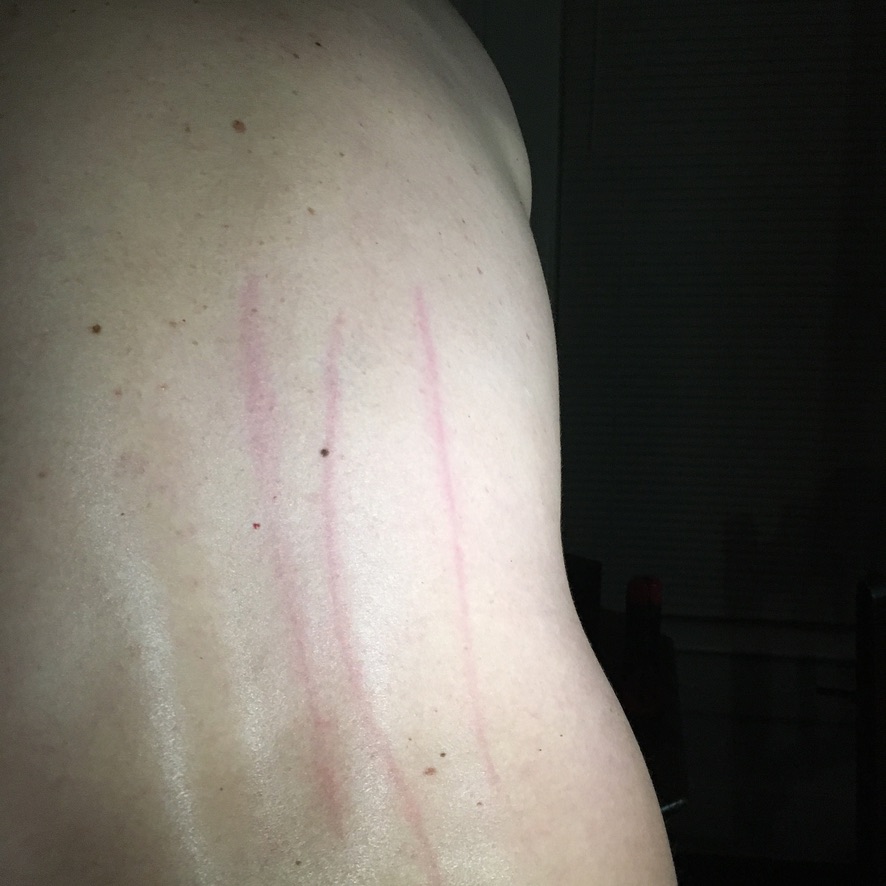
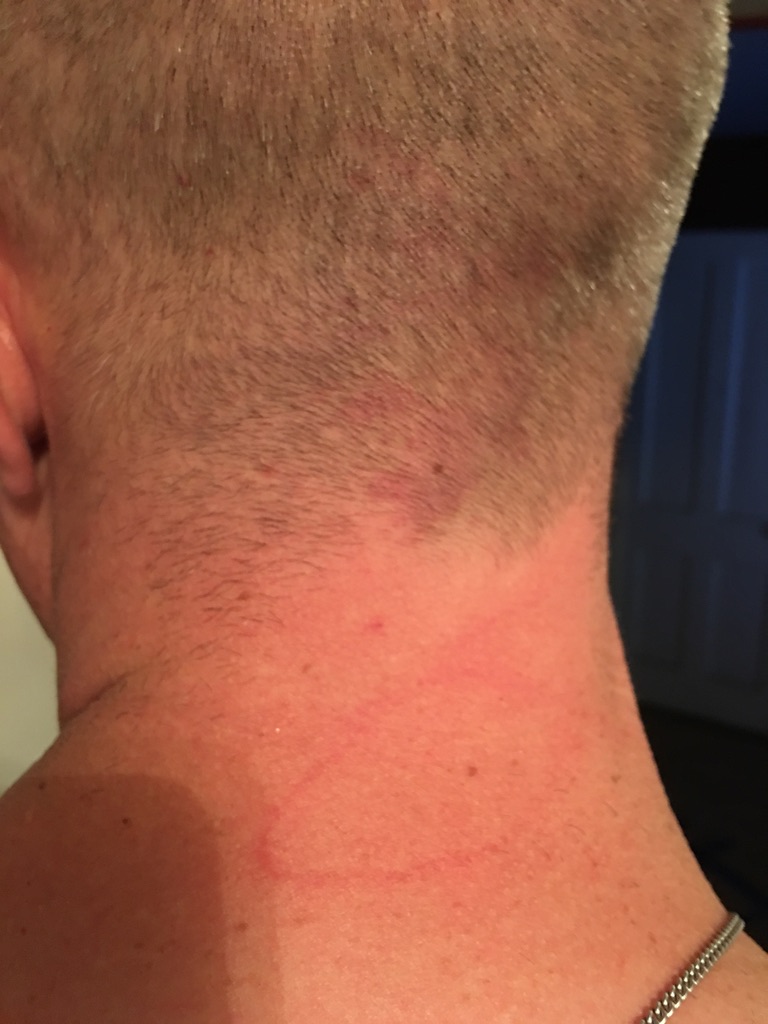
These images document visible marks on skin. My personal interpretation is that they were connected to the activity I was investigating. The photographs alone cannot establish what caused the marks, and they should be considered alongside the original video, the timeline of the session, possible physical explanations, and any available witnesses. That distinction is important when discussing paranormal evidence.
Is ZoZo a real demon, a trickster, or something else?
I have considered the possibility that “ZoZo” is a recurring identity or a kind of mask appearing in different sessions. In traditional demonology, deception is a common theme. But that interpretation is not proof of a supernatural identity. There are other possibilities: expectation, unconscious muscle movement, deliberate hoaxes, cultural imitation, and misunderstandings of ordinary sounds or events. Different accounts may have different explanations.
I still think the phenomenon warrants serious investigation—not because I can prove every claim, but because I want to understand what happened during the sessions we documented.
EVPs, strange voices and the limits of the evidence
An electronic voice phenomenon, or EVP, is a sound in a recording that some listeners interpret as a voice. Environmental noise, radio bleed, equipment artifacts, distant speech, and auditory pareidolia can create convincing impressions. When reviewing a ZoZo recording, I want the original audio, the exact question asked, information about the equipment, and an independent assessment of what listeners hear without being prompted. An unexplained sound is not, by itself, an identified supernatural speaker.
Why live ghost hunts matter to my work
I founded LiveSciFi.tv in 2006 to broadcast paranormal investigations while they were happening. Audiences could watch the quiet periods, changes in method, and moments of uncertainty as well as the dramatic incidents. A live video does not solve every problem of evidence, but it preserves context that can disappear in a heavily edited clip. That transparency has always mattered to me.
Should you try to contact ZoZo yourself?
I do not encourage people to provoke frightening experiences or copy confrontational experiments just to get a dramatic response. If a spirit-board experience leaves you anxious, unable to sleep, or afraid in your own home, prioritize your health and support from people you trust. Fear and expectation can affect how ordinary events are interpreted. For historical and practical context, read my Ouija board rules guide.
My conclusion: who or what is ZoZo?
After all these years, I see ZoZo as a complicated mix of firsthand experiences, reported encounters, occult history, internet folklore, and recordings that deserve critical examination. I have experienced things that disturbed me and that I have not fully explained. I have also seen how quickly people can interpret a dramatic event as definitive proof of a demon.
I believe the right way forward is to document what happened, preserve the footage, distinguish claims from evidence, and let viewers judge for themselves. You do not have to agree with my interpretation. Watch the recordings, study the background, and ask difficult questions.
— Tim Wood — Founder and Lead Investigator, LiveSciFi.tv
Continue exploring my ZoZo investigations
- Warning Signs of the ZoZo Ouija Board Demon
- ZoZo Ouija Demon Stories
- ZoZo Demon House: 2016 Investigation
- LiveSciFi paranormal episodes
Sources and editorial notes
- Tim Wood and Celina Summers, Stalked by the Zozo Demon: Real Life Paranormal Experiment (2017), including descriptions of the 2007 Stanley Hotel experience and the June–July 2017 experiment.
- Jacques Collin de Plancy, Dictionnaire Infernal, 1818 and later editions (historical claim, not verification of possession).
- Contemporary October 2016 announcement of the LiveSciFi/Darren Evans ZoZo House investigation and LiveSciFi archival materials.
- Smithsonian Magazine: Ouija board history and psychology.
Editorial update (October 2026): This is Tim Wood’s newly written first-person article about his own ZoZo investigations, including events from 2007, 2016, and 2017. It is not the text of any 2016 third-party manuscript. Personal experiences and paranormal interpretations are distinguished from independently established facts. The historical images are contextual.
Related research and investigations
Viewer evidence discussion
Share a timestamp, screenshot and what you noticed. Use your existing LiveSciFi account to participate. Comments are moderated.